Science news
Recent stories from university newsrooms, The Conversation, CORDIS, observatories and ScienceDaily, each sorted into the fields, countries and institutions it is about, and each linked to the original publisher. Narrow them below by subject, country, institution, source, words or period. A signed-in reader can follow any filtered view and be told when a new story matches it.
3,088 stories match these filters.
-
Ten Australians are taking the government to the UN over fossil fuel exports. What is their case?
This historic case could establish a legal link between human rights and fossil fuel exports.
-
Spy agencies say AI can help combat AI cyber risks. But don’t forget the basics
Using AI for cybersecurity without first investing in fundamentals is like deploying a robot guard dog to defend an unlocked door.
Picture: Trophim Laptev/Unsplash
-
The R’Garonne Project: an initial trial of controlled recharge of the Garonne alluvial aquifer (opens the original)
By 2030, the Adour-Garonne catchment area will be among those most affected by climate change in France, with its flow reduced by half. Added to this environmental pressure is an estimated population increase of 1.5 million people, which is putting further strain on water resources. The future shortfall could…
-
Modelling regions to make better decisions? The potential and limitations of digital twins for the environment (opens the original)
Given fragmented data, complex trade-offs and conflicting uses, while digital twins cannot solve everything, they do at least provide a centralised source of information, enabling better real-time management and planning.
-
How AI prompting turned writerly description into an everyday skill
Writing prompts to generate images combines two literary tasks at once: the realist description of concrete things and the modernist evocation of atmosphere.
Picture: (Matt Brown/Flickr/Wikimedia), CC BY
-
The first case of H5N1 bird flu in Australia has been confirmed. What does this mean?
This is not the moment to call defeat. There is a chance we can stop this infectious virus, this time at least.
-
Quantum sensors could spot hidden damage in the thousands of US bridges rated ‘structurally deficient’ (opens the original)
Advanced sensors of this type might one day be able to help engineers pinpoint where to look to determine whether hidden damage in infrastructure is worsening.
-
Bio-Coating Developed by University of Leiria and Oeste Researchers Named Finalist in International Sustainability Award (opens the original)
A bio-coating for food-contact cardboard packaging, developed by the University of Leiria and Oeste as part of the Packaging of the Future® Mobilising Agenda, has been selected as a finalist in the…
-
Quantum sensors could spot hidden damage in the thousands of US bridges rated ‘structurally deficient’
Sensors cannot replace bridge inspectors. They can help engineers see corrosion, cracks, scour and weak magnetic signals that eyes alone can miss.
-
RESEARCH: Canada’s national parks can do better at limiting landscape fragmentation, Concordia study suggests (opens the original)
More than a third of parks experienced faster infrastructure growth than in surrounding areas
-
How local communities are challenging Big Tech data centers’ noise, pollution and rising electricity bills
Local needs, political tensions and corporate power all get involved in the democratic processes by which Americans govern their communities.
-
A novel critical quantum phase (opens the original)
In a new study published in Physical Review Letters, a team of the Nägerl group jointly with theory collaborator Alvise Bastianello from the CNRS and the Université Paris-Dauphine demonstrates that highly unusual quantum states known as "fractional Fermi seas" can be quantum engineered.
-
Sovereign AI? Anthropic shutdown reveals Canada’s weakness
Canada is now investing billions to strengthen domestic AI capacity. But sovereignty is not simply about where the servers sit.
-
Researchers aim for thumbs up on 3D-printed splint (opens the original)
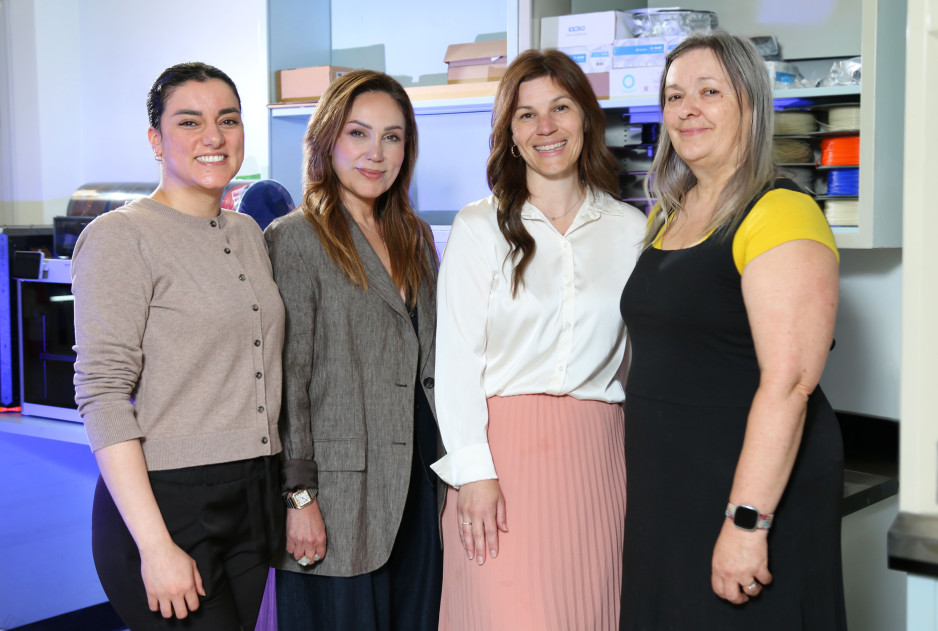
Image hansena Wed, 06/17/2026 - 14:19 A team led by Lawson Research Institute scientist Joy MacDermid, PhD, is exploring how digital scanning and 3D printing could help bring custom hand splints closer to home for people living with thumb arthritis. For many people…
-
A ‘super’ El Niño has the power to devastate fishing – and leave seals and sea lions starving
A dip in anchovy stocks is not only vital for Peru’s economy, but also essential for supporting fish farming and food production worldwide.
-
Swansea University expert part of new international project to tackle hidden online hate speech and AI-driven radicalisation (opens the original)
Dr Joe Whittaker, Senior Lecturer in Cyber Threats at Swansea University, is part of a new international research project funded by Horizon Europe that will investigate how hidden hate speech spreads through social media and AI technologies, while developing innovative tools and strategies to counter it.
-
The US government can shut off access to AI at will. What does this mean for Australia?
The risks of depending on US-based AI models are becoming clear.
Picture: Othman Alghanmi / Unsplash
-
Artificial intelligence raises profound moral questions — for all of humanity to answer
Ordinary people, not just technical experts, need to set the moral standards for regulation of AI.
-
How New Technologies Advance the Discovery of Plant Species (opens the original)
Vast numbers of plant and fungal species are still unknown to science, while biodiversity loss and climate change accelerate. Kew’s sixth State of the World’s Plants and Fungi report explores how digitized collections and new technologies are helping scientists speed up the discovery and assessment of species before…









Read: The Conversation, CORDIS, ESO, NASA, ScienceDaily and the newsroom feeds of 734 institutions. Last read: today. Each story's date is its publisher's. Where the news comes from, and what each source allows.