Science news
Recent stories from university newsrooms, The Conversation, CORDIS, observatories and ScienceDaily, each sorted into the fields, countries and institutions it is about, and each linked to the original publisher. Narrow them below by subject, country, institution, source, words or period. A signed-in reader can follow any filtered view and be told when a new story matches it.
2,061 stories match these filters.
-
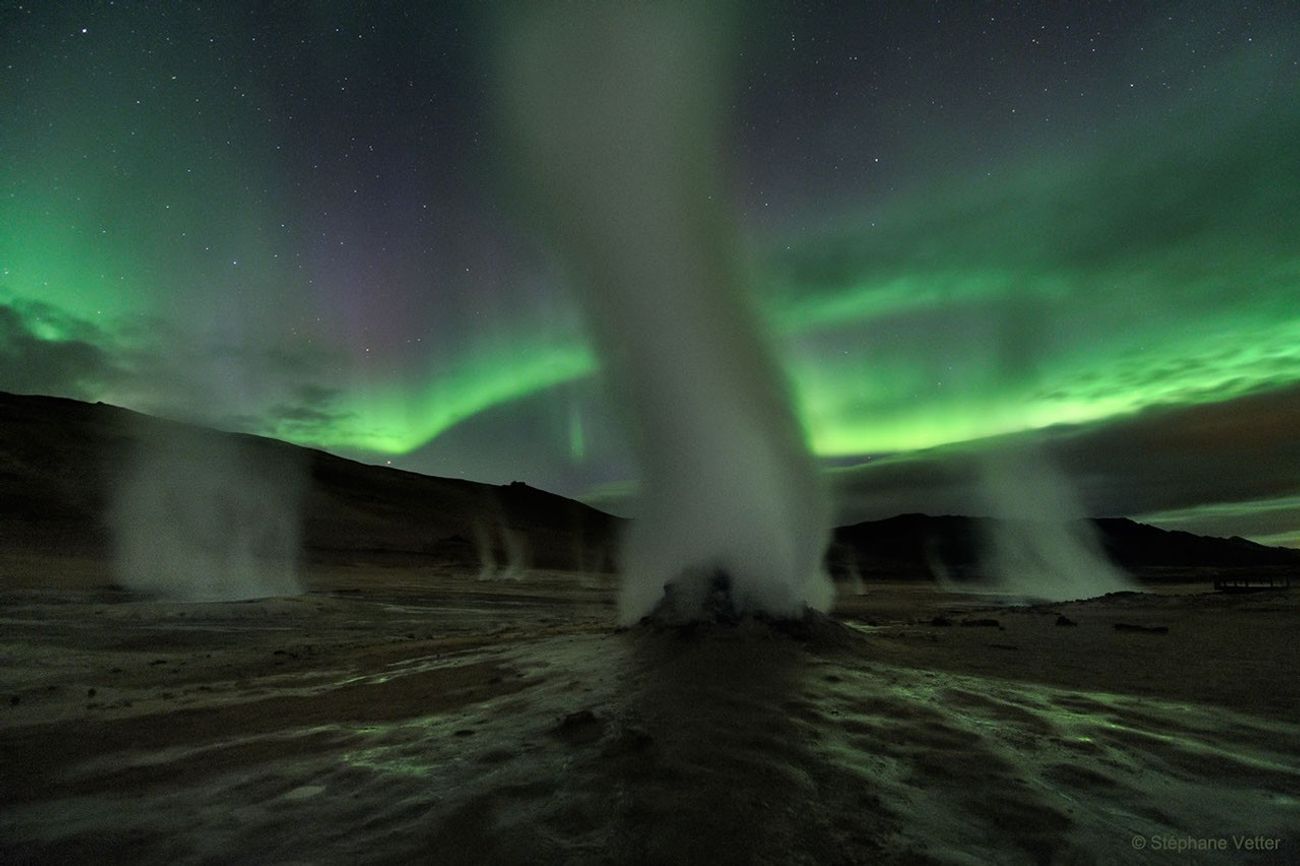
APOD: 2026 October 31 – Night on a Spooky Planet (opens the original)
APOD Science APOD APOD: 2026 October 31 –… Today’s APOD Archive Submissions Index Search Calendar RSS Education About Discuss APOD Astronomy Picture of the Day Discover the cosmos! Each day a different image or photograph of our fascinating universe is featured, along with a brief explanation written by a professional astronomer. Night on a
-
UMS and Indonesia’s Ministry of Marine Affairs and Fisheries Forge Cooperation to Empower Merah Putih Fishing Communities (opens the original)
The cooperation aims to optimize the university’s contribution to coastal area development through research, community service, and the application of cross-disciplinary knowledge.
-
Future-Proof Security System Protects Bitcoin Lightning Network from Quantum Attacks (opens the original)
Nearly all personal information is stored electronically in our digital age. This sensitive data is protected by digital keys unique to each device that would take today’s computers billions of years to crack through brute-force hacking attacks. But technology evolves. So what happens when new technology can break…
-
Students helping students: the Morgan Library peer research mentors (opens the original)
Staring at an empty document with a broad topic, finding credible sources amongst the noise of the internet, and trying to navigate the libraries’ extensive databases can feel overwhelming. At CSU, students don’t have to face these challenges alone.
-
World’s top plague experts meet at McMaster (opens the original)
McMaster University recently hosted an international conference on plague research, which brought together the field’s top experts to collaboratively answer some of the most pressing questions about the disease and the bacteria that causes it. Organized by McMaster Professor Hendrik Poinar in partnership with the…
-
Sandia selected for $3.38 million to advance nuclear fuel research (opens the original)
Sandia National Laboratories has been selected for $3.38 million in Department of Energy funding to develop analytical tools that could help advance the production and deployment of nuclear fuels for next-generation reactors.
-
ORNL researcher to develop new gallium recovery approach (opens the original)
The Department of Energy’s (DOE) Oak Ridge National Laboratory (ORNL) is developing new chemical separation methods to recover gallium from domestic zinc refinery residues, potentially creating a new U.S. source of a critical material used in advanced semiconductors, electronics and energy technologies. Led by ORNL…
-
Q&A: Hey AI, who should I vote for this year? (opens the original)
MIT professors Adam Berinsky and Chara Podimata discuss a new project to track how AI chatbots are responding to questions about the 2026 U.S. midterm elections.
-
"What Could We Not Do?": The Inauguration of Ray Jayawardhana as Caltech's 10th President (opens the original)
On a November evening more than a century ago, George Ellery Hale, one of Caltech's three founders, and his guests gathered atop Mount Wilson to witness the first light of the 100-inch Hooker Telescope, the world's most powerful at the time. Ray Jayawardhana, who took office in July, began his inaugural address on…
-
Stony Brook Researchers Earn Best Paper Honorable Mention at ECCV 2026 (opens the original)
Irene Kim, a third-year Ph.D. student in the Department of Computer Science, is the lead author of a paper that received a Best Paper Honorable Mention at the 2026 European Conference on Computer Vision (ECCV) in Malmö, Sweden, one of the field’s top international conferences. Her paper, “Poppy: Polarization-Based…
-
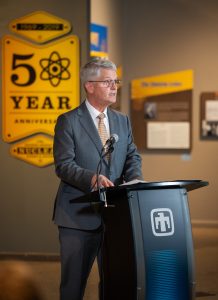
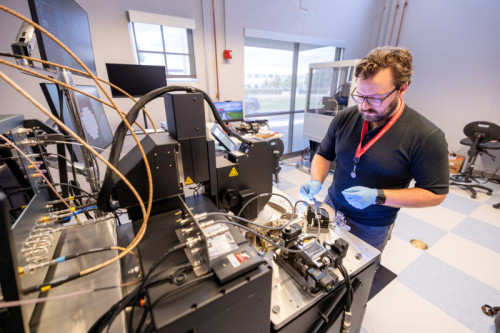
Ohio State holds ribbon-cutting for $20 million semiconductor research and prototyping expansion (opens the original)
The Ohio State University held a ribbon-cutting ceremony on Oct. 20 for a more than $20 million expansion of its semiconductor research and development infrastructure.
-
How NAU and SRP are reducing wildfire risk and water loss in Arizona (opens the original)
From preventing wildfires to finding new ways to identify leaks in water pipes and developing creative ways to pull carbon out of the atmosphere, the nearly decade-long partnership between Northern Arizona University and Salt River Project (SRP) remains focused on protecting Arizona’s natural resources and keeping…
-
Proposal applications open for 2027 Morris Fromkin research grant (opens the original)
The UWM Libraries invite proposals for the 2027 Morris Fromkin Memorial Research Grant and Lecture.
-
Texas A&M awarded $5.4 million to explore turning nuclear waste into fuel (opens the original)
The Department of Energy grant will support research to transform nuclear waste into reactor fuel, strengthening the national nuclear fuel supply chain.
-
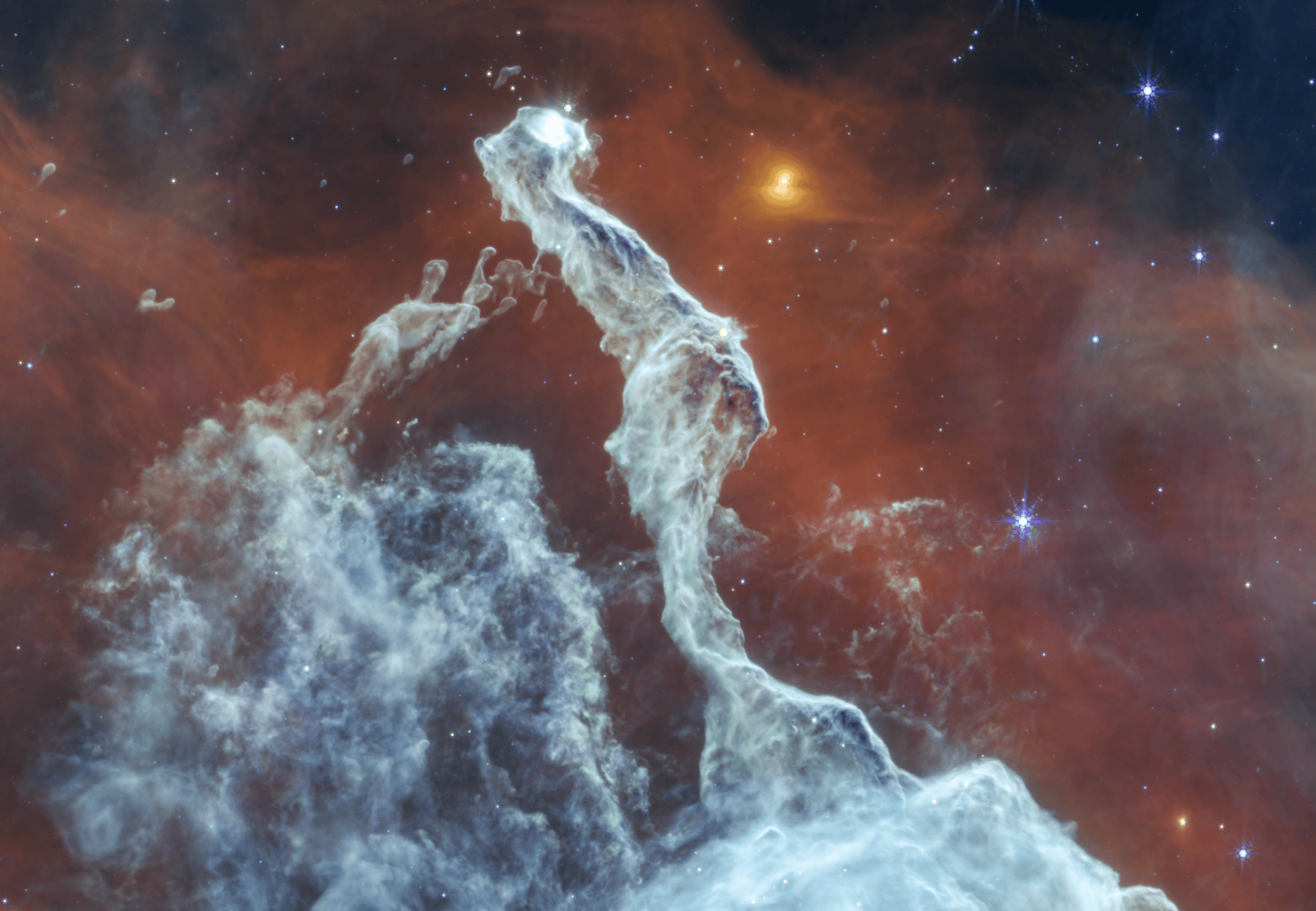
NASA’s James Webb Space Telescope Captures Eerie Cat’s Head (opens the original)
Intricate structures within the Cat’s Head Nebula are illuminated in this mid-infrared view from NASA’s James Webb Space Telescope released on Oct. 29, 2026. The distinctive “cat’s head” shape of the nebula was likely sculpted over time by the intense ultraviolet radiation and winds from massive stars in the Carina…
-
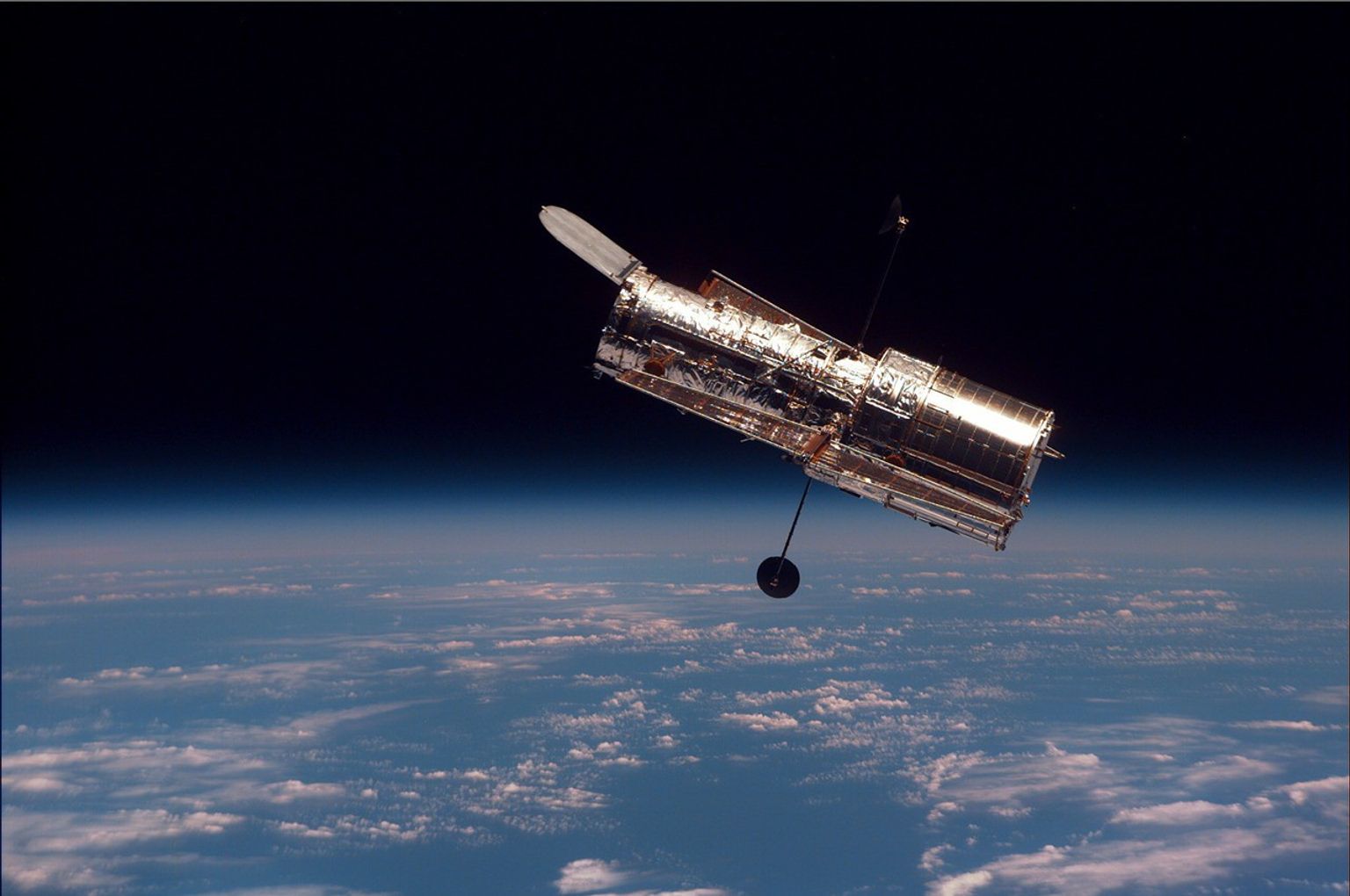
NASA Explores Potential Commercial Servicing for Hubble Telescope (opens the original)
NASA issued a Request for Information Oct. 29 to learn more about industry capabilities for in-space servicing to support the agency’s Hubble Space Telescope.
-
Massive sinkholes open up across Turkey as it struggles with drought and climate change
As Turkey prepares to host Cop31, the massive global conference on environmental issues, it is also being confronted with a dangerous sinkhole problem.
-
Predicting when each HFIR nuclear fuel cycle ‘turns off’ (opens the original)
Researchers from the High Flux Isotope Reactor (HFIR) at the Department of Energy’s (DOE) Oak Ridge National Laboratory (ORNL) have developed an advanced predictive software tool that forecasts the date and time of day when each HFIR reactor operating cycle will exhaust its uranium fuel supply – with an accuracy of…
-
Why it could be a bad idea to get AI to flirt for you
Choosing your own words can reveal how you really feel about a person or situation.
-
Physicists created a tiny universe and watched time emerge without a clock (opens the original)
Scientists have created a miniature universe in the laboratory that could help answer one of the biggest mysteries in physics: What is time, and where does it come from? Using 24,000 ultracold atoms, a University of Birmingham researcher built an isolated quantum system that repeatedly expands and…
-
The asteroid killed the dinosaurs. Why did crocodiles survive? (opens the original)
Scientists may have solved a 66-million-year-old mystery: how crocodiles survived the asteroid that wiped out the dinosaurs. A sweeping analysis of fossils and ancient climates suggests that their preference for warm environments placed them in tropical refuges that remained habitable even after…
-
A computer scientist breaks through a limit that stood since 1996 (opens the original)
A computer scientist has achieved a breakthrough in a nearly 25-year-old problem involving how computers calculate distances across enormous networks. The new algorithm delivers more reliable estimates for closely connected points without sacrificing speed, overcoming a longstanding limitation of…
-
Hubble reveals a stunning twist in how the universe emerged from darkness (opens the original)
A surprising discovery by astronomers using the Hubble Space Telescope is challenging a leading explanation for how the early universe emerged from a dense fog of hydrogen roughly 13 billion years ago. Scientists once believed powerful winds from exploding stars helped radiation escape galaxies…
-
Astronauts just gave the International Space Station a powerful upgrade (opens the original)
Two astronauts completed a 7-hour, 11-minute spacewalk to install a new solar array on the International Space Station, bringing NASA one step closer to a major power upgrade. Once the final array is installed on November 5, the station will have up to 30% more available power, supporting critical…
-
Scientists confirm global warming is accelerating faster than ever recorded (opens the original)
Earth is warming faster than ever recorded, with scientists detecting a major acceleration in global temperatures since around 2015. A new study reveals that the warming rate has surged to approximately 0.35°C per decade, nearly double the average pace observed from 1970 to 2015. After removing…
-
A mysterious star system just 16 light-years away may be hiding habitable planets (opens the original)
Astronomers have solved a 170-year-old planetary mystery in a nearby two-star system, discovering that a mysterious wobble was caused by stellar activity rather than a giant planet. Although Jupiter-sized worlds have been ruled out in key regions, smaller, potentially habitable planets could still…
-
NASA discovers Jupiter’s invisible shield is more complex than Earth’s (opens the original)
NASA’s Juno spacecraft has discovered that Jupiter uses a surprisingly complex system of powerful plasma waves and multiple shock regions to defend against the solar wind. The findings reveal major differences between Jupiter and Earth and could help scientists understand the enormous shock waves…
-
Einstein's equations may explain the universe without dark energy (opens the original)
Mathematicians have uncovered what they argue is a fundamental flaw in the standard model of the universe, potentially challenging the need for dark energy. Their calculations suggest that the mathematical framework used to describe cosmic expansion is inherently unstable and that the universe…
-
128,000-year-old ice in Tibet could rewrite climate history (opens the original)
Ancient ice discovered high in Tibet may be more than 128,000 years old, preserving an extraordinary record of Earth's climate that scientists previously thought had been lost. The discovery reveals a rare glimpse into the last ice age and could reshape our understanding of how glaciers survive…
-
Scientists just broke a textbook rule of physics (opens the original)
Scientists have defied a long-standing rule of laser physics by generating X-rays with much higher energies than conventional theory predicts. The surprising discovery reveals how two electrons working together can overcome a previously accepted limit, opening new possibilities for quantum research.
-
Scientists discover a hidden oxygen reservoir deep inside Earth (opens the original)
Scientists have discovered that magma deep inside Earth can store surprising amounts of extra oxygen, potentially revealing a hidden contributor to our planet's oxygen-rich atmosphere. The findings suggest that ancient volcanic eruptions may have helped transform Earth's atmosphere billions of…











Read: The Conversation, CORDIS, ESO, NASA, ScienceDaily and the newsroom feeds of 756 institutions. Last read: today. Each story's date is its publisher's. Where the news comes from, and what each source allows.