Science news
Recent stories from university newsrooms, The Conversation, CORDIS, observatories and ScienceDaily, each sorted into the fields, countries and institutions it is about, and each linked to the original publisher. Narrow them below by subject, country, institution, source, words or period. A signed-in reader can follow any filtered view and be told when a new story matches it.
1,490 stories match these filters.
-
PhD defence: Asan Meera Sahib Haja Mohideen (opens the original)
Doctoral candidate Asan Meera Sahib Haja Mohideen will hold a trial lecture and defend his thesis for the degree Philosophiae Doctor (PhD) at the Faculty of Biosciences and Aquaculture, Nord University.
-
Healthy Ageing, Brain Health and Cretan Nutrition: Public Event in Heraklion on the 1st of November (opens the original)
An open interactive event dedicated to healthy ageing, cerebrovascular and brain health, the prevention of stroke and neurodegenerative diseases, and the contribution of the Cretan and Mediterranean diet to health and well-being will take place on Sunday, 1 November 2026, from 11:00 to 15:00, at the atrium of the…
-
Financial Incentives Nearly Double Quit Rates Among Underserved People Who Smoke in National Study (opens the original)
Henry Ford Health researchers highlight opportunity to connect tobacco treatment with lung cancer screening
-
Fueling the Healthcare Workforce: Adelphi Nursing Reports Strong Q3 NCLEX Performance (opens the original)
According to the U.S. Bureau of Labor Statistics, the nation will see nearly 180,800 openings for registered nurses annually through 2035, driven by retirements and an aging population. Meeting this demand head-on, the Adelphi University College of Nursing and Public Health is reporting strong third-quarter licensure…
-
McMaster researchers trace fatal Marburg virus outbreak in Ethiopia to animal spillover event (opens the original)
New research led by McMaster University has helped piece together the earliest days of the outbreak of Marburg virus, a deadly relative of Ebola, which appeared in Ethiopia last year. Genetic evidence suggests that the outbreak began with a single spillover from animals to humans, followed by rapid human-to-human…
-
McMaster discovery points to new weakness in the bacteria behind tuberculosis (opens the original)
Mycobacterium tuberculosis is a remarkably resilient organism. With complex DNA repair mechanisms that allow it to fix damage incurred from antibiotics, immune cells, and other stressors, the bacteria — which, as its name suggests, causes tuberculosis — is capable of withstanding particularly hostile conditions…
-
Not all antihistamines are the same – and some may affect your brain more than you think
Some allergy tablets make you sleepy and slow your reactions, others barely affect you. Here’s why – and what to check before you buy.
-
Q&A: A new SFU study offers insight on how to treat sarcopenia (opens the original)
There are several age-related conditions that are etched firmly in the public consciousness, such as diabetes, dementia, heart disease, cancer, osteoarthritis, to name but a few. But what about sarcopenia?
-
Triheptanoin (Dojolvi) approved to treat adults and children with a group of rare inherited disorders (opens the original)
MHRA approves triheptanoin to treat adult and paediatric patients with a group of rare inherited disorders.
-
Alcohol use held steady among cancer survivors (opens the original)
The drinking rate of adults who have had cancer has remained unchanged for nearly a decade, according to a new study by researchers at the WashU Brown School.
-
UAMS’ Arkansas Center for Women and Infants’ Health Making Inroads, Pushing Forward (opens the original)
| A lot has happened in the world of maternal and infant health in Arkansas since early 2025, when the Arkansas Center for Women and Infants’ Health at the University of Arkansas for Medical Sciences (UAMS) began implementing plans to reduce the state’s high rates of maternal and infant mortality. The center was…
-
Oncode’s Spotlight: Breast Cancer Awareness Month (opens the original)
Around 1 in 7 women develop breast cancer in their life. As we are closing the October Breast Cancer Awareness month , we reflect with three Oncode Investigators on their contribution to the scientific understanding, prevention and treatment of this disease.
-
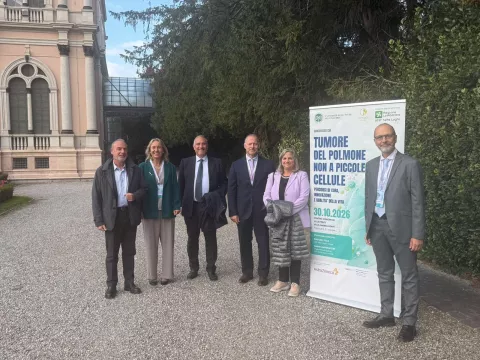
Non-small cell lung cancer: Insubria University and ASST Sette Laghi conference in Varese focuses on innovative care pathways (opens the original)
Ven, 30/10/2026 - 13:53 Paragrafo Non-small cell lung cancer: Insubria University and ASST Sette Laghi conference in Varese focuses on innovative care pathways More accurate diagnoses…
-
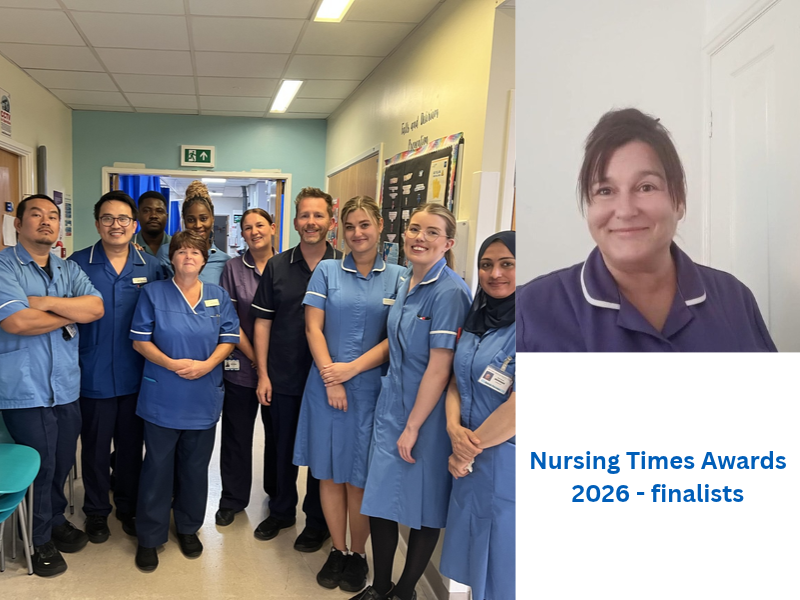
Our nursing team are finalists in national awards for specialist patient care (opens the original)
A focus on specialist patient care and improving patient recovery times are why two of our nursing teams were finalists in the prestigious Nursing Times Awards last night.
-
Florida Department of Health considers dropping 4 school vaccine requirements – here’s what that could mean for kids
Most parents of young children today haven’t experienced the devastating childhood diseases that used to be common before vaccines were developed.
-
Type 2 diabetes breakthrough as 54% achieve remission in just 6 months (opens the original)
A promising new study suggests that more than half of younger adults with type 2 diabetes could achieve remission in just six months through a combination of a low-calorie diet and structured exercise. Researchers found that 54% of participants under age 45 who followed an intensive diet and…
-
YSU students provide interpretation support to children from Gaza (opens the original)
Karine Arsenyan and Elina Voskanyan, students at the YSU Faculty of Oriental Studies, have volunteered as interpreters for children brought to Armenia from the Gaza Strip for medical treatment and their parents, helping the families communicate with medical staff.
-
Research aims to stop eye disease returning (opens the original)
Researchers will investigate whether hidden inflammation left behind after treatment could be behind repeated flare-ups and vision loss.
-
Can creatine help your mental health? Here’s what the latest evidence says
The brain needs a lot of energy. Without a sufficient supply, mood and mental health may be affected.
-
Why some “lower-risk” childhood cancers turn deadly (opens the original)
Scientists have uncovered hidden aggressive cancer cells in children whose tumors were previously considered lower risk, revealing why some cases of rhabdomyosarcoma become unexpectedly deadly. The discovery could help doctors identify dangerous tumors earlier and develop personalized treatments…
-
New research challenges long-held beliefs about Robert Burns and Jamaica (opens the original)
A new UofG study provides the most detailed analysis to date of Robert Burns’s connections with Jamaica and relationship to the Atlantic slavery system.
-
Scientists discover why chronic back pain feels so personal (opens the original)
A surprising discovery at UC San Diego suggests that chronic lower back pain may become deeply embedded in the brain's sense of personal identity. Researchers found that movement-triggered pain activates a brain network associated with self-awareness and memories, even though ordinary acute pain…
-
A single brain signal may explain schizophrenia's most puzzling symptoms (opens the original)
Scientists have identified a weakened brain signal that may connect several seemingly unrelated symptoms of schizophrenia, including sensory processing difficulties, disorganized speech, and greater symptom severity. The surprising discovery could help explain the disorder's underlying mechanisms…
-
Six popular sugar substitutes linked to faster brain aging (opens the original)
A study of nearly 13,000 adults found that people consuming the most artificial sweeteners experienced a 62% faster decline in memory and thinking skills, equivalent to approximately 1.6 additional years of brain aging. Six popular sweeteners were linked to faster cognitive decline, raising…
-
Less than 42 minutes of bright daylight linked to higher dementia risk (opens the original)
Getting more daylight could be linked to a surprisingly powerful benefit for brain health. In a study of more than 87,000 adults, researchers found that higher daytime light exposure was associated with a 16% lower risk of dementia, with longer exposure to bright light linked to even greater…
-
Scientists discover that cranberry juice may help fight tooth decay (opens the original)
Cranberry juice may offer an unexpected benefit beyond its reputation for helping prevent urinary tract infections: protecting teeth from decay. Researchers at the University of Illinois Chicago discovered that pure, unsweetened cranberry juice slowed the regrowth of dental plaque bacteria and…
-
Your blood pressure could be dangerous even when your numbers look normal (opens the original)
Researchers have discovered a small group of brain cells that prevents dangerous blood pressure swings, even when average readings appear normal. The finding reveals a hidden source of cardiovascular risk and could open the door to new treatments that protect the heart and brain.
-
Scientists discover a hidden reason why muscles weaken with age (opens the original)
Scientists have uncovered a hidden defense mechanism in aging muscles that sacrifices strength to protect cells from damage. In mice, partially restoring a crucial molecule reversed signs of muscle wasting and prevented premature death, raising hopes for new treatments for age-related muscle…
-
A single sauna session sends immune cells surging through your body (opens the original)
A new Finnish study reveals that just 30 minutes in a sauna can temporarily flood the bloodstream with additional white blood cells, potentially helping the immune system patrol the body and detect threats. The surprising response resembles the immune boost seen during exercise and may help…
-
NASA’s Artemis I mission reveals surprising radiation levels near the Moon (opens the original)
NASA’s Artemis I mission has revealed that cosmic radiation near the Moon is higher than in Earth orbit, but not by as much as scientists might expect. Tiny experimental detectors also uncovered surprising details about how radiation passes through the human body, offering valuable insights for…
-
A simple daily fiber supplement reduced arthritis pain and improved strength (opens the original)
A new clinical trial suggests that a simple daily fiber supplement could significantly reduce knee osteoarthritis pain, improve muscle strength, and make the body less sensitive to pain. Researchers discovered that the benefits may be linked to changes in gut bacteria and the hormone GLP-1…











Read: The Conversation, CORDIS, ESO, NASA, ScienceDaily and the newsroom feeds of 756 institutions. Last read: today. Each story's date is its publisher's. Where the news comes from, and what each source allows.