Science news
Recent stories from university newsrooms, The Conversation, CORDIS, observatories and ScienceDaily, each sorted into the fields, countries and institutions it is about, and each linked to the original publisher. Narrow them below by subject, country, institution, source, words or period. A signed-in reader can follow any filtered view and be told when a new story matches it.
3,082 stories match these filters.
-
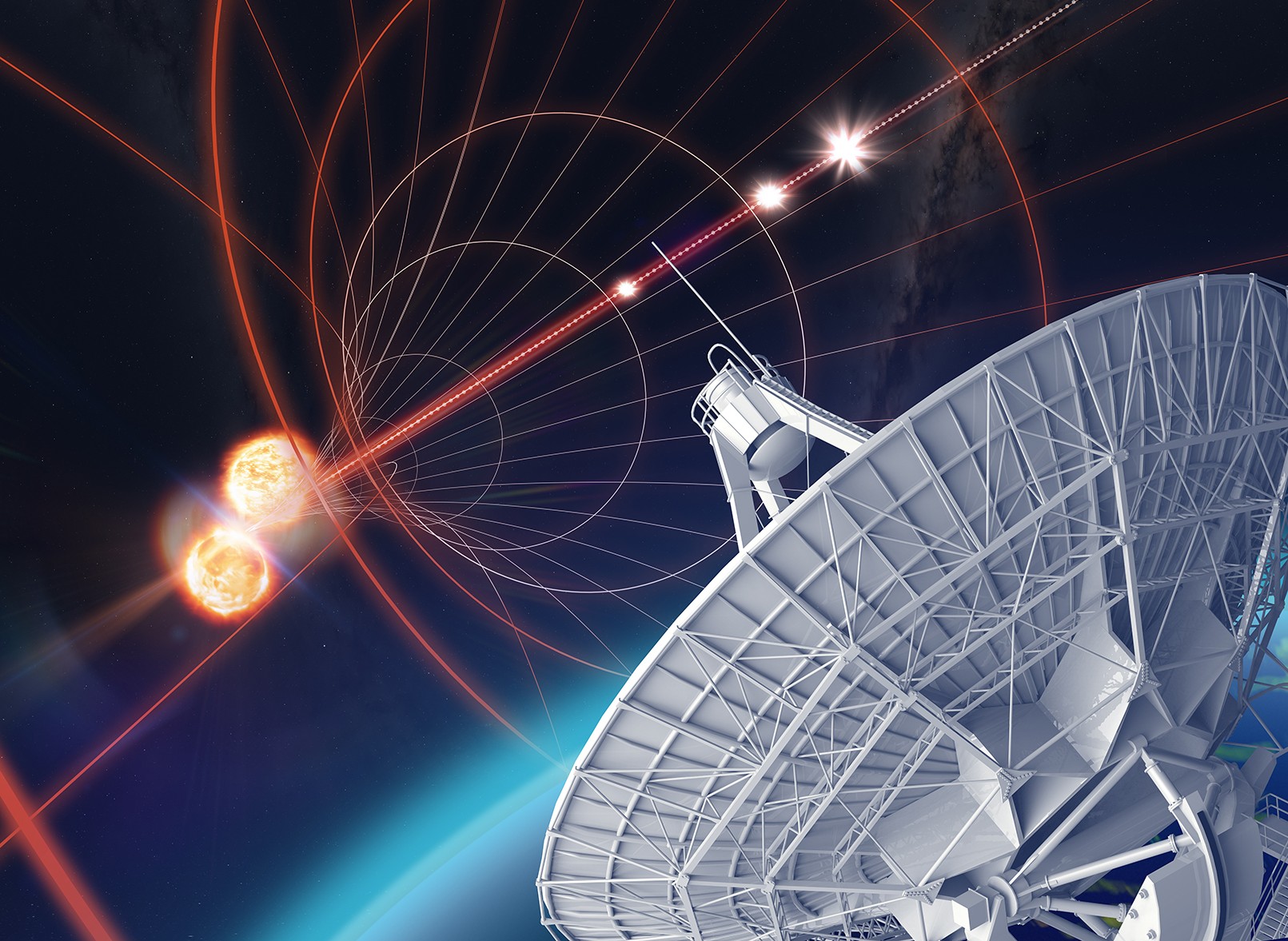
New measurement brings us closer to understanding the Universe’s rate of expansion (opens the original)
Researchers have used gravitational waves from a neutron star collision to make a new measurement of the Universe’s expansion rate, offering new insight into the long-standing Hubble tension.
-
Not all green space is equal: New framework highlights overlooked ecological factors in nature prescribing (opens the original)
A new study led by Swansea University argues that the health benefits of nature-based healthcare may depend not only on access to green space, but also on the biodiversity and ecological quality of the environments involved.
-
South Africa’s move to renewable power is complex, but clearing 5 bottlenecks would speed it up
South Africa is struggling to move to renewable energy because of: Eskom’s dominance, weak planning, a poor grid, failing municipal networks and unused solar.
-
UW against light pollution (opens the original)
The UW Rector’s Team for Ecology and the Climate Change has recommended the use of lighting fixtures with a warm colour temperature not exceeding 2700 K in the University of Warsaw’s outdoor areas. This is the result of the work carried out by the working group on light pollution. “The University of Warsaw is…
-
Shark-spotting drones are about reassurance – not full protection
NSW will soon have the world’s largest shark-spotting drone program. But spotting doesn’t necessarily translate to protection.
-
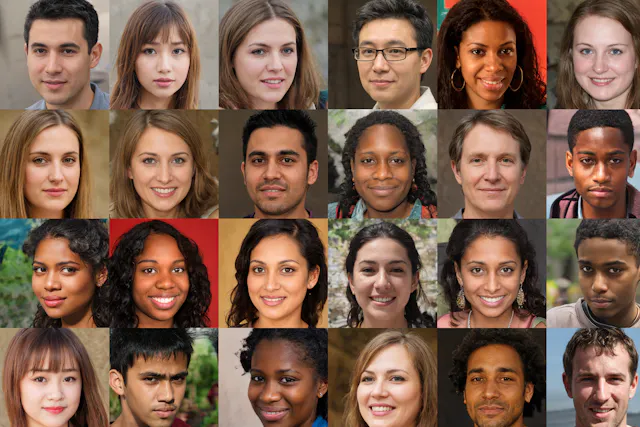
People can learn to spot AI faces – but the clues are no longer obvious
AI-generated faces don’t look weird anymore – they’re ‘hyperaverage’, which is a giveaway to the trained eye.
Picture: Nightingale / OSF, CC BY
-
Could AI create a new form of inequality in South Africa?
If AI is not designed properly, inequalities can reappear in new, digital forms.
-
Is the Pope’s AI encyclical a warning on Tech Messianism?
We are living in a world backed by technology that seems to have a spiritual project of its own. Are the fears of the Pope’s AI-critical encyclical founded?
-
As Route 66 turns 100, what is it that we’re actually celebrating?
The ‘Mother Road’ has long symbolized freedom and reinvention. But its history reveals a more complicated story shaped by migration, segregation and the highways that eventually circumvented it.
-
Can you make a black hole in a laboratory?
An astronomer explains why artificial black holes are pure science fiction – at least for now.
-
Can climate shocks change how people feel about paying taxes?
Citizens don’t just respond to disasters. They also respond to how governments manage them.
-
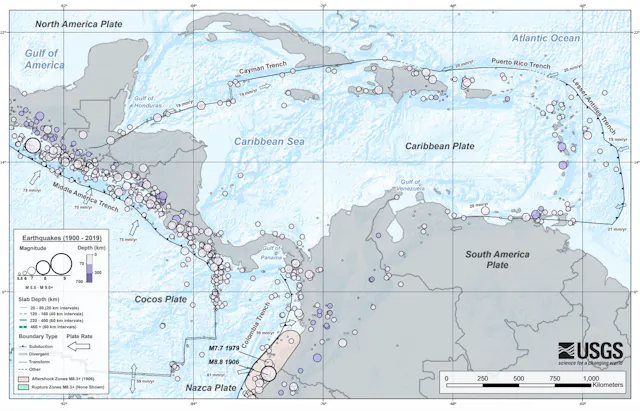
Venezuela’s deadly earthquakes happened on a fault similar to the San Andreas, and the risks aren’t over yet – a geophysicist explains
Both faults are along plate boundaries that move in similar ways and have ruptured in enormously destructive earthquakes in the past.
Picture: U.S. Geological Survey
-
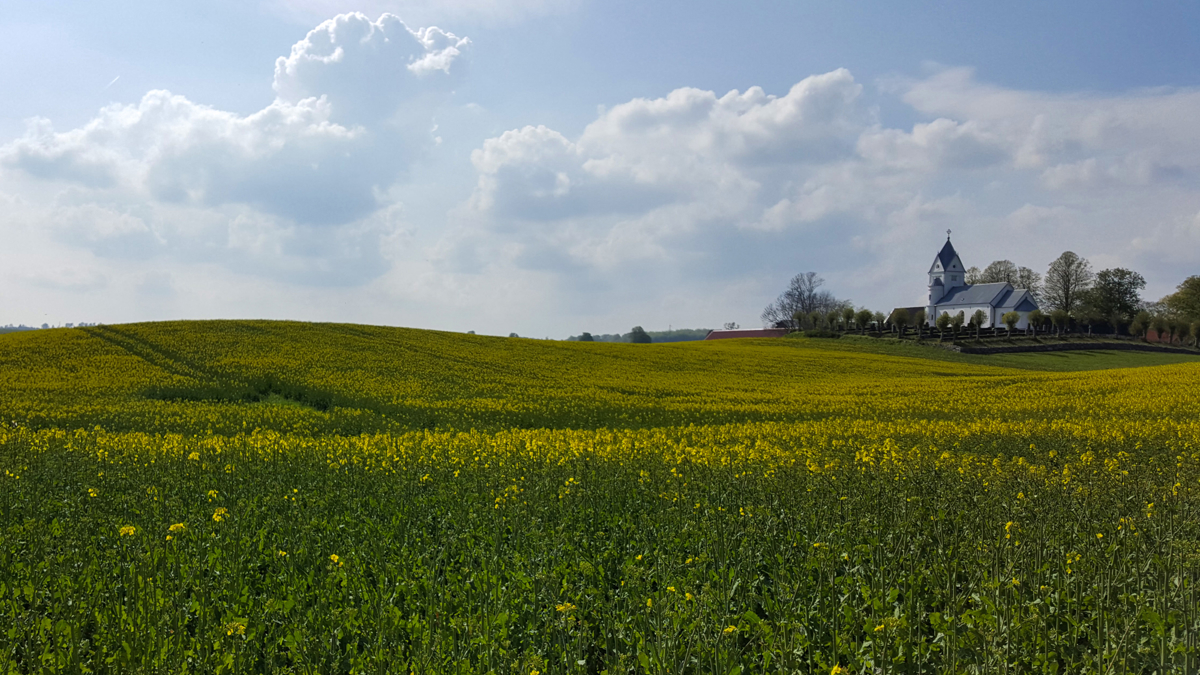
Not just meadows and pastures – arable fields can also support rich biodiversity (opens the original)
Permanent grasslands are widely recognised as key habitats for biodiversity in agricultural landscapes. However, a new study shows that arable land can also support surprisingly rich communities of plants and insects. But these habitats are threatened by agricultural intensification.
-
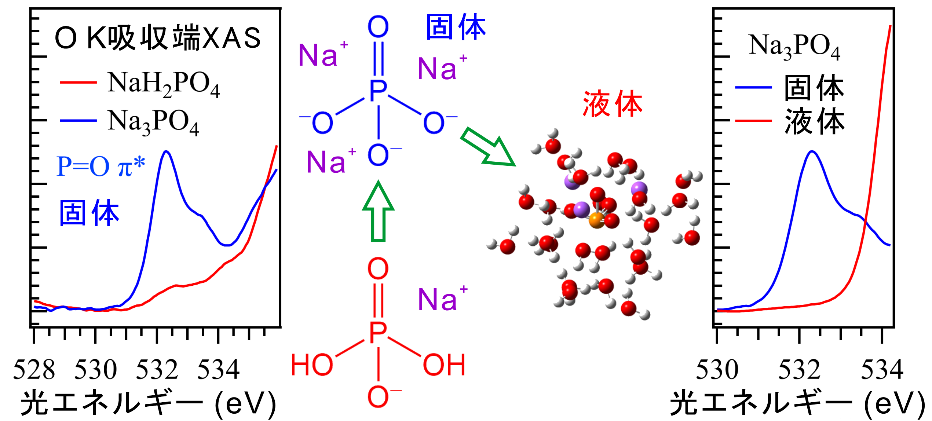
Double-bond character of phosphates in solid and liquid phases probed by oxygen K-edge X-ray absorption spectroscopy (opens the original)
The Institute for Molecular Science, National Institutes of Natural SciencesThe Graduate University for Advanced Studies, SOKENDAIHigh Energy Accelerator Research Organization, KEK The double-bond character of phosphates in solid and liquid phases was investigated using the P=O π* peaks in oxygen K-edge X-ray…
-
Why was the early Earth so hot? The heat wasn’t just coming from the inside
Battered by asteroid impacts, the young Earth was hot and unstable for hundreds of millions of years.
Picture: Pexels/James Lee
-
Other nations thirst for Ukraine’s drone success — but they need a culture shift first
While many countries will try to copy Ukraine’s successful drone tactics, technology isn’t enough. A military must first build a culture capable of maximizing the potential of drones.
-
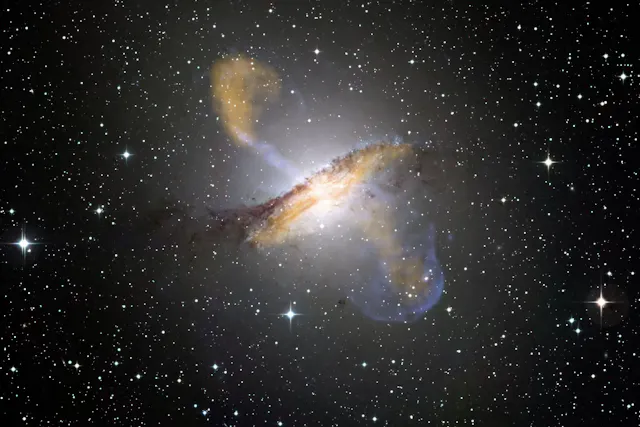
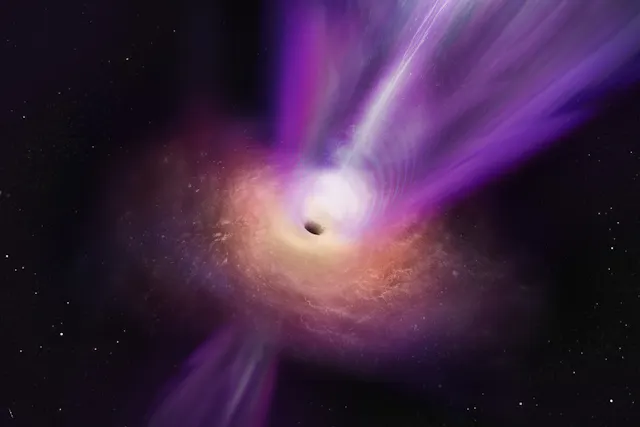
What are supermassive black holes? Everything you need to know – and what astronomers are still learning – about these mysterious objects
Black holes are a mainstay in sci-fi movies. How do these massive black holes, spread throughout our universe, actually work in real life?
-
Patrick Farrell awarded Germund Dahlquist Prize (opens the original)
Patrick Farrell has been awarded the 2025 Germund Dahlquist Prize by Society for Industrial and Applied Mathematics (SIAM) in recognition of outstanding contributions to the numerical solution of differential equations and numerical methods for scientific computing.
-
New blueprint for exotic quantum states (opens the original)
Researchers led by Francesca Ferlaino and Luca Barbiero have developed a new theoretical model for ultracold magnetic atoms in a one-dimensional quantum structure, revealing seven exotic phases of matter. Most remarkably, one phase combines topological order and superconductivity, with potential…
-
Was Venezuela struck by an earthquake ‘doublet’? Here’s what we know so far
The two deadly earthquakes happened just 39 seconds apart, but were seismologically distinct.




Read: The Conversation, CORDIS, ESO, NASA, ScienceDaily and the newsroom feeds of 734 institutions. Last read: today. Each story's date is its publisher's. Where the news comes from, and what each source allows.