Science news
Recent stories from university newsrooms, The Conversation, CORDIS, observatories and ScienceDaily, each sorted into the fields, countries and institutions it is about, and each linked to the original publisher. Narrow them below by subject, country, institution, source, words or period. A signed-in reader can follow any filtered view and be told when a new story matches it.
3,075 stories match these filters.
-
New laws in Victoria target online trolls and harmful tech designs. How will they work?
The Victorian government says the new laws are ‘nation leading’. But there are several points of concern to address.
Picture: Atlantic Ambience/Pexels
-
USask signs MOU for community, environmental, sustainability research and education (opens the original)
The University of Saskatchewan (USask) is home to world-leading environmental and sustainability research, and the formalizing of an exciting partnership in Saskatchewan will
-
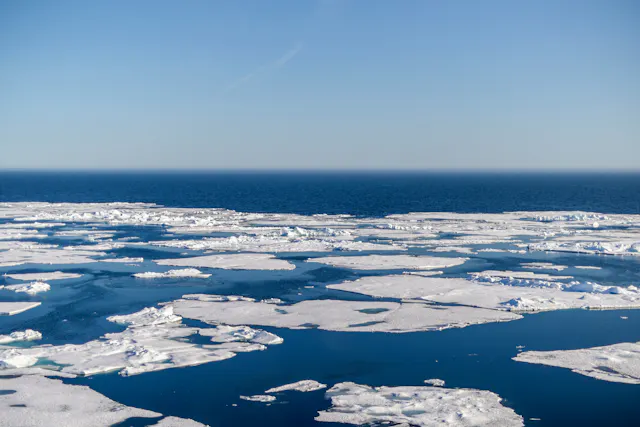
Arctic sea ice decline seemed to be slowing – until two record-breaking low-ice winters
New research shows Arctic winter sea ice loss has not stopped – it was temporarily hidden by natural variability.
-
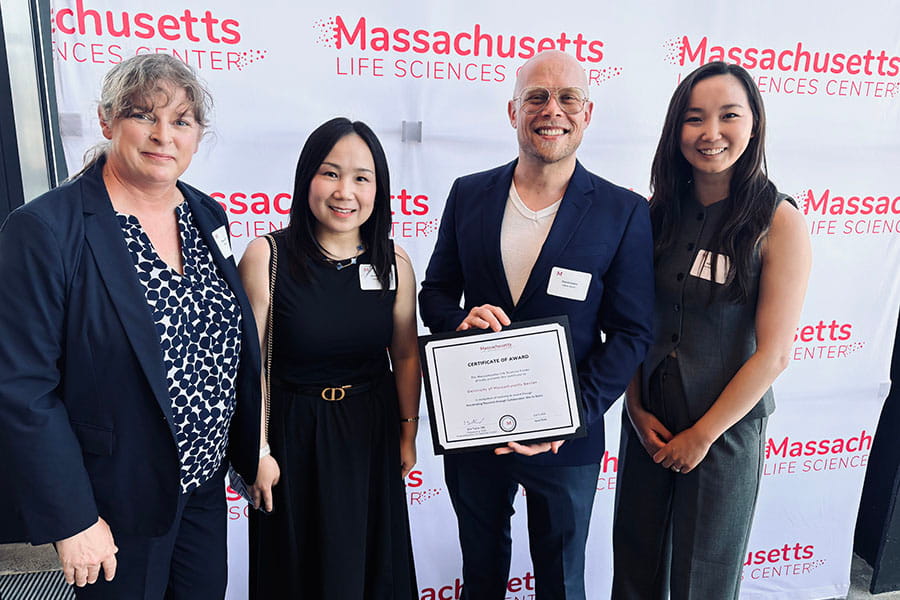
AI Researcher Receives $745K Bits to Bytes Award from Massachusetts Life Sciences Center to Create the World’s Largest Annotated Spleen Ultrasound Dataset (opens the original)
Principal Investigator (PI) Daniel Haehn, PhD, director of UMass Boston’s Artificial Intelligence (AI) Research Core Facility and an associate professor of computer science, will lead SPLEEN-US: Open Annotated Spleen Ultrasound Dataset for Precision Neuromodulation.
-
How hot does it get in the desert? A climate scientist explains its blazing heat
Death Valley set a record when the temperature reached 134 degrees Fahrenheit. Here’s why deserts can reach such scorching temperatures – and also very cold ones.
-
MGU to Develop Advanced Mobile Air Quality Monitoring System for Emergencies (opens the original)
A university that is truly connected to society has a responsibility to understand the changing needs of society and respond with knowledge, innovation, and timely action. With this vision, Mahatma Gandhi University, Kerala is taking an important step towards protecting public health by developing an Advanced Mobile…
-
Stop policing AI in the classroom, start teaching it
Universities’ crackdown on the use of AI misses the point. They should instead teach it as a vital productivity tool, undepinned by ethics.
-
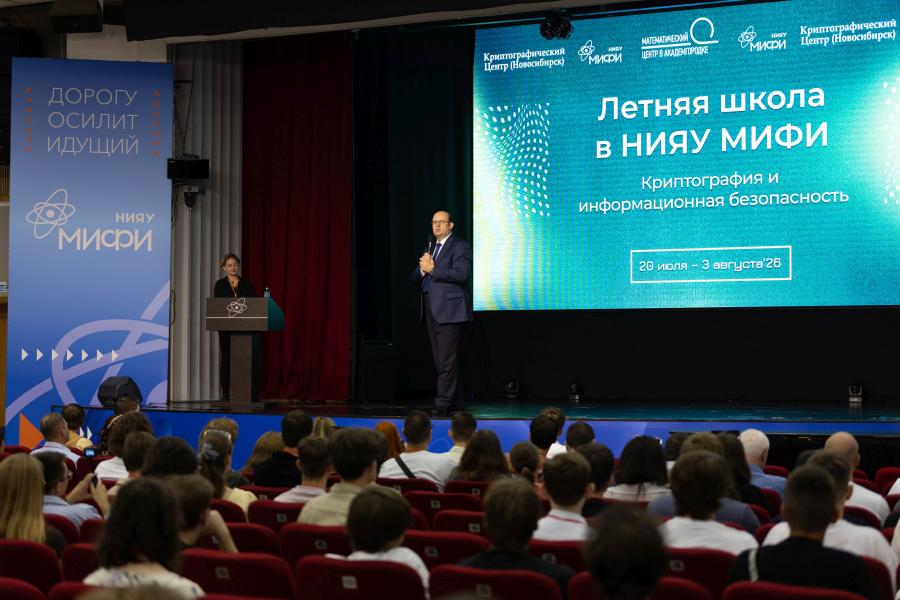
The summer school "Cryptography and Information Security" has started at MEPhI (opens the original)
From July 20 to August 3, the summer school-conference "Cryptography and Information Security", organized by the Cryptographic Center of Novosibirsk and the International Mathematical Center in Akademgorodok, will be held on the basis of the Moscow site of the National Research Nuclear University MEPhI. The event…
-
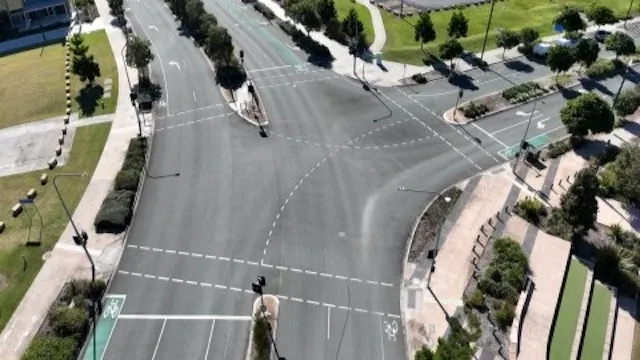
New trial of AI-powered traffic lights will be a test for who gets priority on public roads
Australia’s first AI traffic-light trial could cut delays. It also raises hard questions about fairness, safety and who gets priority on public roads.
Picture: Moreton Bay City Council, CC BY
-
Where do the world’s biggest diamonds come from? Geology now has answers
Studying the mineral olivine in kimberlite sheds some light on diamond origins.
-
Why AI’s environmental footprint won’t disappear into orbit
Proposals to put data centres in space have many hidden costs.
Picture: Nasa / US DoE / Satellite Power System (SPS) Concept Development and Evaluation Program Plan, 1978.
-
Why Trump’s move to gut the Endangered Species Act likely won’t hold up in court
If Congress didn’t believe habitat destruction and degradation constitute ‘harm’ under the statute, why would it require permits and plans to offset habitat loss?
Picture: Under the Same Moon/Flickr, CC BY
-
In hot water: what happens to marine life during heatwaves
The full picture of potential consequences of the UK’s marine heatwaves is only just starting to emerge.
-
The Large Hadron Collider is being upgraded so that it can unlock the secrets of the Higgs boson
Major upgrade works may allow the LHC to uncover signs of new physics.
-
UMass Boston Receives Decarbonization Grant for Renewable Seawater Heating System (opens the original)
With $5.3 million in funds from the Massachusetts Department of Energy Resources, the university will be able to implement innovative decarbonization efforts utilizing its harborside location.
-
New DNA research sheds light on the biological history of the Shroud of Turin (opens the original)
New research has uncovered the complex biological history preserved within DNA traces found on the Shroud of Turin, offering fresh insights into one of the world’s most studied and debated historical artefacts. Published in Scientific Reports, the study is the first to apply advanced genomic sequencing methods…
-
Minister McGuinty to make an important energy efficiency announcement at CHEO (opens the original)
The Honourable David J. McGuinty, Minister of National Defence, on behalf of the Honourable Julie Dabrusin, Minister of the Environment, Climate Change and Nature, will make an important energy efficiency announcement at CHEO, a globally renowned health institution in Ottawa. He will be joined by Dr. Vera Etches…
-
Tahoe State of the Lake Report Released (opens the original)
The University of California, Davis, Tahoe Environmental Research Center (TERC) today released its “Tahoe: State of the Lake Report 2026” which presents data from 2025 in the context of the long-term record. The report provides an annual update for non-scientists on the Lake Tahoe Basin’s ecological health. It…
-
Virtual Birds Challenge Assumptions About Pigeon Navigation (opens the original)
As a part of his PhD research at UMass Boston, Shoubhik Banerjee used geospatial data from homing pigeons to see what strategies they used to navigate their way home and found that it may not be as complex as researchers had assumed.
-
Africa’s Greater Horn region is facing a looming polycrisis fueled by conflict, prices, climate and disease
The response to the many problems facing the region has been set back by cuts in humanitarian aid.





Read: The Conversation, CORDIS, ESO, NASA, ScienceDaily and the newsroom feeds of 734 institutions. Last read: today. Each story's date is its publisher's. Where the news comes from, and what each source allows.