Science news
Recent stories from university newsrooms, The Conversation, CORDIS, observatories and ScienceDaily, each sorted into the fields, countries and institutions it is about, and each linked to the original publisher. Narrow them below by subject, country, institution, source, words or period. A signed-in reader can follow any filtered view and be told when a new story matches it.
3,063 stories match these filters.
-
Anthropic’s fight with the Pentagon shows how AI could threaten a crucial safeguard of democracy
What happens to democracy when the independent people capable of resisting abuses of power are replaced by systems designed to make those abuses easier?
-
We asked ChatGPT, Claude and Perplexity for financial advice: what we got was practical, but with big blind spots
AI is a powerful tool for financial fact-finding and brainstorming. But for now it can’t replace the human element.
-
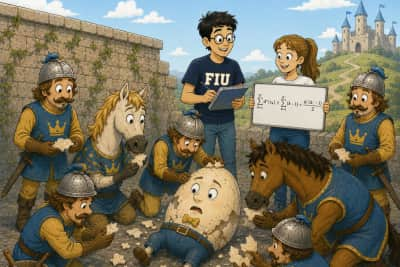
Can math prove that Humpty Dumpty was simply mismanaged? (opens the original)
New research from FIU math student seeks to answer how much is enough to guarantee success.
-
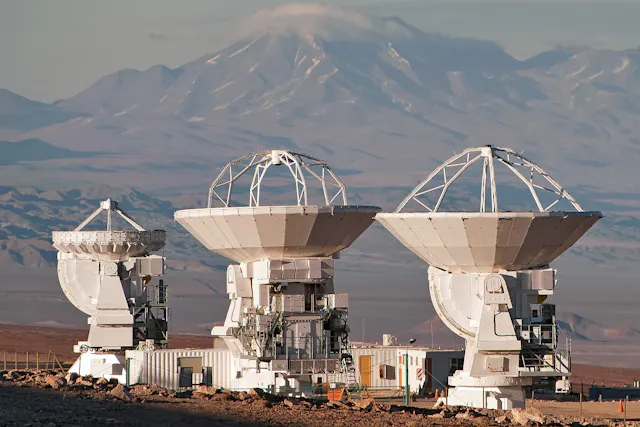
Radio telescopes help scientists map molecules in space and uncover where and how stars form
Interstellar maps can help scientists find patterns that tell them about fundamental chemical processes in the cosmos.
Picture: J.F. Salgado (ESO), CC BY
-
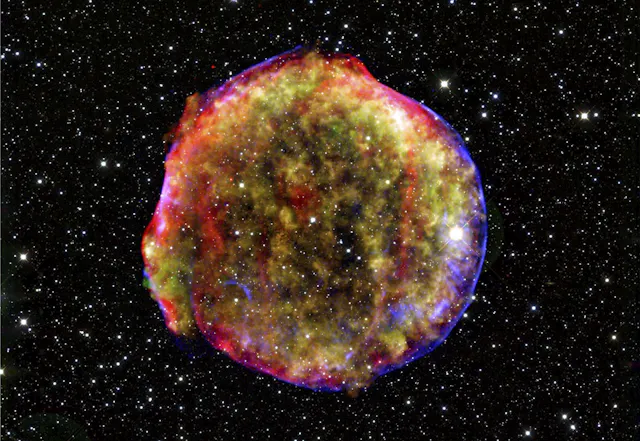
The death of dark energy is a false alarm – the universe is still accelerating
A recent paper claimed that dark energy might not exist. But new research suggests this conclusion was premature.
Picture: Nasa / JPL-Caltech / CXC / Calar Alto O. Krause /MPIA
-
Federal Environment Minister Carsten Schneider is exploring the River Gera with members of the public (opens the original)
The FLOW project, run by the University of Jena, the UFZ and iDiv, combines scientific water monitoring with voluntary work
-
Ancient forests took 100,000 years to recover from the last global warming period similar to today – Wyoming fossils reveal what happened
Understanding what happened in these forests 56 million years ago may help humanity recognize similar thresholds before we cross them again, the lead author of a new study writes.
-
Why AI training can backfire for older workers
For older employees already experiencing burnout, poorly designed or poorly timed training can become an additional job demand rather than a solution.
Picture: (Unsplash)
-
Huskie Trek Talks: NIU’s quantum leap (opens the original)
As a collaborator in the Midwest “quantum prairie” and the Chicago Quantum Exchange, Northern Illinois University is helping advance quantum technology.
-
A new class of metals could transform Africa’s clean energy economy – scientists explain
Storing hydrogen in metallic materials is a promising avenue for extracting value from Africa’s minerals.
-
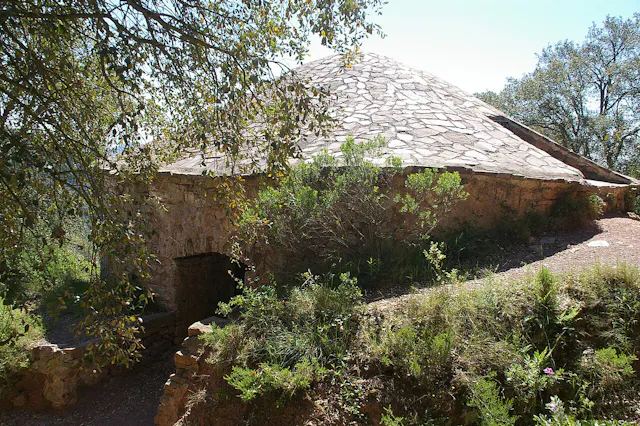
Wildfire-damaged historic buildings may not be as ruined as they appear, but saving them means acting fast
The damage is sometimes only centimeters deep. Three engineers explain the colors of burned masonry and other signs preservationists look for amid another destructive fire year.
Picture: Jrpuig/Wikimedia Commons, CC BY-SA
-
An AI agent spent your money – can anyone prove you authorized it?
AI agents cross company boundaries, but proof of their authority often does not. When they overstep, no single record shows what the user allowed.
-
Plans revealed for new £500m centre for advanced ceramics research based at Keele (opens the original)
Plans have been unveiled for a new £500 million advanced ceramics research facility by international technology company Lucideon, with a site at Keele University earmarked for the development.
-
Innovation, Invention and Impact: NJIT Undergrads Present Summer Research (opens the original)
NJIT undergraduate researchers had just three minutes each to explain 10 weeks of work. In rapid succession, students took the stage in the Campus Center Ballroom to describe projects spanning bioscience, bioengineering, materials, sustainability, artificial intelligence, robotics and data science. A panel of judges…
-
DNA origami illuminates invisible molecular movements (opens the original)
LA JOLLA—Scientists often describe life as a series of chemical reactions. Pallav Kosuri, PhD, describes life as movement. Chemical reactions are how you drive the movement of atoms, proteins, cells, and bodies—without movement, there is no life .
-
Research at Minus 269 Degrees Celsius for the Quantum Computing of the Future (opens the original)
The new “Cryo-Lab for Materials and Electronics Packaging Chemnitz” (CRYME) enables the study of materials and systems for quantum computers at extremely low, so-called cryogenic temperatures
-
NZ wants a high-tech future. Its proposed physics curriculum may make that harder
The government wants a knowledge-rich physics curriculum, but packing in too many topics without a clear order could backfire.
-
MEPhI scientists have discovered the mechanism of transformation of a two-dimensional diamond into a semiconductor (opens the original)
Researchers from the National Research Nuclear University "MEPhI" have studied the properties of a unique two-dimensional material — diamane. According to the authors, the results obtained open the way to the creation of hybrid materials for nanoelectronics of the future. Diamane is essentially a "two-dimensional…
-
UofL AI Software Licensed to Improve Blood Cancer Testing (opens the original)
Researchers at the University of Louisville have developed an artificial intelligence-powered software platform designed to assist clinical laboratories in detecting conditions that may lead to certain types of blood cell cancer.
-
Concordia research could help improve aircraft engine durability (opens the original)
A new self-repairing coating promises to make gas turbines more reliable and longer lasting




Read: The Conversation, CORDIS, ESO, NASA, ScienceDaily and the newsroom feeds of 734 institutions. Last read: today. Each story's date is its publisher's. Where the news comes from, and what each source allows.