Science news
Recent stories from university newsrooms, The Conversation, CORDIS, observatories and ScienceDaily, each sorted into the fields, countries and institutions it is about, and each linked to the original publisher. Narrow them below by subject, country, institution, source, words or period. A signed-in reader can follow any filtered view and be told when a new story matches it.
3,061 stories match these filters.
-
Chapman Study Finds Some Orange County Schools Face Extreme Heat Risks (opens the original)
As Southern California faces more frequent and intense heat waves, a new Chapman University study finds that some students may be spending their school days on campuses that become dangerously hot during extreme heat events. Researchers found that outdoor surfaces at some Orange County public schools reached nearly…
-
Photo Release: Webb reveals stunning panorama of star formation (opens the original)
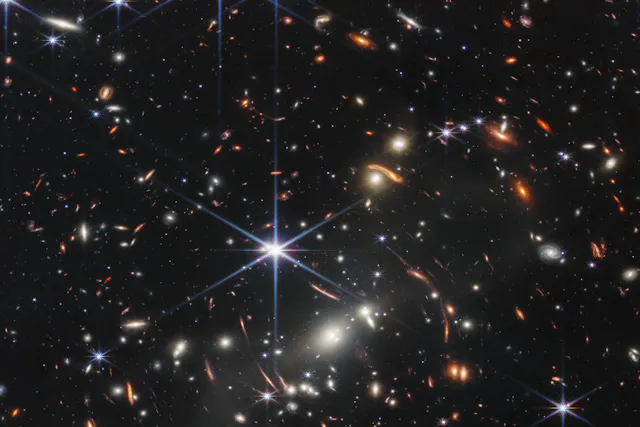
This starry view of the nearby star-forming region IC 348 is one of the largest images from the NASA/ESA/CSA James Webb Space Telescope released to the public so far. Using Webb, astronomers searched IC 348 for brown dwarfs, which are less massive than the smallest stars. The researchers discovered brown dwarfs just…
-
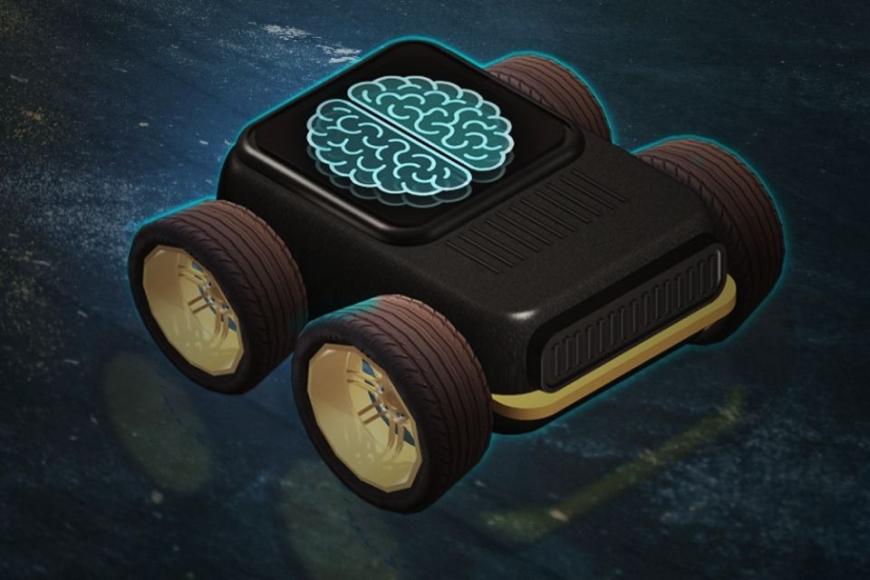
No, AI systems don’t have a drive to survive – a developmental psychologist explains why it only looks that way
In tests, some AI systems resisted being shut down. But an instinct to stay “alive” isn’t the reason they behaved that way.
-
DTU Launches Two AI Products for Education (opens the original)
On September 12, DTU unveiled two artificial intelligence products independently researched and developed by its team: HeyDT, an intelligent interactive AI assistant, and DTU AI Exam Hub,
-
Hot new dataset focuses on human health (opens the original)
Heat stress is a leading cause of weather-related deaths and can be especially dangerous in cities where phenomena like urban heat islands drive temperatures higher than surrounding rural areas. Now a new dataset developed by the U.S. National Science Foundation National Center for Atmospheric Research (NSF NCAR)…
-
Robotics meets physics (opens the original)
Researchers at Oxford’s Department of Physics have demonstrated a new way to control a robot using brain-inspired computing hardware based on physical waves.
-
Robotics meets physics (opens the original)
Researchers at Oxford’s Department of Physics have demonstrated a new way to control a robot using brain-inspired computing hardware based on physical waves.
-
Robotics meets physics (opens the original)
Researchers at Oxford’s Department of Physics have demonstrated a new way to control a robot using brain-inspired computing hardware based on physical waves.
-
Global business giant Bloomberg showcases DMU's innovative use of data streams. (opens the original)
Global business giant Bloomberg makes a showcase of DMU's innovative use of its vast resources.
-
Our new research shows humans have maligned bandicoots for decades, making them more vulnerable to extinction
Humans have had a complex relationship with this marsupial, known for its pointy snout, thin tail and large hind feet.
-
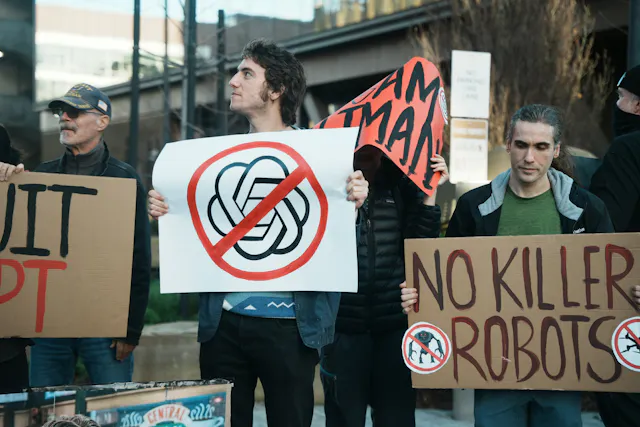
Cyber attacks? Bioterrorism? To ‘Pace the Frontier’ of AI effectively, we must improve our anticipatory thinking
Anthropic CEO Dario Amodei argues for slowing the pace of AI development globally. We must use this time to learn how to anticipate, and test for, future threats.
Picture: (Unsplash/Nathan Kuczmarski)
-
Podcast: Creating thermal cloaking and new structures (opens the original)
Shelly Zhang, an NSF-supported researcher, discusses her work using additive manufacturing and topology optimization to create new structures, including a 3D thermal cloaking device
-
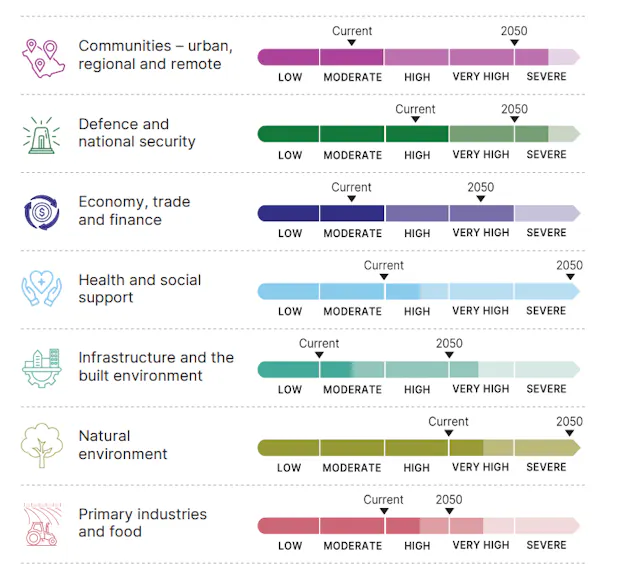
It’s been one year since Australia assessed its national climate risk. But have we listened?
Over the past 12 months, the federal government has approved multiple fossil fuel projects and cut climate science funding.
-
Unsustainable – or manageable? We don’t yet know how data centres will impact Australia’s environment
The data centre boom will mean more energy and water use. The real question is how the energy is produced – and where the water comes from.
-
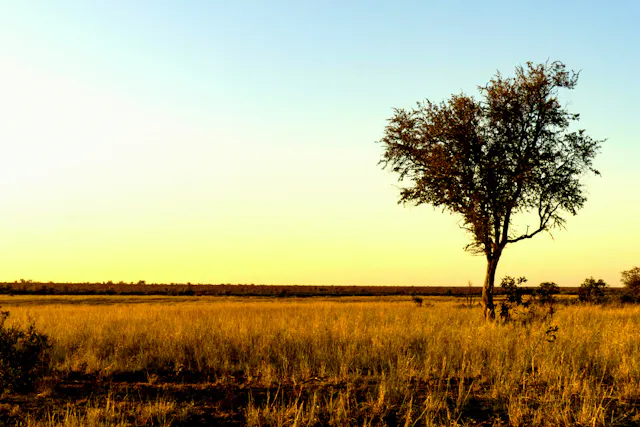
Planting trees in the wrong places is not a climate solution
Global tree-planting campaigns can harm natural drylands. Effective climate restoration must work within dryland ecosystems, not seek to replace them.
Picture: (Javier Puig Ochoa), CC BY
-
Chemists uncover how unthinkable reactions occur in unimaginable conditions (opens the original)
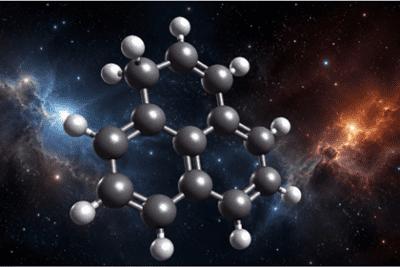
FIU chemists reveal how complex organic molecules can form in the far reaches of space.
-
Physicists zoom into the birth of cosmic rainstorms with new CERN study
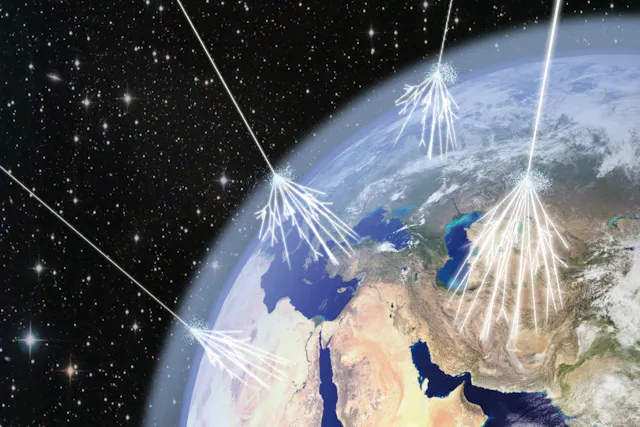
Scientists recreated cosmic rays in a massive underground particle collider.
Picture: Thomas Bergauer/Flickr, CC BY-NC-ND
-
Wildfire strategy doesn’t need a winner – with 3 camps fighting for dominance, the system can’t keep up with the risk
Wildfire strategy tends to break into three distinct camps today, each focusing heavily on one approach over the others. Successful management requires them all.
-
NASA’s Roman Space Telescope will use gravity as a magnifying glass to find distant planets
Massive objects bend light around them, a quirk that opens up unique opportunities for astronomical surveys.
Picture: NASA/STScI






Read: The Conversation, CORDIS, ESO, NASA, ScienceDaily and the newsroom feeds of 734 institutions. Last read: today. Each story's date is its publisher's. Where the news comes from, and what each source allows.