Science news
Recent stories from university newsrooms, The Conversation, CORDIS, observatories and ScienceDaily, each sorted into the fields, countries and institutions it is about, and each linked to the original publisher. Narrow them below by subject, country, institution, source, words or period. A signed-in reader can follow any filtered view and be told when a new story matches it.
2,232 stories match these filters.
-
OMRF receives $1.9 million to study cause of infertility, congenital disorders (opens the original)
Scientist's focus is a type of cell division that results in egg and sperm cells
-
When your child asks if they’ll be harmed like the people on the news, what do you say? Psychologists provide tips on how to talk about identity
Many children are seeing aspects of their identity portrayed as problematic. Having regular conversations about identity can armor them against future harm.
-
How the pro-nicotine ‘wellness’ movement rebranded an addictive drug
Nicotine products like pouches and patches are being promoted for cognitive enhancement, stress reduction, improved athletic performance and much more – with little scientific evidence.
-
Researcher Céline Wick Embraces the Potential of Traditional Medicine (opens the original)
This Emerging Leader Uses Indigenous-Centred Care to Support Health
-
Target identified in treatment of neuroHIV (opens the original)
UC Riverside-led study shows how a specific brain protein causes damage during long-term HIV infection
-
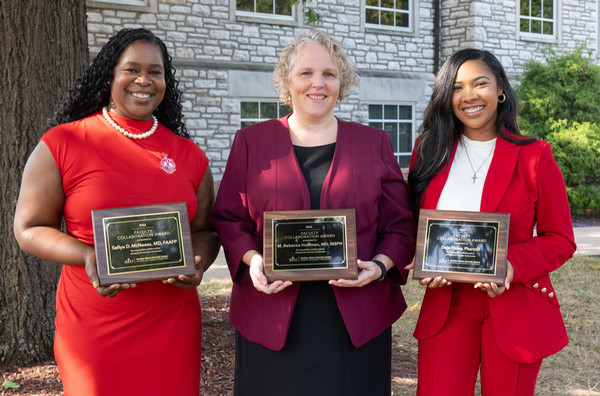
SIUE School of Pharmacy’s Deja Finley Honored with 2026 SIU System Faculty Collaboration Award (opens the original)
Deja Finley, PharmD, assistant clinical professor in the Southern Illinois University Edwardsville School of Pharmacy Department of Pharmacy Practice, has received the 2026 SIU System Faculty Collaboration Award for cross-campus work advancing health equity, interprofessional education and team-based patient care…
-
No, you’re not imagining it. Flu season is late and cases are up
There’s been a late rise of influenza A, mostly due to the ‘super K’ strain.
-
Message from the Minister of Health on World Alzheimer's Day (opens the original)
On World Alzheimer’s Day, the Minister raises awareness of dementia and highlights Canada’s latest national dementia strategy report and the authorization of two new treatments for mild cognitive impairment or early-stage Alzheimer’s disease.
-
IMMCG researchers uncover new immune mechanism in atherosclerosis (opens the original)
"Our study moves the field forward by identifying which sequences in a host protein cause CD8+ T cell mediated aberrant autoreactivity in CVD," says Payel Roy, PhD.
-
Making mental health chatbots more culturally sensitive won’t necessarily make them safer
Canadians are turning to AI mental health chatbots for support. But what if the bot agrees with the beliefs that are keeping you unwell?
-
Families provide dementia care. Why must they also be the air traffic controllers of the system?
Families are still expected to navigate disconnected health and community services on their own. A new report sets out what governments can do to change that.
-
FIU tackles Alzheimer's from every angle (opens the original)
Today is World Alzheimer's Day, which raises awareness of the disease and other forms of dementia. FIU researchers are contributing to the global scientific knowledge needed to discover a treatment.
-
Bone glue from Uppsala tested on patients (opens the original)
Over ten years ago, Håkan Engqvist and Philip Procter began developing a bone glue designed to help repair fractures. Now, the glue has been used on a patient in England for the first time.
-
Noise pollution is a serious but often forgotten public health problem
Creating a quieter environment can improve your health – but you have to know what you’re listening for.
-
How employers can make good decisions about remote work before the next crisis strikes
Whether work gets done on-site, remotely or using a hybrid of the two can have a lot to do with an employer’s organizational culture.
-
The higher your body fat percentage, the less accurate your smartwatch is at measuring calories you burn when exercising – new study
Smartwatch users should be wary of relying too heavily on these devices’ algorithmic measurements.
-
What Philly can – and can’t – do to reduce the number of people killed in car crashes
Philadelphia has more fatal traffic accidents than other big US cities, and they’re concentrated in poor neighborhoods.
-
Why the start of your run feels so difficult
It’s a problem that affects almost everyone – from someone attempting their first 5K to elite endurance athletes.



Read: The Conversation, CORDIS, ESO, NASA, ScienceDaily and the newsroom feeds of 734 institutions. Last read: today. Each story's date is its publisher's. Where the news comes from, and what each source allows.