Science news
Recent stories from university newsrooms, The Conversation, CORDIS, observatories and ScienceDaily, each sorted into the fields, countries and institutions it is about, and each linked to the original publisher. Narrow them below by subject, country, institution, source, words or period. A signed-in reader can follow any filtered view and be told when a new story matches it.
823 stories match these filters.
-
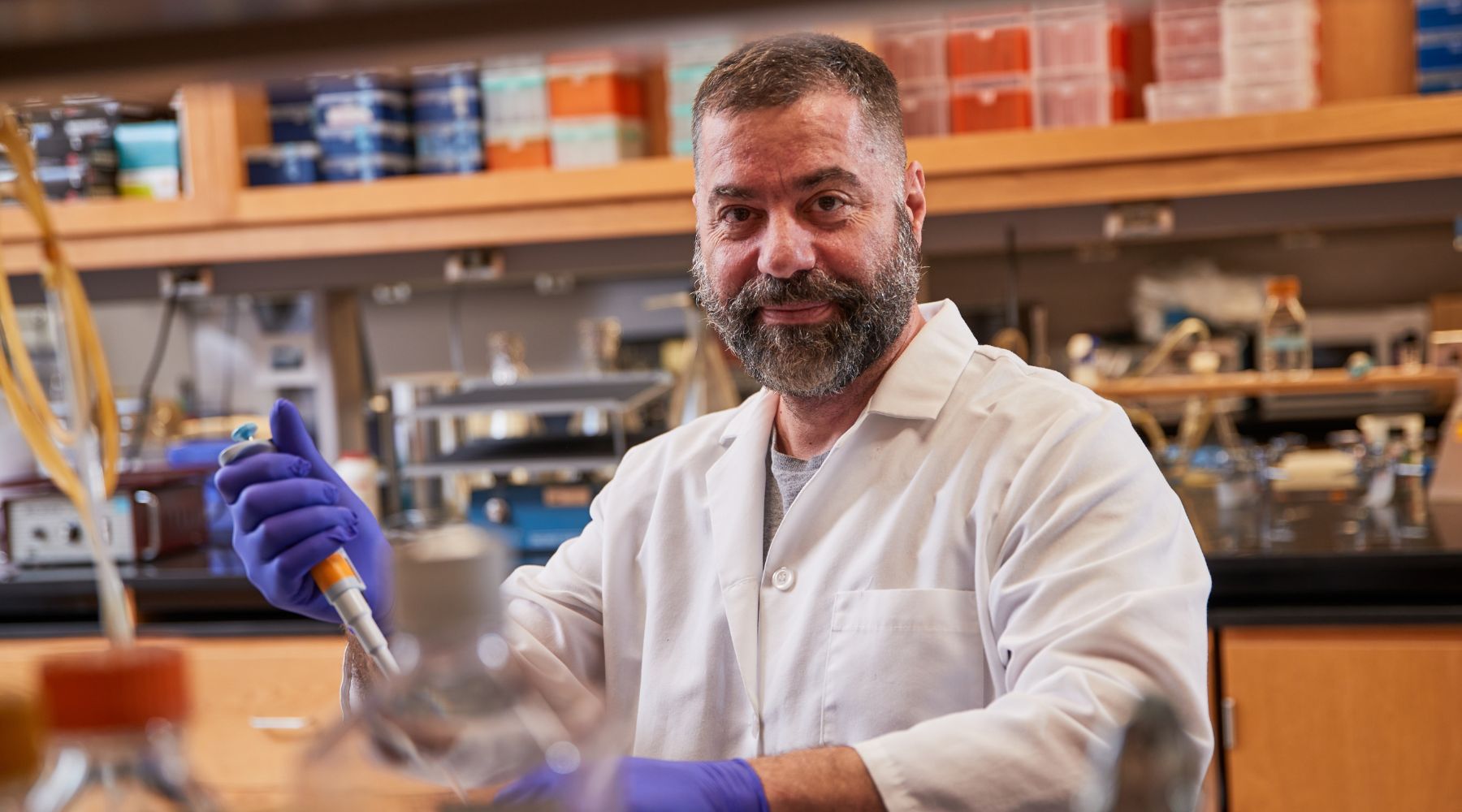
OMRF receives $1.9 million to study cause of infertility, congenital disorders (opens the original)
Scientist's focus is a type of cell division that results in egg and sperm cells
-
How do animals sense the Earth’s magnetic field?
A recent study adds a sixth way animals may use magnetoreception.
-
Salk Institute moves deeper-rooted crop research from lab discovery to field testing (opens the original)
LA JOLLA—The Salk Institute has received an $18 million grant from the Bezos Earth Fund to test whether deeper-rooted soybeans can store more carbon in soil and better withstand drought and disease in field conditions. The three-year project, called ROOTS, moves Salk’s climate-focused crop research into a new…
-
Molecular biologist and neuroscientist Catherine Dulac wins the 2026 Pearl Meister Greengard Prize (opens the original)
Dulac's research revealed the neural circuits underlying instinctive behaviors such as mating, parenting, and aggression. She will be presented with the award on October 20.
-
Five foods that could cost even more this winter – and why
Conflicts, energy shocks, climate change and El Niño are combining to squeeze food prices upwards. Five familiar foods illustrate what’s going on.
-
How does a minimal cell membrane work (opens the original)
An international team of researchers from the Netherlands, Poland and Australia has described the properties of the cell membrane of the synthetic minimal cell JCVI-syn3A. Dr Joanna Juhaniewicz-Dębińska from the University of Warsaw is a co-author of the paper, which appeared in “Nature Communications”. A new paper…
-
Decoding the secret language of RNA (opens the original)
Dr. Shai Zilberzwige-Tal explores how RNA and proteins communicate to orchestrate bacterial defense systems—from single cells to communities
-
How Safe Are the Vegetables We Eat Every Day? MSU Researcher Develops Color-Based Test Kit for Pesticide Residues (opens the original)
A simple screening tool designed to bring food safety testing closer to farmers and consumers Before vegetables and fruits reach
-
Thai Rice Can Go Further: MSU Researchers Turn Rice into Kefir and Bring New Value to Consumers (opens the original)
A 10-year research journey from international fermentation culture to new opportunities for Thai rice When people hear the word “kefir,”
-
‘I want a visa, so I have to do farm work’: how new visa rules will hit regional Australia
Expecting backpackers to work in tough conditions for months, only to be entered into an uncertain visa ballot, is a gamble for farmers and regional communities.
-
Families provide dementia care. Why must they also be the air traffic controllers of the system?
Families are still expected to navigate disconnected health and community services on their own. A new report sets out what governments can do to change that.
-
How employers can make good decisions about remote work before the next crisis strikes
Whether work gets done on-site, remotely or using a hybrid of the two can have a lot to do with an employer’s organizational culture.
-
Can nutrients in our foods mimic calorie restriction and increase our healthspan?
Researchers are investigating whether food compounds can imitate calorie restriction. The strongest evidence still comes from cells and animals.
-
Neuroscience offers new insights into how our brain solves ‘the cocktail party problem’
Trying to understand how the brain is so good at focusing on one conversation has kept auditory neuroscientists occupied since the 1950s.
-
Learning another language may be one of the best ways to keep your brain healthy as you age
Learning another language is not a miracle cure for aging, and it cannot guarantee protection against Alzheimer’s disease. But it does have various other benefits.
-
Scientists discover why high levels of the amino acid cysteine are toxic to cells (opens the original)
Cysteine is essential for life, but toxic in excess. A new study reveals why: free cysteine can unleash stored iron, overwhelming mitochondria and triggering a form of cell death.



Read: The Conversation, CORDIS, ESO, NASA, ScienceDaily and the newsroom feeds of 734 institutions. Last read: today. Each story's date is its publisher's. Where the news comes from, and what each source allows.