Science news
Recent stories from university newsrooms, The Conversation, CORDIS, observatories and ScienceDaily, each sorted into the fields, countries and institutions it is about, and each linked to the original publisher. Narrow them below by subject, country, institution, source, words or period. A signed-in reader can follow any filtered view and be told when a new story matches it.
2,973 stories match these filters.
-
Government hacks, rogue agents and no transparency: can we ever fully trust AI?
AI expert Nick Jennings speaks to The Conversation Weekly podcast about calls for a slowdown in the development of frontier AI models.
-
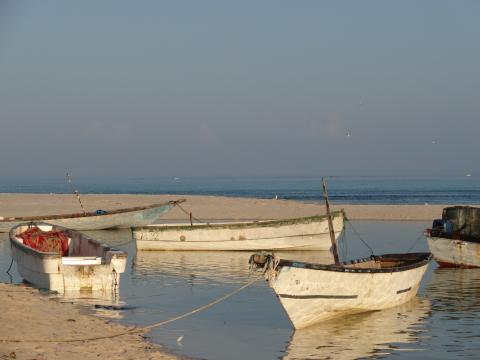
Climate change threatens Somalia's offshore fisheries, but coastal fleet may be spared, study finds (opens the original)
Image elefro@noc.ac.uk Thu, 24 Sep 2026 - 15:36 Image Climate change threatens Somalia's offshore fisheries, but coastal fleet may be spared, study finds Support Us New research led by the National Oceanography Centre…
-
Why volcanic crystals are black boxes for tracking magma’s journey to the Earth’s surface
By observing the tree-ring-like growth records present in volcanic crystals, geologists are able to track volcanic activity and reconstruct the steps leading up to eruptions.
-
Mohammad Javad Amiri Receives NSF CAREER Award to Advance Adaptive Distributed Systems (opens the original)
Mohammad Javad Amiri, an assistant professor in Stony Brook University’s Department of Computer Science, has received a National Science Foundation CAREER Award to develop distributed data management systems that automatically adapt to changing workloads, failures and potential attacks. The five-year, $631,659 award…
-
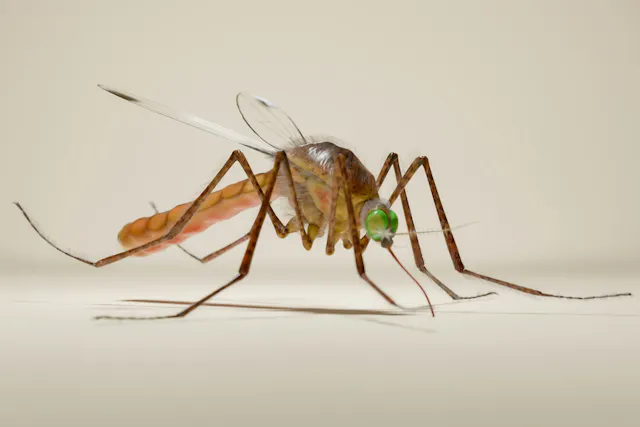
Science that makes you laugh? Canadian engineers win Ig Nobel Technology Prize for 3D ‘necroprinting’ with mosquitoes
The team printed a honeycomb and a Canadian maple leaf, both roughly the size of a single grain of sand.
Picture: (Unsplash/Zyanya Citlalli)
-
Alaska’s Orange Rivers More Metallic Than Acid Mine Drainage (opens the original)
Alaska's orange, rusted rivers from melting permafrost are even more acidic than water leached from metal mines — an increasingly common mark of climate change, finds a UC Davis study.
-
AI tools can help Americans meet their civil legal needs
The US legal system often fails to provide counsel for millions of Americans in civil cases. Generic and law-specific AI models can help address this justice gap of unmet legal needs.
-
Announcing Open Source SAC Community Edition v103.0 (opens the original)
Our community’s access to the Seismic Analysis Code (SAC) is now being released as open source software as the SAC Community Edition.
-
El Gordo: Dark Matter Could Be Self-Interacting (opens the original)
ramani Thu, 09/24/2026 - 13:46 Simulations of El Gordo, one of the most massive and distant galaxy clusters ever observed, provide strong indications that dark matter could interact with itself through collisions. The study, conducted by Riccardo Valdarnini, a former…
-
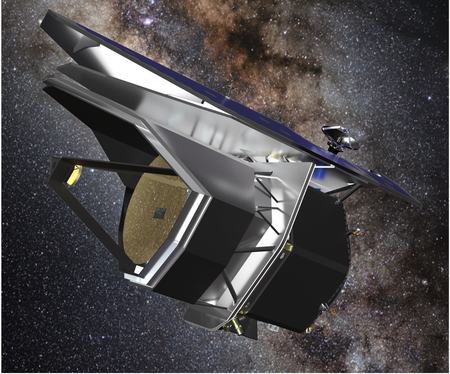
NASA selects infrared space telescope PRIMA featuring Dutch technology (opens the original)
NASA has selected the far-infrared space telescope PRIMA as its Probe mission. It will be the first space telescope with an actively cooled mirror, at 4.5 degrees Kelvin. This reduces noise to such an extent that PRIMA is one thousand to one hundred thousand times more sensitive than its predecessors. SRON, TU Delft…
-
Dal Innovation Week returns with talks, networking and more (opens the original)
Meet founders, researchers and innovators tackling real-world challenges while discovering career paths, pitch competitions, workshops and unexpected connections along the way.
-
A new venomous British snake? Why there’s no need to panic
Why the smooth snake is in far more need of protection than humans.
-
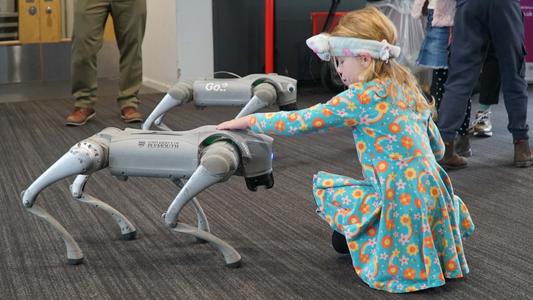
Sharks, robots and fireworks – families invited on a Voyage of Discovery (opens the original)
Free community event at the University of Plymouth
-
Astronomers produce the first complete picture of (gas) planet formation in action (opens the original)
Astronomers have directly imaged the “swirl” where a protoplanet interacts with the gas in the surrounding protoplanetary disk
-
An AI model has found a new ‘CRISPR-like’ biological system. Here’s what it means for science
After coding, mathematics and chatbots, AI companies are setting their sights on the messy world of biology.
-
The space race should not endanger Australian wildlife
The future of a proposed rocket-launch facility in South Australia is uncertain. But tensions between space exploration and conservation remain.
-
What does the OpenAI Medicare hack reveal about Australia’s cyber security?
We need to ask how ready Australian government systems are for increasingly capable AI agents.
-
An OpenAI agent hacked Medicare. Will anyone be held responsible?
This is unlikely to be the last time an AI agent hacks a government system.
-
Sharks often swim across national borders. Our conservation efforts must travel with them
Sharks and rays have been swimming through the oceans for millions of years – but we still don’t really know where.
-
Personal locator beacons save lives. But they can’t make hiking safe
Personal locator beacons can save lives – but they must be coupled with education.






Read: The Conversation, CORDIS, ESO, NASA, ScienceDaily and the newsroom feeds of 735 institutions. Last read: today. Each story's date is its publisher's. Where the news comes from, and what each source allows.