Science news
Recent stories from university newsrooms, The Conversation, CORDIS, observatories and ScienceDaily, each sorted into the fields, countries and institutions it is about, and each linked to the original publisher. Narrow them below by subject, country, institution, source, words or period. A signed-in reader can follow any filtered view and be told when a new story matches it.
2,965 stories match these filters.
-
New UMaine facility to help Maine track microplastics in seafood, water and soil (opens the original)
Tiny plastic particles are making their way into seafood, drinking water, soil and air, raising concerns about their potential effects on human and environmental health. But where are they accumulating
-
Data centers’ neighbors weigh in on how to manage them
The people of northern Virginia have been living with data centers for many years. But even they are resisting new developments. And they have specific wishes for how to regulate them.
-
An overlooked era of cosmology is stealing the show in the quest to understand the cosmos
The early universe was kind of like a big game of musical chairs – scientists are figuring out how many particles were able to find ‘seats’ to understand the cosmos.
Picture: NASA
-
Coal-powered economic growth linked to urban air pollution and deaths in India (opens the original)
Research led by the University of Oxford has found that rapid economic growth brought major gains but has contributed to worsening outdoor air pollution and a sharp rise in urban air-pollution-related deaths.
-
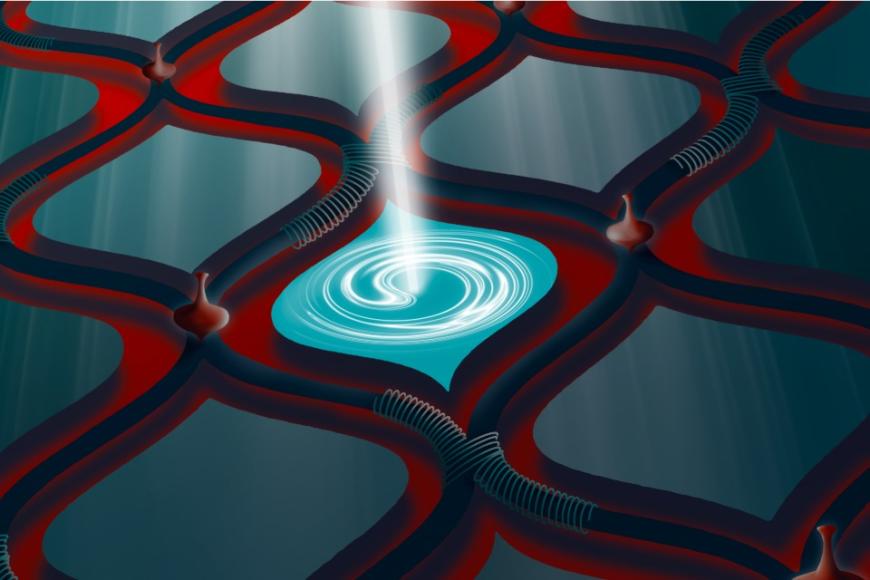
Hybrid quantum computer observes foundational quantum effect in a new setting (opens the original)
Physicists have used a hybrid quantum computer to observe the Aharonov-Bohm effect in a quantum simulation.
-
Hybrid quantum computer observes foundational quantum effect in a new setting (opens the original)
Physicists have used a hybrid quantum computer to observe the Aharonov-Bohm effect in a quantum simulation.
-
Hybrid quantum computer observes foundational quantum effect in a new setting (opens the original)
Physicists have used a hybrid quantum computer to observe the Aharonov-Bohm effect in a quantum simulation.
-
There’s something you can do now to cool your home next summer – and it’s far cheaper than air conditioning
Plants can help homes stay cooler in a variety of ways.
-
Molecular switch-up (opens the original)
Researchers show how bacteria remodel a peptide to take on a new role.
-
Scattering neutrinos to probe the fundamental laws of the universe (opens the original)
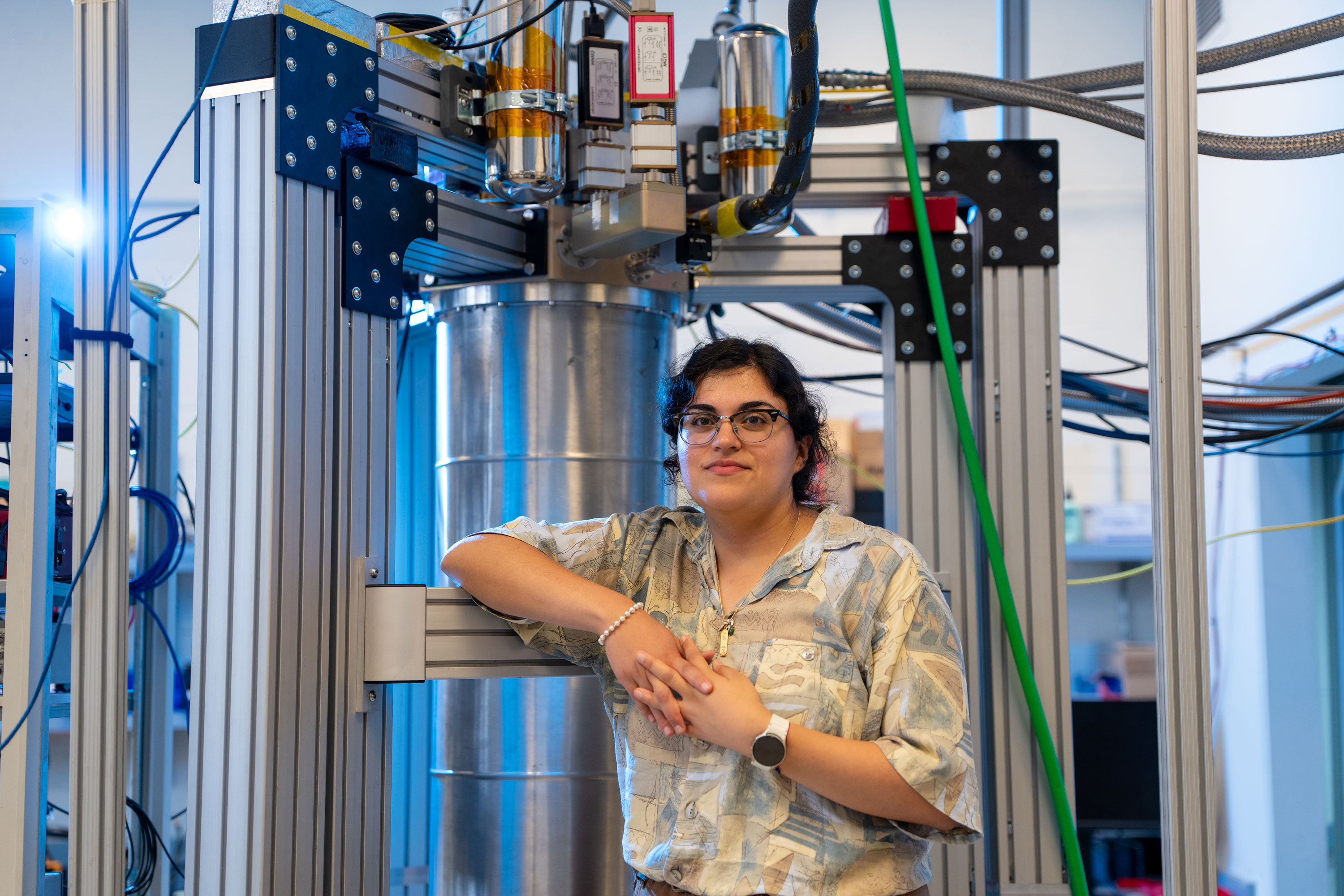
As she became integral to an international particle physics experiment, PhD student Faith Reyes found confidence in herself as a scientist.
-
Could an ‘Australian AI’ protect us from being hacked? Cybersecurity isn’t that simple
News that an OpenAI agent hacked Medicare has prompted calls for Australia to develop its own AI system.
-
Curious Kids: does music affect how plants grow?
Some people may think it’s nice to listen to music with their plants. But is there any truth to the idea that certain music boosts plant growth?
-
September’s ozone hole was the biggest in 20 years. The warning signs appeared months ago
This spring’s ozone hole is likely to be among the top ten most severe of all time, bringing weather changes to New Zealand and Australia.
Picture: NASA Ozone Watch, CC BY-SA
-
An MEPhI expert has suggested that interplanetary flights using spacecraft with plasma engines are possible (opens the original)
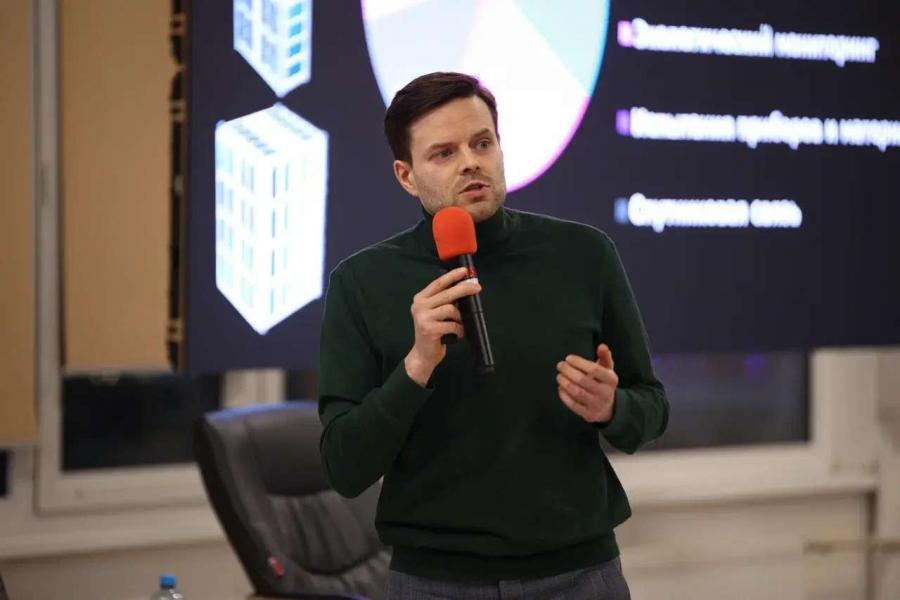
Thanks to their characteristics and efficiency in outer space, marching plasma engines for open‑space spacecraft open up new horizons for humanity in the exploration and study of the Solar System, said Evgeny Stepin, director of the Cosmocenter Center for Space Research and Technologies at the National Research…
-
Trump wants a diesel export ban. Australia would be uniquely exposed
It’s a bid to alleviate cost-of-living pressures in the US and claw back Trump’s voter base.
-
King Charles shown Geothermal research (opens the original)
Our team behind a pioneering geothermal feasibility pilot study to unlock the heat beneath our feet discussed their research with His Majesty the King during his visit to the North-east.
-
Army Col. Kevin Gillespie Named Acting Associate Dean for Research at USU’s Postgraduate Dental College (opens the original)
Gillespie will lead an effort to unite Army, Navy, and Air Force dental research around shared military health priorities Army Col. (Dr.) Kevin R. Gillespie, center, speaks during a meeting with Army, Navy, and Air Force service members and civilian colleagues. Gillespie will lead USU’s effort to build a unified…
-
Why winter cold spells are getting milder
Across the northern hemisphere, cold spells are becoming milder as the temperatures rise, with their intensity decreasing by 0.3°C per decade.





Read: The Conversation, CORDIS, ESO, NASA, ScienceDaily and the newsroom feeds of 736 institutions. Last read: today. Each story's date is its publisher's. Where the news comes from, and what each source allows.