Science news
Recent stories from university newsrooms, The Conversation, CORDIS, observatories and ScienceDaily, each sorted into the fields, countries and institutions it is about, and each linked to the original publisher. Narrow them below by subject, country, institution, source, words or period. A signed-in reader can follow any filtered view and be told when a new story matches it.
2,925 stories match these filters.
-
Climate Action Learning Lab bridges research and policy for effective climate solutions (opens the original)
J-PAL North America’s Learning Lab supported a second cohort of U.S. government and nonprofit organizations in building and using rigorous evidence to advance effective decarbonization and adaptation strategies.
-
Starship’s first orbital flight put its heat shield to the test – how it fares could determine if SpaceX’s vision is possible
Starship’s heat shield is made of up of an array of ceramic tiles. Each is a small component, but together they have large consequences.
-
How sugar from outer space became one of the backbones of life on Earth
Ribose molecules came to Earth in meteorites and eventually became key parts of RNA. But how they survived in between has been a mystery.
-
Georgia Tech Students Build, Operate Simulated Mars Mission (opens the original)
admin Tue, 09/29/2026 - 14:34 Earlier this month, six Georgia Tech students went to Mars. For 10 days, they conducted experiments, managed limited resources, and lived in isolation while learning what it's like to be an astronaut. Except they were not…
-
Where Academic Healthcare Meets AI (opens the original)
There is a version of the artificial intelligence story that everyone has heard by now: the billion-dollar campuses, the coastal cities competing for the next great tech company. Memphis, Tennessee, does not fit that story. And that, it turns out, may be precisely the point. The University of Tennessee Health…
-
Caltech Roboticist Says Safety Should Be Top Concern with Humanoid Robots (opens the original)
A quick search of humanoid robot videos will deliver demonstrations of two-legged robots playing soccer, dancing, jumping several feet in the air, even competing in kickboxing matches. It is all dazzling, certainly. But roboticist Aaron Ames, the Booth-Kresa Leadership Chair and director of Caltech's Center for…
-
Why AI hasn’t triggered mass layoffs — yet (opens the original)
Artificial intelligence can do some jobs already, but experts say CEOs have good reasons to keep humans on the payroll
-
John Bowers honored by UC Regents for a lifetime of innovation (opens the original)
A pioneer in silicon photonics and founding director of UCSB's Institute for Energy Efficiency, he received the Distinguished Lifetime Achievement Award at the inaugural UC Regents Innovation Awards
-
Aberdeen looks to the stars with first new observatory in more than 200 years (opens the original)
A new observatory at the University of Aberdeen will open its doors this week, giving students, researchers and the public the opportunity to explore the night sky using an advanced, AI-controlled telescope.
-
Revisiting a Young Isaac Newton (opens the original)
Isaac Newton is typically portrayed as a solitary scientist with intense focus who was obsessed with power and deeply egotistical. But a new book by Caltech historians Jed Buchwald and Mordechai Feingold takes a deeper look at Newton's life in the two decades leading up to the 1687 publication of his groundbreaking…
-
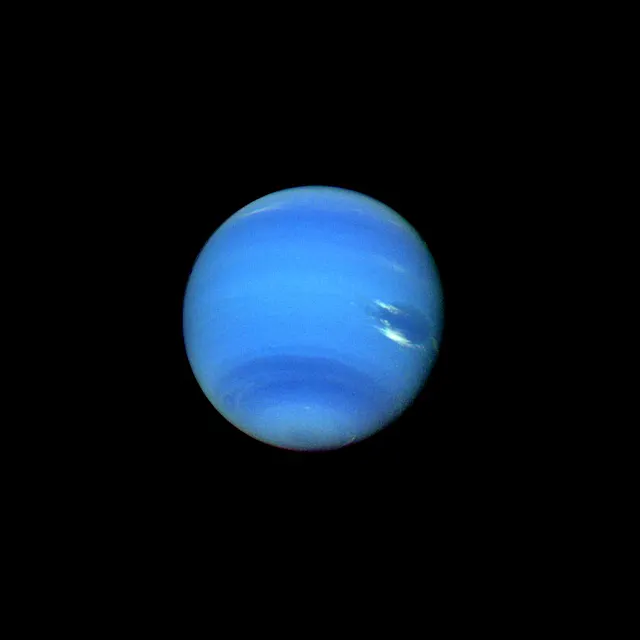
Alien life? Why the possibility of exoplanet LHS 1140b emitting helium gas is so exciting
The exoplanet LHS 1140b may have a temperature that could allow for liquid water on its surface. Just possibly, it could support the existence of life.
Picture: (NASA/JPL)
-
Putting a spin on cricket ball aerodynamics research (opens the original)
With the help of Prof. Tobias Rossmann and Lafayette’s subsonic wind tunnel, Tendai Ankude ’28 explores firsthand the forces behind cricket ball motion
-
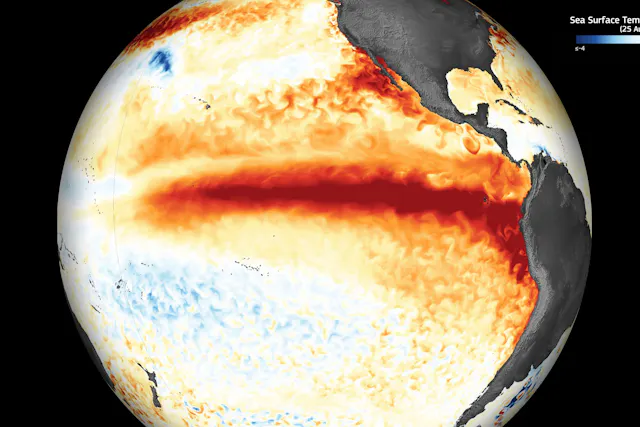
How can the same El Niño cause drought in one part of the world and floods in another?
The climate science behind 2026’s super El Niño.
-
Wolves did not save Yellowstone – why were we so desperate to believe they did?
Yellowstone’s reintroduced wolves have become a famous conservation success story, but the reality is far messier.
-
US tech leaders are urgently calling for rules on AI – China already has them
China has already implemented many rules governing the use of artificial intelligence.
-
Chatbots as oracles: How AI is giving new life to the ancient practice of seeking answers from inscrutable sources
Human beings have always turned to oracles and divination for answers to difficult questions. Today, AI might be fulfilling that role.
-
Oil and gas industry expected surplus – but war brought shortage instead
Any work to ease current shortages and price hikes while the Strait of Hormuz remains closed will take years and billions of dollars.
-
Arctic infrastructure was built on frozen ground that’s starting to thaw – drones can help spot the permafrost changes coming
A regional permafrost map can’t tell a builder if a particular foundation or road will survive as temperatures rise. Engineers need to see beneath the surface to find the weaknesses.
-
Last year, Floridians over 60 lost nearly $710M to cybercrime – here’s what to do if you or a loved one has been scammed
Cybercrime is getting increasingly sophisticated, and scammers target senior citizens.
-
The Mecca alliance meets the Red Sea – Saudi Arabia’s new defense pact faces its first major test
The pact with Turkey and Pakistan has evolved quickly from a vague political commitment. Riyadh hopes it will help it navigate a thorny Middle East crisis.






Read: The Conversation, CORDIS, ESO, NASA, ScienceDaily and the newsroom feeds of 737 institutions. Last read: today. Each story's date is its publisher's. Where the news comes from, and what each source allows.