Science news
Recent stories from university newsrooms, The Conversation, CORDIS, observatories and ScienceDaily, each sorted into the fields, countries and institutions it is about, and each linked to the original publisher. Narrow them below by subject, country, institution, source, words or period. A signed-in reader can follow any filtered view and be told when a new story matches it.
2,925 stories match these filters.
-
Co-Developing an Adaptive Management Framework for a Cold-Water River Facing Ecosystem Change (opens the original)
Join this Friday's Findings to learn how USGS's Cooperative Research Unit science on cold-water rivers is supporting adaptive management and effective decision making for riverine systems experiencing ecosystem changes.
-
Digging deep, researchers find high-altitude glacier endured last ice age (opens the original)
Ancient ice trapped within an ice cap in Northwestern Tibet appears to preserve fragments from the last ice age, extending Earth’s glacial record by over 100,000 years and making them the oldest ice cores ever recovered from the region, according to a new study.
-
We love TV reno shows. Could they help us build more sustainable homes?
Programs like ‘Big Little Reno’ aim to help people make their houses more energy efficient.
-
Mapping Rocky Reef Habitats Along the U.S. West Coast (opens the original)
Updated mapping dataset reveals rocky reefs are widespread but patchier than previously known, providing a more detailed foundation for protecting important groundfish habitat.
-
Spotlight: Aldís Elfarsdóttir (opens the original)
“My research is animated by the idea of “walking the talk.”…”
-
Why scientists predicted ‘Friday 13 November 2026’ would be ‘doomsday’
An article published in ‘Science’ in 1960 predicted that, thanks to ever-increasing growth, in the year 2026 the human population would approach infinity.
Picture: (Unsplash)
-
Scientists predicted ‘Friday 13 November 2026’ will be ‘doomsday.’ Should you be worried?
An article published in ‘Science’ in 1960 predicted that, thanks to ever-increasing growth, in the year 2026 the human population would approach infinity.
Picture: (Unsplash)
-
Scientists predicted ‘Friday 13 November 2026’ would be ‘doomsday.’ Should you be worried?
An article published in ‘Science’ in 1960 predicted that, thanks to ever-increasing growth, in the year 2026 the human population would approach infinity.
Picture: (Unsplash)
-
NASA satellite can monitor most of world’s irrigation canals, study finds (opens the original)
A NASA satellite originally designed to study large bodies of water may also be able to monitor most of the world’s irrigation canals, according to a new UW study. This capability could help farmers and water managers around the world manage resources, prepare for droughts and improve food security in their…
-
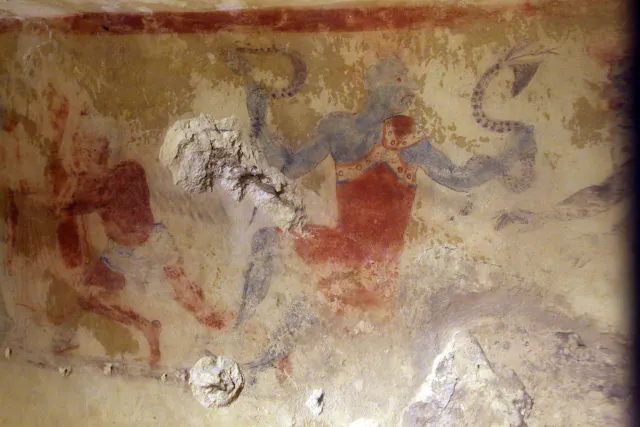
Confronting demons: how acoustic and AI technology brought ancient Etruscan tombs back to life
Our research suggests these tombs were designed and constructed not simply to house the dead, but to affect the living.
-
3D National Topography Model Data Acquisition Project Tracker (3DNTM Tracker) Now Available (opens the original)
USGS released a web tool that provides up-to-date status information about 3D Elevation Program (3DEP) lidar data acquisition projects, including when data will become publicly available on The National Map.
-
This game-playing AI is the new champ at Stratego (opens the original)
Able to defeat top-ranked human players and more efficient than other models, the new system could help decision-makers in military maneuvers or business negotiations.
-
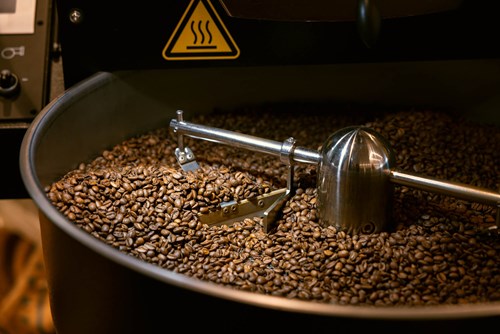
Can the coffee of the future be roasted without fossil fuels? (opens the original)
Kjeldsberg Kaffebrenneri and SINTEF Energy Research are exploring the possibility of electrifying coffee production in Trondheim.
-
Research collaboration helps Gulf Coast communities plan for the unpredictable (opens the original)
Projects across the state use storm-surge, population and transportation data to develop real-time strategies for hurricane evacuations.
-
Giant Fluctuations of Focused Light Reveal Hidden Correlations in Complex Media (opens the original)
Saint Louis University-led research in collaboration with Sorbonne Université reveals that giant fluctuations in wavefront-shaping enhancement provide a sensitive probe of hidden correlations in complex scattering media.
-
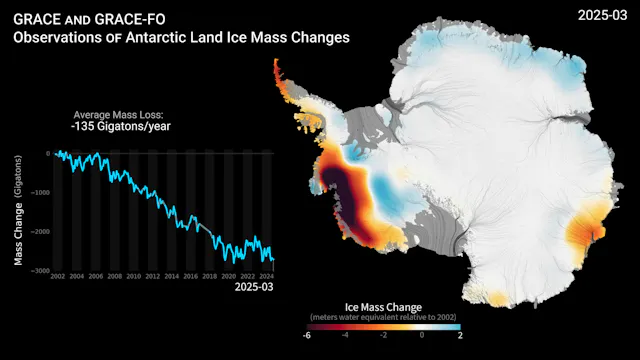
Antarctica’s ice loss is locked in, and extra snowfall won’t save it – that’s bad news for low-lying coastal areas elsewhere
The Antarctic ice sheet’s future depends how a chain of events plays out. A new study finds the evidence points in one direction.
Picture: NASA
-
As AI political deepfakes go viral, lawmakers struggle to keep up – 2 states’ laws show limits of what they can do
Most states require warnings on AI-generated political ads, but studies show these disclosures do little to alter people’s willingness to share the content. Most states have legislated election deepfakes by requiring a warning 28 states require disclosures on the media
-
Why the nor'easter’s storm surge was so high, and what it says about the El Niño winter ahead
Several factors make for high water levels, and they conspired to worsen the storm surge that flooded coastal areas from North Carolina to New York.
- University at Albany, State University of New York
- United States
- Atmospheric Science
- Earth and Planetary Sciences
Picture: Brian Tang, NOAA images
-
Criminal conspiracy to steal used cooking oil shows how trash can become treasure
No longer viewed only as waste, used cooking oil is a common ingredient in biofuels.
Picture: Wing-Chi Poon, CC BY-SA









Read: The Conversation, CORDIS, ESO, NASA, ScienceDaily and the newsroom feeds of 737 institutions. Last read: today. Each story's date is its publisher's. Where the news comes from, and what each source allows.