Science news
Recent stories from university newsrooms, The Conversation, CORDIS, observatories and ScienceDaily, each sorted into the fields, countries and institutions it is about, and each linked to the original publisher. Narrow them below by subject, country, institution, source, words or period. A signed-in reader can follow any filtered view and be told when a new story matches it.
2,867 stories match these filters.
-
College of Computer Science and Engineering in Yanbu Congratulates Its Student Sarah Alsharif on Her Achievement in Artificial Intelligence (opens the original)
The College of Computer Science and Engineering in Yanbu congratulates its student, Sarah Alsharif, on earning the AI Engineer – Associate Badge, certified by the Saudi Data and Artificial Intelligence Authority (SDAIA), as part of the 4th International Center for AI Research and Ethics (ICAIRE) Global Forum 2026…
-
Stuntwoman pursues USC online master’s degree to stay ahead in the AI era (opens the original)
For Heather Bonomo, a master’s in applied psychology created new career opportunities following an industry strike and rapid advances in artificial intelligence.
-
A magnitude 4.8 earthquake just shook southeast Victoria. Here’s why we may expect more
There’s a reason why Gippsland gets so many earthquakes, compared to most of Australia.
-
El Niño Affects Marine Life and Fisheries. How Should We Respond? (opens the original)
With a “super” El Niño ramping up, scientists explore its impacts on life in the ocean
-
Kauri dieback threatens more than trees: it could change how much carbon forests store
New research shows forests affected by severe kauri dieback can shift from accumulating carbon to losing it, with mature trees particularly affected.
-
From AI to smart grids: how energy management is changing (opens the original)
Artificial intelligence can help forecast electricity production and consumption, promoting more efficient energy distribution and grid stability. At the same time, however, its growing spread poses new challenges linked to the energy consumption of the computing centres required to run it. Interviewed on the RSI…
-
Chips under control? (opens the original)
How to detect hardware tampering and protect chips against attacks by quantum computers today
-
Breaking up NZ’s power gentailers sounds appealing. The consequences may not be
Splitting up NZ’s big gentailers promises more competition and lower power bills. But the economics of separating generation and retail are more complicated.
-
Protecting endangered species must include supporting habitats and nearby human settlements
The Barbary macaque is legally protected in Algeria; however, crop losses could increase hostility toward the species if farmers lack practical ways to protect their crops.
-
USC and the University of Washington: Opponents on the field, partners in scientific discovery (opens the original)
The two universities collaborate on addressing disparities in healthcare, accelerating scientific and medical innovation, and much more.
-
Brazil’s future depends on science
With the upcoming Oct. 5 elections, the country has a new opportunity to strengthen scientific research as a foundation for addressing today’s challenges and bolstering its sovereignty.
-
SDSU robotics professor’s research explores topics from Apple to apples (opens the original)
Shabbir Ahmed, an assistant professor of artificial intelligence and robotics in South Dakota State University’s Department of Mechanical Engineering, is working on two projects funded by the National Science Foundation. The first NSF grant, related to the Apple devices you may own, led to a recent publication in a…
-
Research advances brain-inspired computing materials (opens the original)
How electrons and ions move through metal-organic frameworks offers insights to advance neuron-inspired computing.
-
Changing the way we research could fix the oceans’ crisis (opens the original)
Marine scientists are finding new ways to understand how other organisms experience their environment, from tiny shifts in temperature and water movement to the limits of what cameras and sensors can reveal. The closer they look, the more complicated the ocean becomes.
-
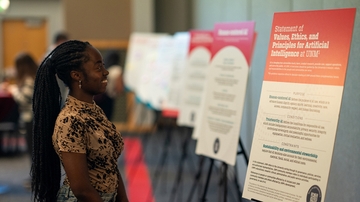
Campuswide conversation on AI asks, ‘How are you going to shape the future?’ (opens the original)
The University of New Mexico community came together recently to discuss a topic that has rapidly become omnipresent in today’s world — artificial intelligence. The UNM AI Conversation Kickoff event on Sept. 3 brought together a wide mix of faculty, staff and students throughout the day to explore topics through…
-
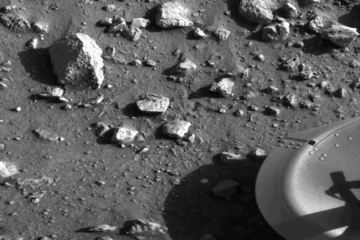
Mars symposium sheds light on life on the red planet (opens the original)
“The Exploration of Mars & the Search for Life: Viking to Humans” symposium was held in the Sadler Center on Sept. 18 and focused on the findings of the Viking Project.
-
NASA's Roman Space Telescope Takes First Coronagraph Instrument Observation (opens the original)
On September 22, the Coronagraph Instrument on NASA's Nancy Grace Roman Space Telescope opened its eyes to cosmic light for the first time. The ultimate purpose of the instrument—which is commanded from Caltech's IPAC, a science and data center for astrophysics and planetary sciences—is to demonstrate technology that…
-
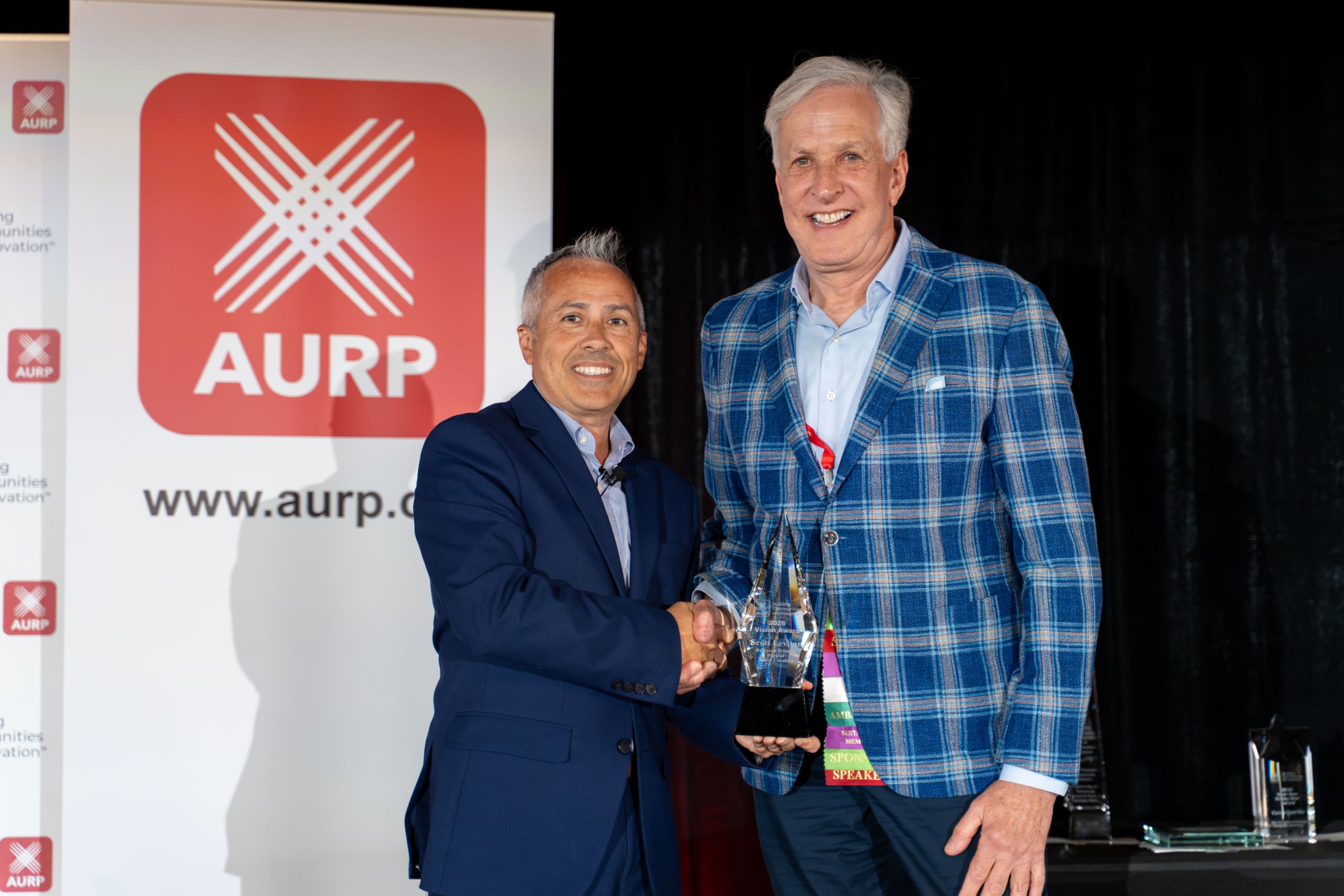
AURP recognizes Scott Levitan with 2026 Vision Award for advancing innovation districts and research parks (opens the original)
RESEARCH TRIANGLE PARK, N.C. [Oct. 2, 2026] – The Associati
-
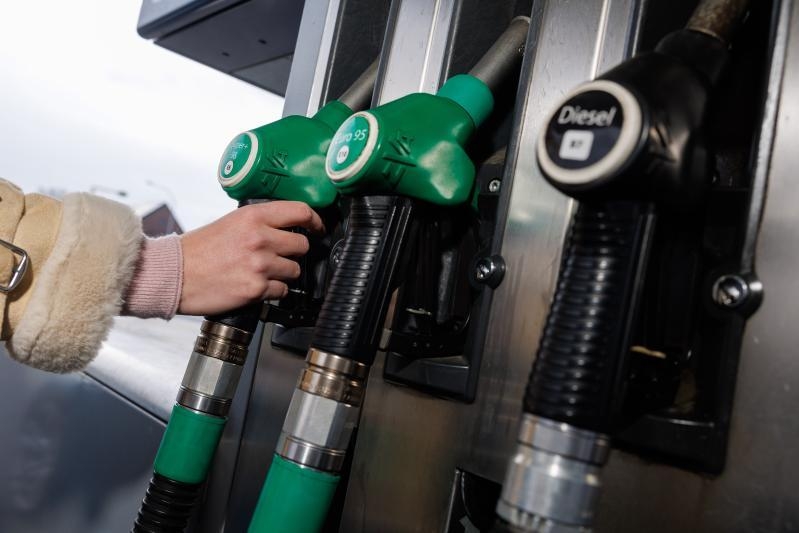
G7 Leaders' Statement on global energy security and market stability (opens the original)
During a virtual meeting to address challenges to energy security, the G7 Leaders agreed a series of coordinated measures to stabilize immediate energy supplies, shield households and businesses from price shocks, and strengthen the long-term resilience of global energy systems.
-
Seaweed strandings cause a stink – here’s why they harm your health
When free-floating patches of seaweed are pushed together by currents and winds, seaweed strandings can inundate the coastline with often devastating consequences.



Read: The Conversation, CORDIS, ESO, NASA, ScienceDaily and the newsroom feeds of 739 institutions. Last read: today. Each story's date is its publisher's. Where the news comes from, and what each source allows.