Science news
Recent stories from university newsrooms, The Conversation, CORDIS, observatories and ScienceDaily, each sorted into the fields, countries and institutions it is about, and each linked to the original publisher. Narrow them below by subject, country, institution, source, words or period. A signed-in reader can follow any filtered view and be told when a new story matches it.
12,092 stories stored from the last six months.
-
National lab partnership helps launch U.S. lithium supply chain (opens the original)
With support from the Department of Energy (DOE) national laboratories, including Oak Ridge National Laboratory (ORNL), Texas-based company Element3 has launched the first domestic lithium mining project in 50 years. This achievement is likely to have a big impact, turning the United States from a net importer of…
-
McMaster researchers develop Vote Compass tool to help voters in the municipal elections (opens the original)
Not sure who to vote for in the 2026 municipal elections? A tool developed by McMaster researchers is helping Ontario voters compare their views with those of local candidates. The 2026 municipal election edition of the Vote Compass tool launched on Sept. 28, providing insights into the political positions of mayoral…
-
Georgia Kirkos gets the picture (opens the original)
People of McMaster celebrates the incredible people who help make McMaster a great place to work, learn, teach and conduct research. Click here for the rest of the series. An employee dancing across a campus sidewalk. A researcher embracing her children in a laboratory. A student celebrating a milestone with friends…
-
Nobel prize in chemistry awarded for work on mirror-image molecules
The prize was awarded for work that produces one version of a mirror image molecule.
-
Joel Kallio joined Research Services as Information Specialist (opens the original)
Joel Kallio works in the Open Science and ACRIS team.
-
KEF results highlight University of Liverpool’s UK leadership in partnerships and innovation (opens the original)
The University of Liverpool has maintained its sector-leading performance in Research England’s Knowledge Exchange Framework results (KEF6), highlighting its position as one of the UK’s leading universities for supporting businesses, organisations and communities beyond academia. Announced today (7 October), the…
-
Coolcations: tourism boom is taking a toll on chillier destinations
Holiday destinations in northern Europe saw a boost in tourist numbers this summer, but for some this throws up new problems.
-
Parasitic worms could hold the key to treating immune system diseases – here’s what we know
Parasitic worms have evolved a way to calm the immune system, and scientists want to copy it.
-
Training the next generation of space scientists (opens the original)
Northumbria University has hosted a major international workshop, bringing together leading scientists and early-career researchers from around the world to study the Sun and the particles it sends into space. This is the first time the S³PARK Workshop, which stands for Synergy between Spacecraft observations and…
-
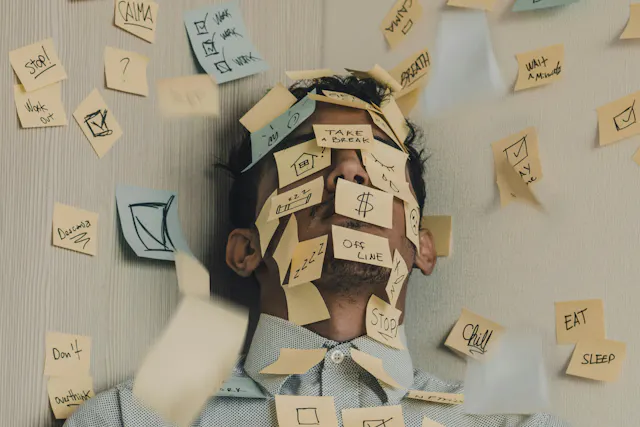
Why your boss matters more than remote or hybrid work when it comes to burnout and job satisfaction
A return to the office can mean very different things to different workers, which is why this debate often produces conflicting answers.
Picture: Luis Villasmil on Unsplash, CC BY
-
AI can help with academic research but doesn’t always get it right – here are some tips to check the information you receive
AI is quickly changing. These tips from university librarians can help people keep pace with the shifts as they approach their research.
-
Stirling research to analyse revolutionary golf tee (opens the original)
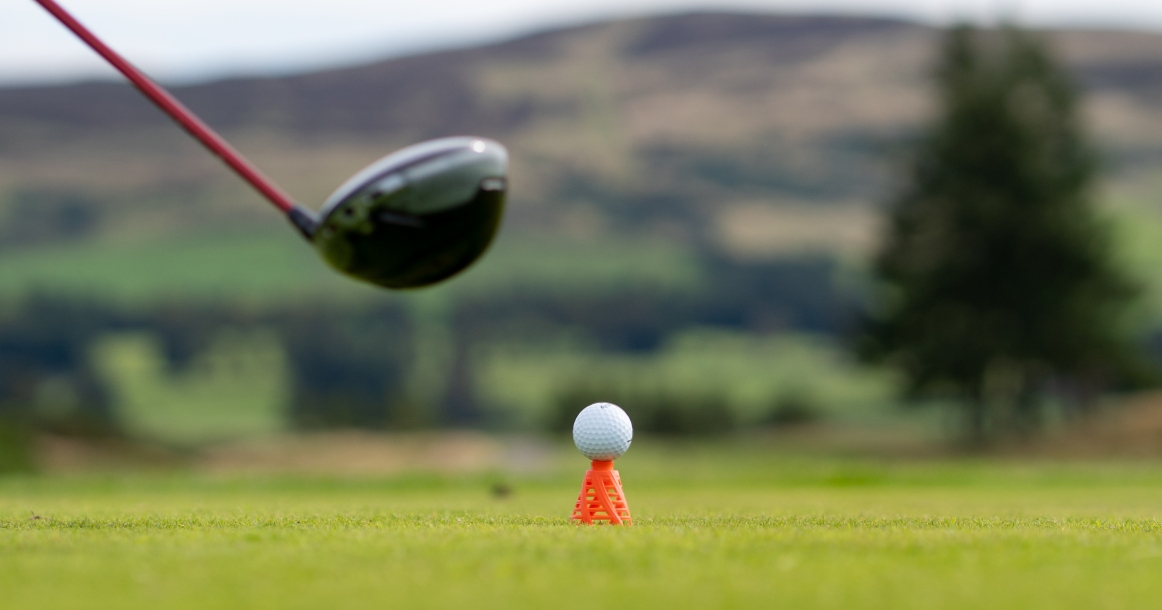
A new study led by the University of Stirling will examine the effectiveness of an invention that challenges one of golf's most familiar pieces of equipment – the tee. Developed by golf equipment company BirTee Golf International Inc. the innovative tee, which has been approved by the R&A, sits on top of the ground…
-
AI behaves more like a brain than a database – cognitive science’s role in its origin story helps explain why
Modern AI owes its existence to both cognitive and computer science. What you envision as its origin story can influence how you understand what large language models can do.
-
Your cells keep a record of every workout you’ve ever done – and those gains persist even after a break from exercise
‘Use it or lose it’ isn’t quite true when it comes to the health benefits of exercise. Cells across the body retain a memory of training that lasts longer than once thought.
-
Keele praised for work with businesses and public sector in national assessment (opens the original)
Keele’s work with businesses and contributions to local growth have been praised in a national assessment from a government research body.
-
New technique holds promise for improved gene editing (opens the original)
A new engineered gene editing system addresses some of the limitations of current gene editing tools with the hope of improving their use for research, for better crops or to treat diseases.
-
Third international conference on transformative economy opens at YSU (opens the original)
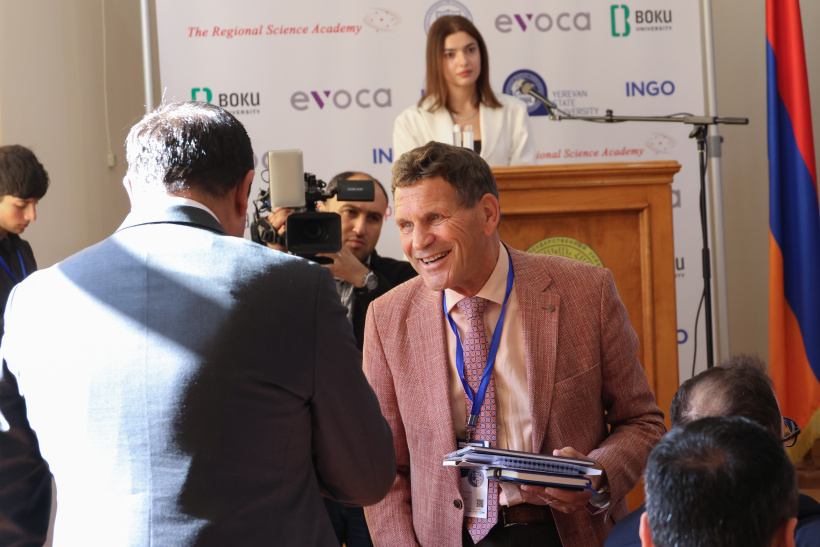
What happens when green technologies, the digital revolution and leading experts in the field come together on one platform? The answer is taking shape at the YSU Faculty of Economics and Management, where leading researchers, experts, and policymakers from around the world are discussing pressing economic issues…
-
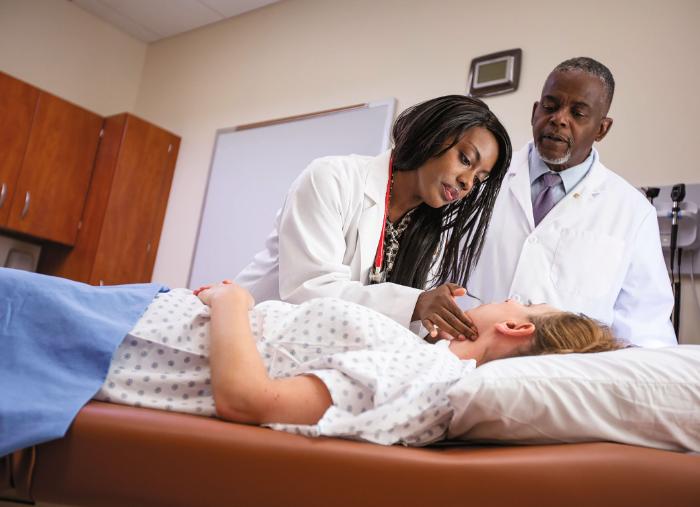
5 Tips for Succeeding in Clinical Rotations (opens the original)
Clinical Education Expert at New York Medical College Offers Practical Advice for Making the Transition from Classroom Learning to Patient Care
-
UNSW leverages industry partnership to set large-scale perovskite PV efficiency world record (opens the original)
Engineers from UNSW Sydney have collaborated with high-tech energy company UtmoLight to set a benchmark for perovskite solar submodules.
-
Using AI-discovered equations to study climate variability (opens the original)
Researchers have used an AI technique called equation discovery to derive, directly from observational data, three simple equations that describe how the North Atlantic Ocean, atmosphere and rainfall interact over decades.







Read: The Conversation, CORDIS, ESO, NASA, ScienceDaily and the newsroom feeds of 739 institutions. Last read: today. Each story's date is its publisher's. Where the news comes from, and what each source allows.