Science news
Recent stories from university newsrooms, The Conversation, CORDIS, observatories and ScienceDaily, each sorted into the fields, countries and institutions it is about, and each linked to the original publisher. Narrow them below by subject, country, institution, source, words or period. A signed-in reader can follow any filtered view and be told when a new story matches it.
2,866 stories match these filters.
-
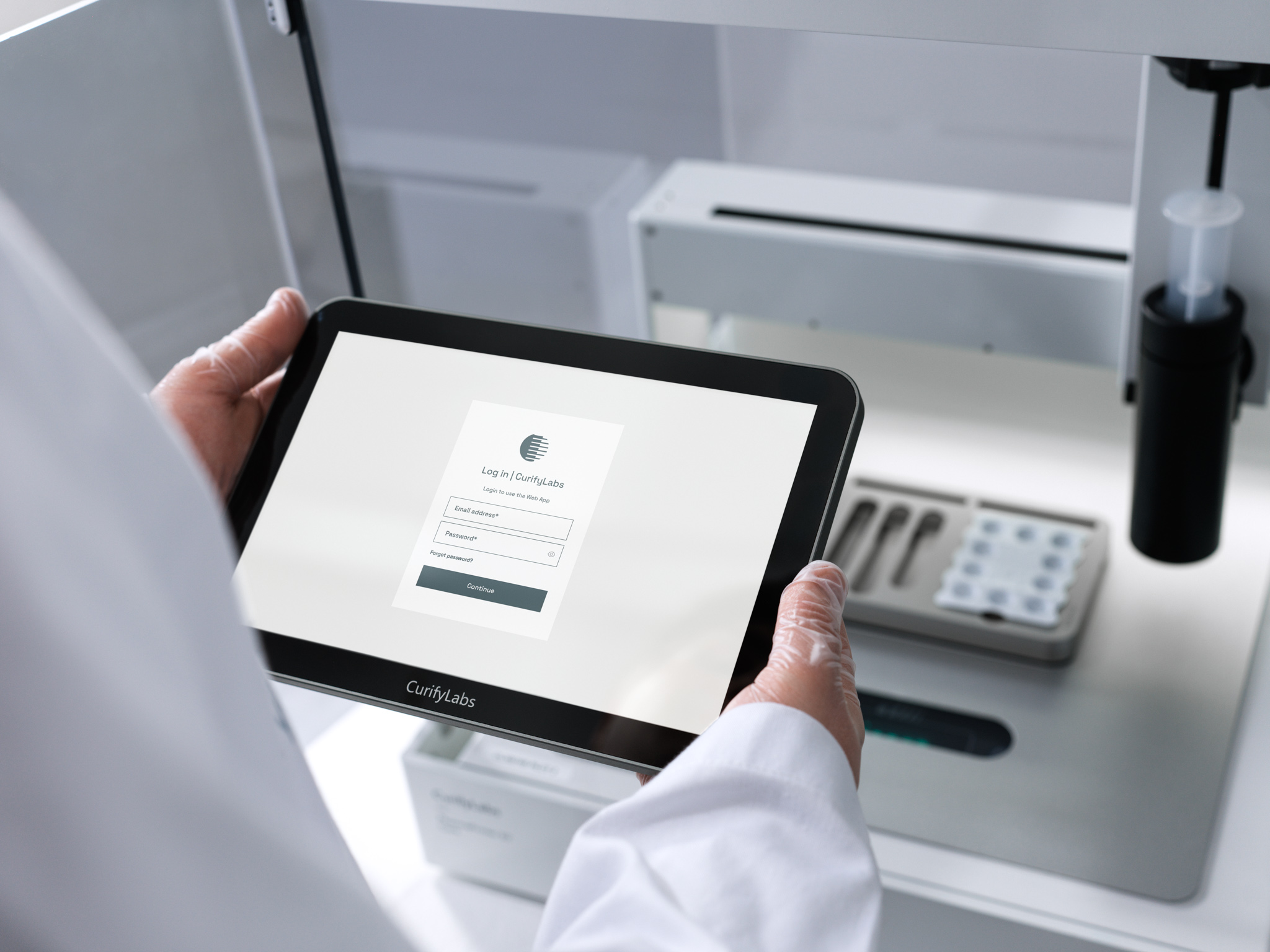
Technology inspired by 3D printing could transform how medicines are tailored to patients (opens the original)
I sin doktorsavhandling vid Åbo Akademi undersökte Mahsa Bahman hur den här tekniken kan bidra till noggrannare dosering och göra individanpassade behandlingar mer tillgängliga.
-
Smart photovoltaic control is set to save households money and stabilise the grid (opens the original)
Mathematicians from the Faculty of Science at Palacký University are developing a system which, using mathematical optimisation and machine learning, will automatically decide when a household should consume electricity from a photovoltaic system, store it in a battery or feed it into the grid.
-
Nebraska teams with USGS to create new statewide surface geologic map (opens the original)
Paul Hanson and Matthew Joeckel of the university's Conservation and Survey Division worked with the U.S. Geological Survey to create the first-ever statewide map showing Nebraska's surficial geology. The achievement provides an important new resource for understanding water management, wildlife habitat, geohazards…
-
Pacific people pay exorbitant prices for energy. Rich countries should back their renewable transition
Electricity in the Pacific is currently among the least reliable and most expensive in the world. Switching to renewables offers huge benefits.
-
Using AI to mitigate the growing environmental threat of data centers (opens the original)
By rethinking how large cloud computing systems operate, Associate Professor Christina Delimitrou seeks to make data centers more energy efficient.
-
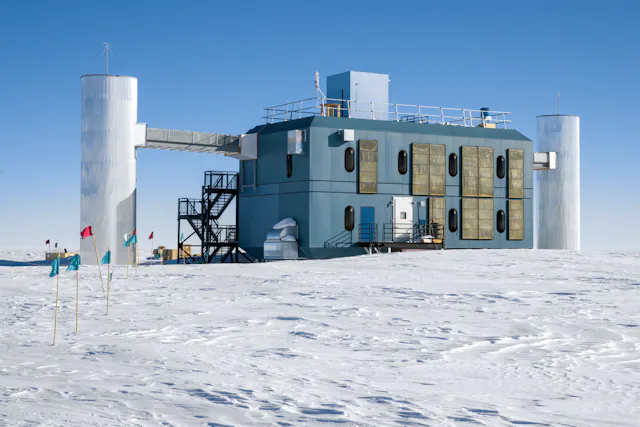
IceCube is built on decades of research into tiny ‘ghost particles’ – but it was the first to find neutrinos coming from deep space
IceCube looks for high energy neutrinos from space. It joins the ranks of complementary experiments that study neutrinos originating closer to home.
-
Australia’s top court puts fossil fuel developers on notice
This win could sour the economic argument for developing new coal and gas projects in NSW, and possibly Australia.
-
What is hantavirus? Symptoms, spread and prevention explained by an expert (opens the original)
Earlier this year, a cruise ship returning from Argentina experienced an outbreak of hantavirus. With a background in hantavirus research, NHMU’s Destiny Gonzalez answers your questions.
-
As AI Learns to Write, Tuhin Chakrabarty Studies What Humans Stand to Lose (opens the original)
As AI models are able to generate increasingly convincing prose, what began as an experiment—can AI write something that sounds plausibly human?—is becoming a commercial reality, with blog posts, YouTube video scripts and even bestselling novels bearing AI’s fingerprints. But the speed of that shift brings unique…
-
Can AI do maths without mathematicians? (opens the original)
AI agents are solving open math problems. Nathanaël Berestycki and Vera Fischer argue that maths is more than solving proofs at speed.
-
Copyright, data, licenses, and AI: discover CCdigitallaw (opens the original)
Do you often find the perfect image online for a presentation, only to wonder if you can actually use it? Do you need to collect personal data for a research project and remain unsure which rules to follow? Or are you wondering what changes when artificial intelligence comes into play? These questions are becoming…
-
Deep-sea sulfide minerals can spontaneously heat and combust when exposed to air (opens the original)
Findings from Escanaba Trough, a seafloor spreading center offshore of the Oregon/California border, highlight a potential hazard that could merit special consideration if deep-sea mining of seafloor massive sulfide deposits moves forward.
-
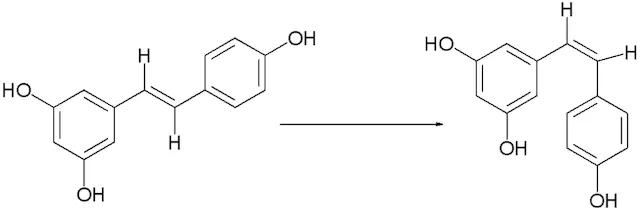
Many drugs have mirror chemical structures, one helpful and the other harmful – a Nobel-winning discovery allows chemists to make either on demand
From thalidomide to resveratrol, molecules with the exact same chemical properties can have drastically different effects in the body depending on how they’re arranged in space.
Picture: V8rik/Wikimedia Commons, CC BY-SA
-
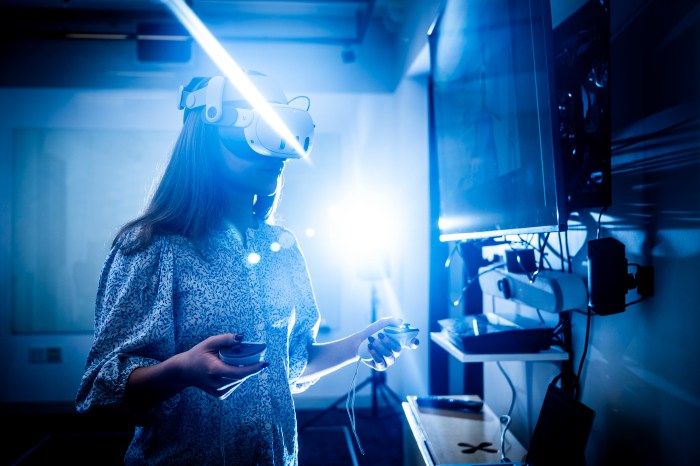
This virtual reality system lets healthcare students practice with AI (opens the original)
With the help of a $900,000 grant, researchers are developing an AI-powered virtual reality system for health-profession students.
-
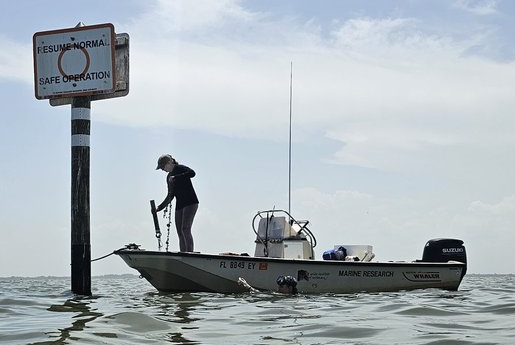
New Study Shows Effects of Hypoxia in Banana River (opens the original)
MELBOURNE, FLA. — A new study from Florida Tech assistant professor of marine sciences Austin Fox Ph.D. ’15, based on the most widespread testing ever of oxygen levels across the Banana River found that low levels of oxygen are contributing to the re-release of nutrients buried on the river floor that feed harmful…
-
Summertime air pollutants often come from household products and buildings (opens the original)
Products such as hairspray, paint and household disinfectants are increasingly causing summertime air pollution – and cities aren't accounting for it, which makes air-quality advisories and regulations harder to enact, new research from Colorado State University, the University of Minnesota and Purdue University shows.
-
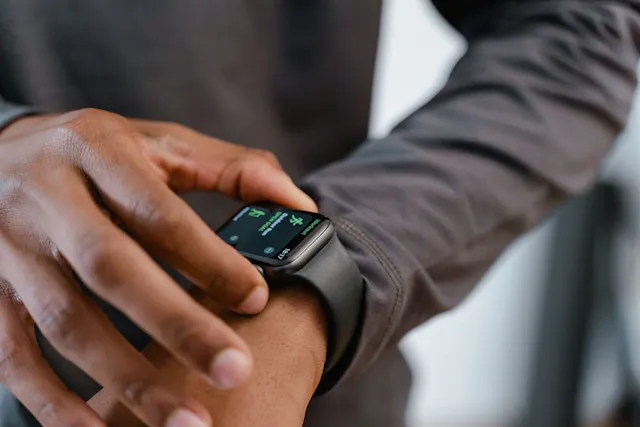
Why most health apps are biased even before their first lines of code are written
Apps and wearables are often built on invisible assumptions that might not be relevant to you. A new study shows how we can change that.
Picture: Mart Production/Pexels
-
What happens to language when machines start talking back?
AI systems tend to focus on the person speaking – but the listener plays just as big a part in communication.
-
Colonisation, not climate change, first primed these forests to burn
For more than 800 years, frequent cultural burning kept this land as stable, open woodland.





Read: The Conversation, CORDIS, ESO, NASA, ScienceDaily and the newsroom feeds of 739 institutions. Last read: today. Each story's date is its publisher's. Where the news comes from, and what each source allows.