Science news
Recent stories from university newsrooms, The Conversation, CORDIS, observatories and ScienceDaily, each sorted into the fields, countries and institutions it is about, and each linked to the original publisher. Narrow them below by subject, country, institution, source, words or period. A signed-in reader can follow any filtered view and be told when a new story matches it.
11,964 stories stored from the last six months.
-
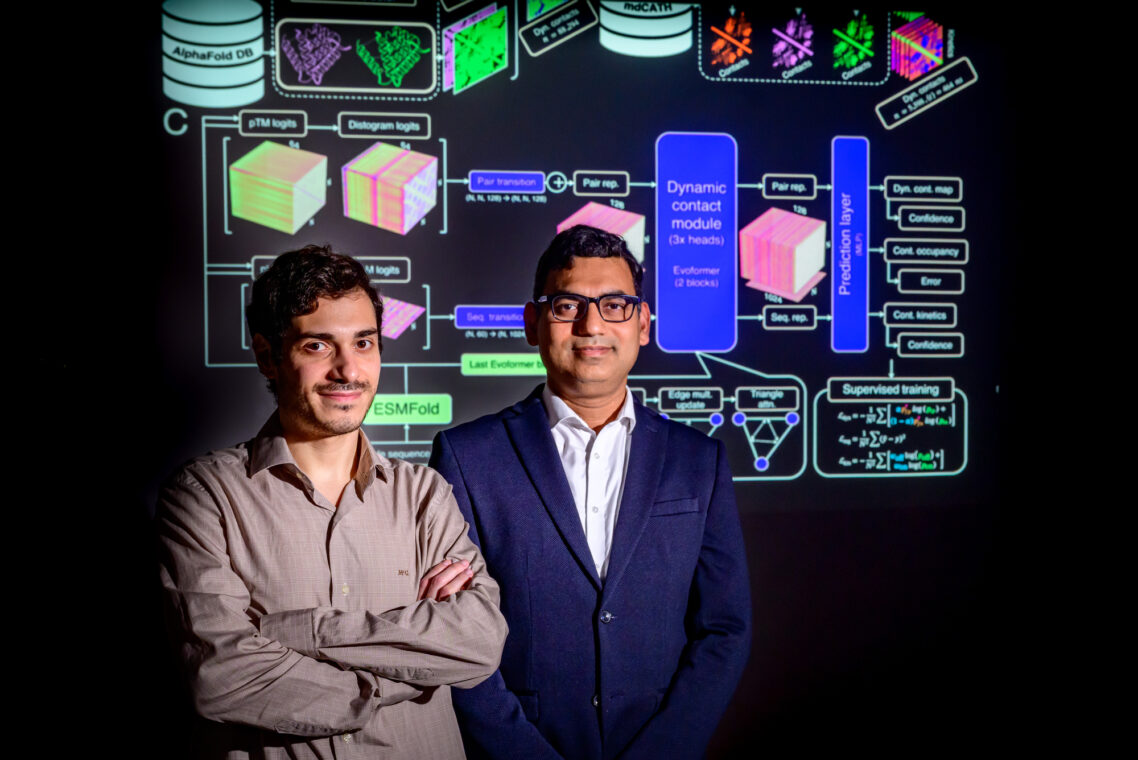
AI model offers a faster way to explore how proteins move, study finds (opens the original)
Researchers mapped the moving parts of 18,000 proteins in the human body in two days, a feat that previously took months on a supercomputer.
-
Pope Leo’s lung cancer prognosis may be favorable, surgeon says (opens the original)
Pope Leo XIV underwent a 90-minute operation to remove the lower lobe of his right lung after being diagnosed with cancer.
-
Student and faculty researchers team up to drive societal change (opens the original)
Susan Martonik Wed, 10/14/2026 - 12:47 Body This summer, classrooms gave way to labs, field sites, and data sets as George Mason University faculty and students partnered to tackle some of society's most pressing challenges. The research teams explored…
-
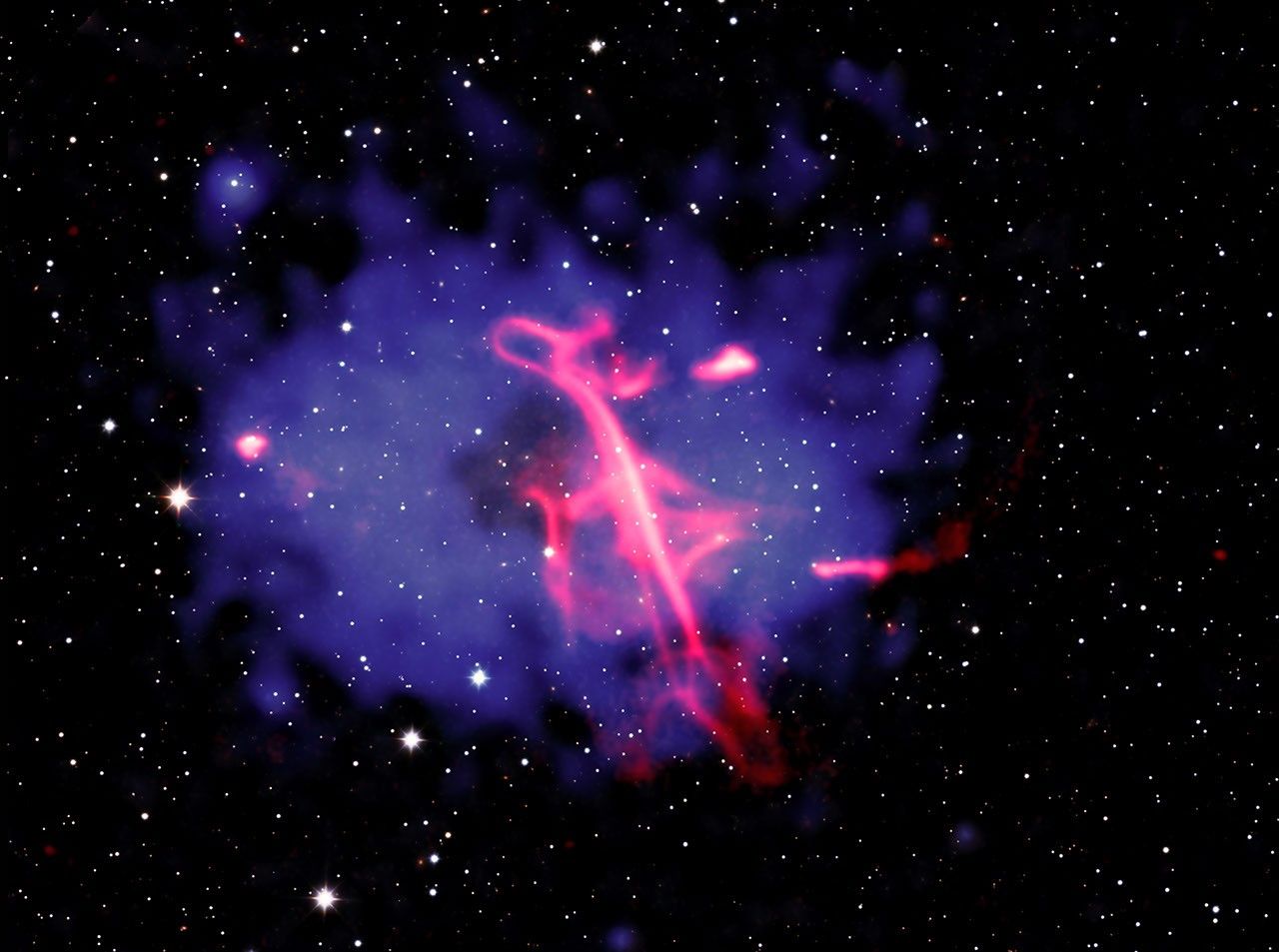
NASA’s Chandra Breaks Down ‘Treble Clef’s’ Galaxy Cluster Collision (opens the original)
Astronomers have used NASA’s Chandra X-ray Observatory to break down the cause of a remarkable formation of radio waves they have nicknamed the “Treble Clef” because its distinct shape strongly resembles the musical symbol. The researchers discovered the Treble Clef is likely caused by an outburst from a supermassive black hole, followed by a collision
-
How concerned should we be about ‘plague’? (opens the original)
The “plague” is back in the headlines. In a Q&A, Yale physician-scientist and global health leader Ingrid Katz explains how worried people should be about it.
-
First Light: Celebrate the Inauguration of Caltech's 10th President, Ray Jayawardhana (opens the original)
First light is the threshold moment in astronomy when a telescope makes its first observation and opens a new window to discovery. That same spirit of possibility defines the Caltech community. Through curiosity-driven inquiry, powerful experimentation, and groundbreaking instrumentation, Caltech illuminates new…
-
Ocean Facts: What are Kelvin waves? (opens the original)
Kelvin waves are difficult to see with the naked eye as they are large in scale, slow moving, and don't break onshore like typical ocean waves. In this graphic, satellite radar altimetry measurements reveal the sea surface signature of Kelvin waves where the ocean surface is higher…
-
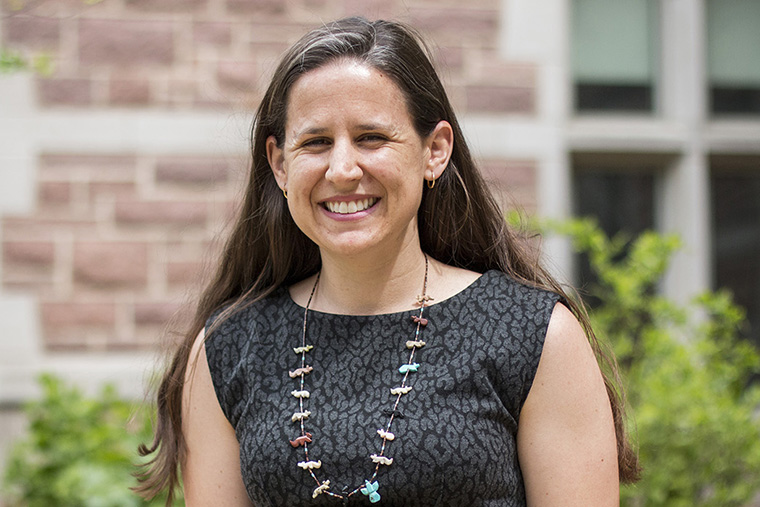
Using AI to fight election misinformation works, WashU research finds (opens the original)
Artificial intelligence could help counter election misinformation at the same speed that false narratives spread, according to new research from WashU and Caltech.
-
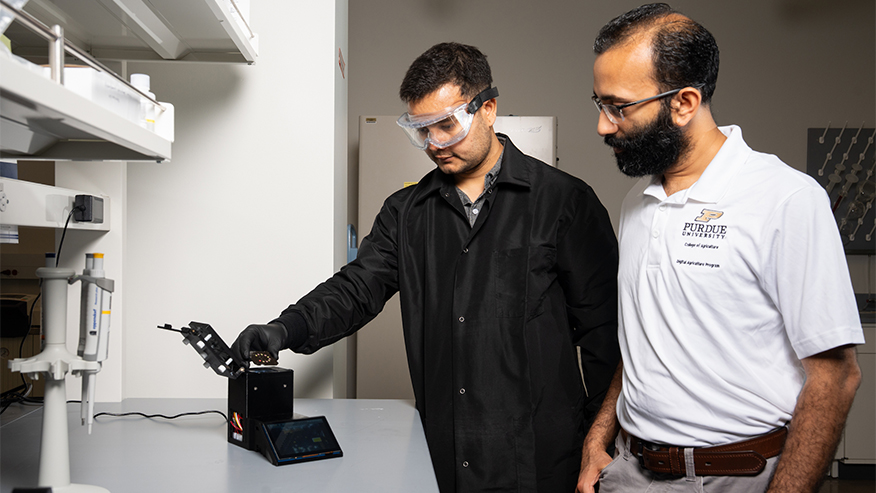
New molecular diagnostics instruments provide improved accuracy (opens the original)
WEST LAFAYETTE, Ind. — Purdue University researchers have developed prototypes of three new molecular diagnostics instruments designed to rapidly and affordably deliver results in a user-friendly manner. The new instruments — created by Mohit Verma, associate professor of agricultural and
-
From campus to the capital: Finding a path to public service (opens the original)
With legendary leadership skills, Camila Lopez is ready for what's next.
-
Spotlight: Lvmin Zhang (opens the original)
“My work focuses on adding human control to AI systems to align with human intents…”
-
Scientists alarmed as Super El Niño collides with ‘strange uptick’ in Galapagos iguana trafficking (opens the original)
The only lizard in the world that can live and forage at sea may now be in a fight for survival. International scientists warn black-market trafficking of Galapagos marine iguanas is peaking just as the Super El Niño decimates their natural food source.
-
Kubanek receives One Mind Rising Star Award (opens the original)
WashU Medicine psychiatry researcher Jan Kubanek was recognized with the One Mind Rising Star Award for his work on applying ultrasound to map and modulate brain circuits involved in depression.
-
Charité opens new HIV cure research center (opens the original)
About 41 million people worldwide are living with HIV, and all of them require lifelong treatment—at least to date. The goal of the new Berlin Center for HIV Cure (BeCURE) at Charité – Universitätsmedizin Berlin is to transform HIV infections from treatable conditions into curable ones. The center was officially…
-
Doing a short cardio session after weight training probably won’t boost your gains – here’s why
Make sure you don’t skip cardio entirely, or you’ll be missing out on key health benefits.
-
Brain cancer patients to see faster development of new treatments (opens the original)
Prime Minister and Health Secretary met campaigner Archie Goodburn, following his emotional plea on BBC Breakfast.
-
Did you lose a wedding ring (or something else) on campus? (opens the original)
Keys, wallets and headphones are everyday finds at Nebraska, but an engraved wedding band? That’s a different story. The ring remains unclaimed weeks after it was found outside the Nebraska Union. Here’s how UNL’s lost-and-found system works — and how to get lost belongings home.
-
A crackdown on online shopping tricks is welcome, but doesn’t go far enough
Consumers don’t need the extra pressure to purchase.
-
Case Studies (opens the original)
On wildix@noc.ac.uk Wed, 14 Oct 2026 - 16:25 Image Case Studies News & Media Communicating Research in Dynamic Ways When communicating the important work marine scientists, researchers, and engineers carry out, we understand the importance of using different tools and formats to appeal to a wide range of…








Read: The Conversation, CORDIS, ESO, NASA, ScienceDaily and the newsroom feeds of 739 institutions. Last read: today. Each story's date is its publisher's. Where the news comes from, and what each source allows.