Science news
Recent stories from university newsrooms, The Conversation, CORDIS, observatories and ScienceDaily, each sorted into the fields, countries and institutions it is about, and each linked to the original publisher. Narrow them below by subject, country, institution, source, words or period. A signed-in reader can follow any filtered view and be told when a new story matches it.
1,912 stories match these filters.
-
Thanking Nurses With a DAISY (opens the original)
DAISY Award for Extraordinary Nurses now at UConn Health
-
Is it better to vaccinate against COVID and flu together, or separately?
The target groups for these two jabs are not exactly the same.
-
UNM study finds differences in cellular responses to exercise (opens the original)
A recently published study by University of New Mexico researchers looks at how intense exercise affects the body. Michael Deyhle, an associate professor in the Department of Health, Exercise and Sports Sciences, oversaw the study led by doctoral students Jonathan Specht, Jeremy Ducharme, and Alyssa Bailly. The study…
-
A ‘huge leap forward’ for brain injury care in first responders (opens the original)
Over 50 experts – clinicians, researchers, policymakers, first responders and representatives from agencies that employ and advocate for them – have reached consensus on the first-ever recommendations for the recognition, diagnosis and management of traumatic brain injury in first responders.
-
Why Early Detection Matters: 7 Things to Know About Breast Cancer Screening (opens the original)
Finding breast cancer earlier can change what comes next. Mammograms can detect signs of breast cancer before symptoms appear, when the disease may still be confined to the breast and more treatment
-
Can AI screen for heart disease using photos of your tongue and face?
Photos of the face and tongue helped an AI identify heart disease with 98% accuracy, but screening the general public is a much harder task.
-
Treating depression during pregnancy may benefit baby’s brain development – new research
Therapy during pregnancy for those who need it may have advantages for the next generation.
-
Preventing Osteoporosis: 5 Tips For Bone Health (opens the original)
While bone loss is more pronounced as you age, there are many ways to slow deterioration and promote healthy bone growth.
-
Portia Zaire brings cancer prevention research to UC Nursing (opens the original)
Dr. Zaire's doctoral and postdoctoral work centered on timely access to colorectal cancer screening in Black communities, as Black Americans have the highest colorectal cancer mortality rate and are often diagnosed at later stages, when outcomes are worse. Today she describes herself as a cancer health services…
-
A new era in Kansas animal health (opens the original)
Kansas State University’s new $135 million Veterinary Diagnostic Laboratory will expand animal disease testing, protect livestock and strengthen Kansas agricu
-
Vaccines have been so successful that some people have forgotten why we need them
The return of measles shows what happens when vaccination rates fall. Understanding why people distrust vaccines is essential to rebuilding confidence.
-
Restraint can leave mental health patients traumatised. New research reveals what they need afterwards
New research suggests that the support patients receive after being restrained can affect how safe they feel and whether they regain trust in their care.
-
Cardiac arrest: why the quality of CPR could affect your chances of survival
Starting CPR quickly can save lives. Research suggests that how effectively chest compressions are performed could also influence survival.
-
We compared what happens after a schizophrenia diagnosis in Denmark and the UK
It turns out where you live matters. A lot.
- University of Copenhagen
- King's College London
- Frederiksberg Hospital
- Center for Clinical Research and Prevention
Picture: pexels aleks
-
Study Finds Treating Depression During Pregnancy May Benefit Babies' Brain Development (opens the original)
Treating depression during pregnancy influences infant brain development and early emotional function, according to new research published in Nature Communications.
-
Exeter’s NIHR Policy Research Unit in dementia granted £2 million extension (opens the original)
The National Institute for Health and Care Research (NIHR) Policy Research Unit (PRU): Dementia and... Exeter’s NIHR Policy Research Unit in dementia granted £2 million extension appeared first on University of Exeter News.
-
Synthetic cells: new functions through mutation (opens the original)
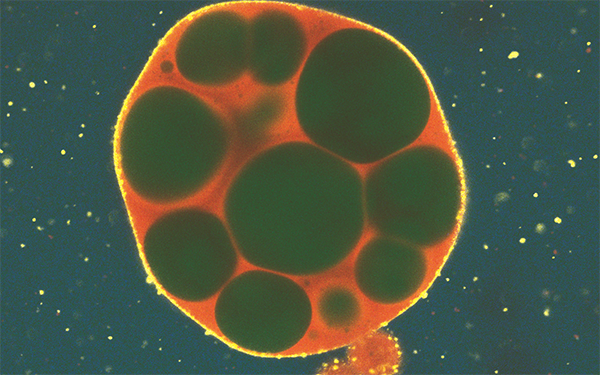
Just a few genetic mutations transform simple RNA droplets into cell-like structures with surprising capabilities: they form cavities, move and store molecules. Researchers have now succeeded in unravelling the underlying mechanisms. The findings have been published in Nature Chemical Engineering.
-
When is surgery a good option for chronic sinus problems? (opens the original)
Surgery can significantly improve quality of life for patients suffering from nonstop sinus issues. A USC expert explains.











Read: The Conversation, CORDIS, ESO, NASA, ScienceDaily and the newsroom feeds of 746 institutions. Last read: today. Each story's date is its publisher's. Where the news comes from, and what each source allows.