Science news
Recent stories from university newsrooms, The Conversation, CORDIS, observatories and ScienceDaily, each sorted into the fields, countries and institutions it is about, and each linked to the original publisher. Narrow them below by subject, country, institution, source, words or period. A signed-in reader can follow any filtered view and be told when a new story matches it.
11,549 stories stored from the last six months.
-
Natural hazards don’t obey electoral cycles. The next government faces crucial choices
New Zealand is a hazard-prone country and exposure to risk is rising. The choices the next government makes may be among the most consequential of the next decade.
-
Video game film adaptations used to be huge flops. Now studios can’t get enough
From Mario to the new Street Fighter film, the video game-to-film pipeline is now bursting open – and there are several reasons for it.
-
A botanist weighs in on our love-hate relationship with crepe myrtles
Lots of people love the crepe myrtle but others think of them as an inadequate and over-planted species. Some even refer to them as ‘crap myrtle’. But is that fair?
- Commonwealth Scientific and Industrial Research Organisation
- The University of Melbourne
- Australia
- Agricultural and Biological Sciences
Picture: Dion Wijaya/Pexels
-
Prolapse is common after pregnancy and later in life. Here’s what to look out for
Pelvic organ prolapse may develop and worsen after pregnancy and childbirth, around menopause or because of lifestyle and genetic factors.
-
Advice around children’s screen use can be overwhelming. There is no single ‘right’ approach
Advice around screens is no longer just about avoiding harms, but maximising benefits for your kid. No wonder some parents feel like their heads might explode.
Picture: Yan Krukau/Pexels
-
Ukraine’s drone strikes on Russian data centres may change how we see disinformation
Russia’s push for ‘digital sovereignty’ concentrated online services in a few physical sites – and that creates a vulnerability.
-
SUSU Hosts Closing Session of the “Russian Statehood Code” All-Russian Forum (opens the original)
The “Russian Statehood Code: The Past, the Present, and the Future” All-Russian Scientific and Educational Forum has wrapped up at South Ural State University (SUSU). The final event of the two-day program was a plenary discussion entitled “Russian Statehood Code: Strategic Priorities and Best Practices in Higher…
-
UH Hilo study maps shoreline sewage (opens the original)
The UH Hilo study is the first to map wastewater pollution hotspots from King’s Landing to Honoliʻi Beach Park on Hawaiʻi Island. The post UH Hilo study maps shoreline sewage first appeared on University of Hawaiʻi System News.
-
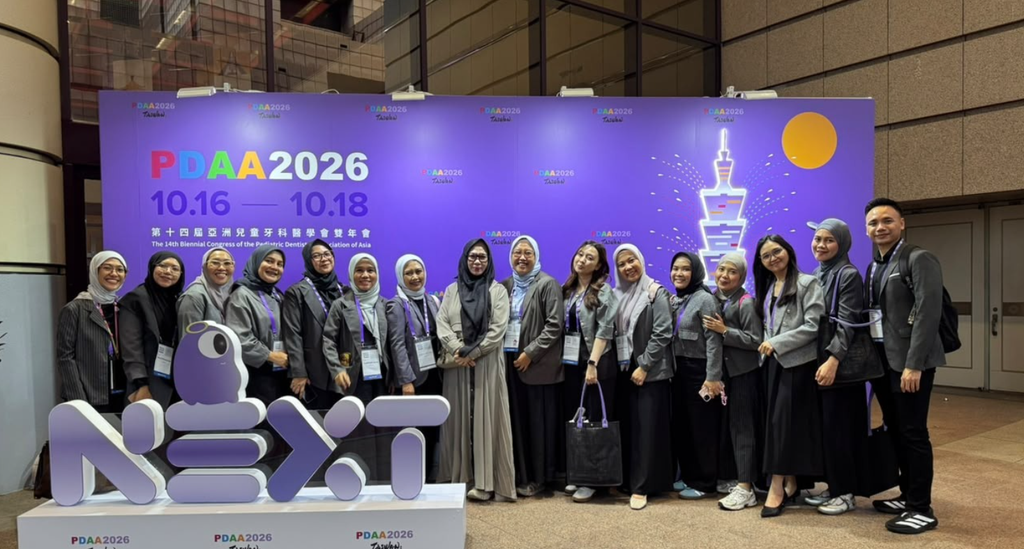
University Hasanuddin Pediatric Dentistry Residents Present Case Reports and Original Research at the 14th PDAA Biennial Congress in Taipei (opens the original)
A delegation of lecturers and residents from the Pediatric Dentistry Specialist Program at Hasanuddin University attended the 14th Biennial Congress of the Pediatric Dentistry Association of Asia. The event took place at the Taipei International Convention Center in Taiwan from October 16 to 18 2026. Professor…
-
Why the ugly history of IQ testing matters for AI and education
To figure out what AI may be understood as replacing, we need to examine intelligence as a historical and dangerous idea — rather than as a biological fact.
-
How Canada can better track what happens to trafficked wildlife after they’re seized
When wild animals are illegally imported to Canada, the law is clear about what happens to perpretrators. It fails to address how they are cared for after seizure.
-
Data centres: Opposing them and developing them are not the only two choices
The question is not whether Canada builds more data centres, but what it asks of them before they draw on public systems and local landscapes.
-
AI-enabled biochip for rapid cancer, disease detection (opens the original)
AUC researchers have spent more than a decade trying to turn tiny electrical signals from cells into an inexpensive early warning system for disease.
-
Jewellers back research on ‘silent killer’ hypertension (opens the original)
New funding is helping researchers tackle one of New Zealand's most common health conditions.
-
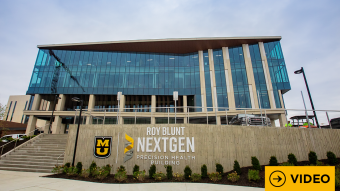
Step inside NextGen, the building designed to transform the future of health (opens the original)
See how Mizzou scientists are turning discoveries into new ways to prevent, diagnose and treat disease.
-
Elite rower receives Major Pasifika Blues Award (opens the original)
Arie Rasmussen Magasiva has established himself among New Zealand's top rowing talent while pursuing tertiary study. He was honoured with the Major Pasifika Award at the University's Blues Awards.
-
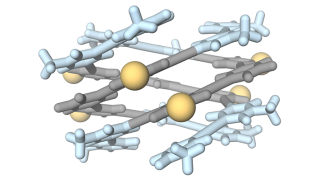
New method guides molecules into precisely defined structures (opens the original)
Researchers at the JYU shown that multiple layers of information can be encoded within an artificial molecule to control how it assembles. The study could eventually open new possibilities for the development of advanced functional materials.




Read: The Conversation, CORDIS, ESO, NASA, ScienceDaily and the newsroom feeds of 744 institutions. Last read: today. Each story's date is its publisher's. Where the news comes from, and what each source allows.