Science news
Recent stories from university newsrooms, The Conversation, CORDIS, observatories and ScienceDaily, each sorted into the fields, countries and institutions it is about, and each linked to the original publisher. Narrow them below by subject, country, institution, source, words or period. A signed-in reader can follow any filtered view and be told when a new story matches it.
2,860 stories match these filters.
-
Women in Nuclear Science: The Legacy of Marie Skłodowska-Curie and New Opportunities for Young Researchers (opens the original)
The history of science includes many women whose discoveries have transformed our understanding of the world. One of them was Marie Skłodowska-Curie, whose research on radioactivity laid the groundwork for further advances in nuclear physics and other scientific fields. Her achievements remain an inspiring example of…
-
A botanist weighs in on our love-hate relationship with crepe myrtles
Lots of people love the crepe myrtle but others think of them as an inadequate and over-planted species. Some even refer to them as ‘crap myrtle’. But is that fair?
- Commonwealth Scientific and Industrial Research Organisation
- The University of Melbourne
- Australia
- Agricultural and Biological Sciences
Picture: Dion Wijaya/Pexels
-
Ukraine’s drone strikes on Russian data centres may change how we see disinformation
Russia’s push for ‘digital sovereignty’ concentrated online services in a few physical sites – and that creates a vulnerability.
-
How Canada can better track what happens to trafficked wildlife after they’re seized
When wild animals are illegally imported to Canada, the law is clear about what happens to perpretrators. It fails to address how they are cared for after seizure.
-
Data centres: Opposing them and developing them are not the only two choices
The question is not whether Canada builds more data centres, but what it asks of them before they draw on public systems and local landscapes.
-
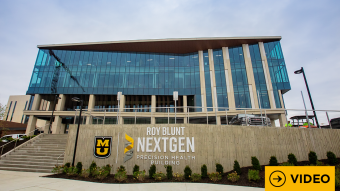
Step inside NextGen, the building designed to transform the future of health (opens the original)
See how Mizzou scientists are turning discoveries into new ways to prevent, diagnose and treat disease.
-
APOD: 2026 October 18 – Sonified: Eagle Nebula Pillars (opens the original)
APOD Science APOD APOD: 2026 October 18 –… Today’s APOD Archive Submissions Index Search Calendar RSS Education About Discuss APOD Astronomy Picture of the Day Discover the cosmos! Each day a different image or photograph of our fascinating universe is featured, along with a brief explanation written by a professional astronomer. Sonified: Eagle Nebula
-
NCERC Secures Status as Industry Leader as Advancements in Biofuel Technology Include Multimillion Dollar Facility Expansion (opens the original)
On Tuesday, October 13, the National Corn-to-Ethanol Research Center (NCERC) at Southern Illinois University Edwardsville hosted the annual NCERC Illinois Ethanol Research Advisory Board Meeting days after a major announcement of a combined $17 million granted from the state and Illinois Corn Growers Association. The…
-
How Bacteria Survive a World Full of Killer Bacteriophages (opens the original)
Humans throughout history have invented a variety of ways to fight back against troublesome bacteria. But bacteria live in a dangerous world too. The human body and other bacteria-rich environments abound with bacteriophages, or viruses that prey upon bacteria. Phages can sometimes outnumber bacteria a hundredfold…
-
How do forests recover after logging? UMaine researchers plan to find out (opens the original)
U.S. Department of Energy grant supports UMaine study of forest recovery after timber harvesting led by Daniel Hayes, professor of geospatial analysis and remote sensing Maine’s forests support jobs, supply
-
NASA Names Stephen Cash Marshall Space Flight Center Director (opens the original)
NASA Administrator Jared Isaacman has named Stephen Cash director of the agency’s Marshall Space Flight Center in Huntsville, Alabama, effective Monday, Oct. 19. Cash, a veteran NASA engineer and aerospace executive, returns to lead the center where he began his career more than four decades ago. “Marshall…
-
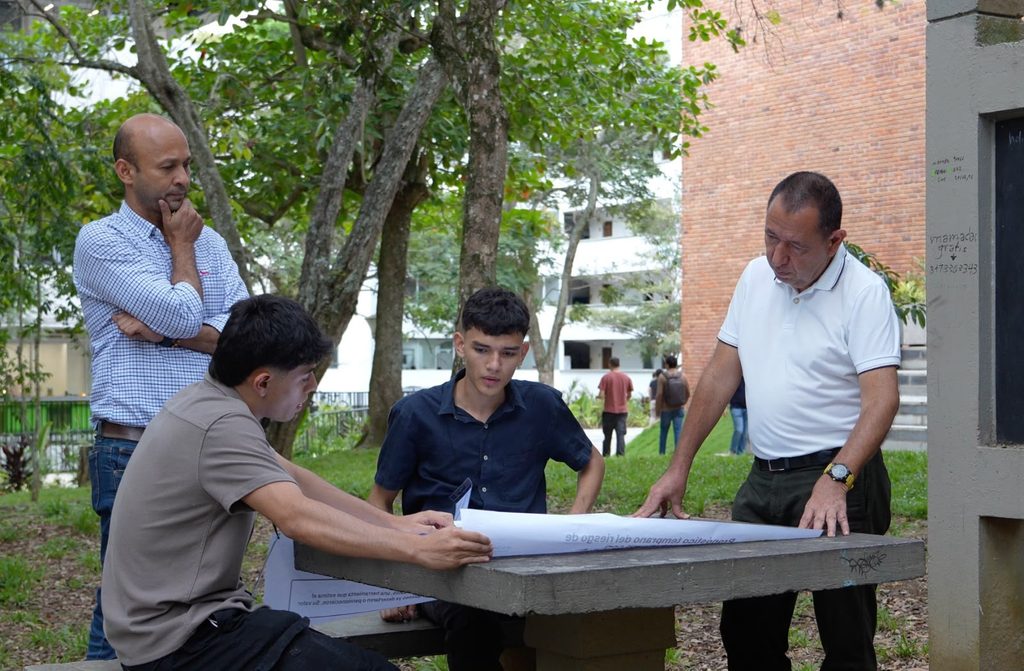
From Saravena, UIS Students Put Artificial Intelligence to Work Addressing Arauca’s Challenges (opens the original)
Students in the Artificial Intelligence Engineering program at the Universidad Industrial de Santander (UIS), Saravena campus, presented two research projects addressing the risks of flooding along the Cravo Norte River and university dropout rates. The projects were showcased during the event “AI & Science…
-
Notre Dame’s Early Learning Foundations Lab expands literacy work to Nebraska With new grant (opens the original)
The University of Notre Dame’s Early Learning Foundations (ELF) Lab is partnering in work supported by a nearly $10 million federal grant to strengthen early reading skills in Nebraska. Through the project, the ELF Lab will help scale and evaluate two of its evidence-based shared book reading programs, which support…
-
NAU in the news: October 2026 (opens the original)
This month, NAU researchers made headlines for their work in Arctic permafrost, a host of space research, including alien life, and mapping clean water on the Navajo Nation. To
-
Minister Dabrusin and Secretary of State (Nature) Provost met with provincial and territorial environment ministers to strengthen collaboration on conservation, wildlife, and biodiversity (opens the original)
The Honourable Julie Dabrusin, Minister of the Environment, Climate Change and Nature, and the Honourable Nathalie Provost, Secretary of State (Nature), joined provincial and territorial environment ministers and leaders from National Indigenous Organizations in Toronto, Ontario, on October 14 and 15, 2026, to…
-
UCLA’s Terence Tao confronts an AI revolution in mathematics — and more UCLA media (opens the original)
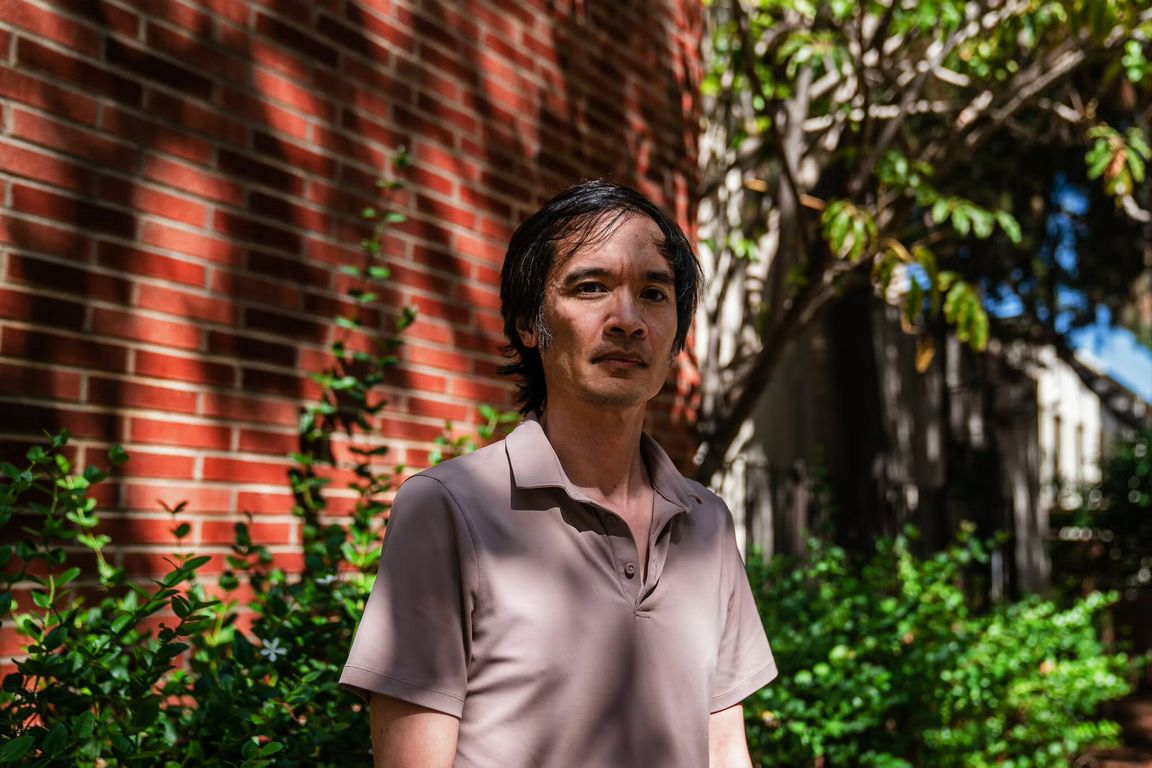
The New York Times profiled UCLA mathematician and Fields Medal recipient Terence Tao, who has emerged as a leading voice in the debate over AI’s rapidly growing role in mathematical research and its impact on younger scholars. The article also featured UCLA professors Andrea Bertozzi and Dimitri Shlyakhtenko, as…
-
The researchers using AI to avert another Deepwater Horizon oil spill (opens the original)
The Silicon Valley team has set out to address one of the critical root causes of accidents like the Deepwater Horizon spill.
-
Artemis II Heat Shield After Splashdown (opens the original)
Shortly after NASA’s Artemis II mission splashed down on April 10, 2026, U.S. Navy divers captured underwater imagery of the Orion spacecraft’s heat shield. In the months after, the agency measured whether the thermal protection system effectively safeguarded the crew and Orion systems as the spacecraft reentered Earth’s atmosphere. This rigorous analysis confirmed that the
-
UMass Boston Offers AI Education Microcredential Program (opens the original)
The Paul English Applied Artificial Intelligence Institute aims to offer students from UMass Boston and the surrounding community a chance to learn about new AI tools with a flexible, adaptable program.
-
I Am Artemis: Allison Mjoen (opens the original)
As the supercooled propellant flowed into the core stage, and NASA’s SLS (Space Launch System) rocket roared to life, Allison Mjoen and her family watched with awe and pride. Mjoen, NASA’s operations manager for the agency’s Exploration Ground Systems Program, helped shape the systems and ground operations that will one day send humans back to









Read: The Conversation, CORDIS, ESO, NASA, ScienceDaily and the newsroom feeds of 739 institutions. Last read: today. Each story's date is its publisher's. Where the news comes from, and what each source allows.