Science news
Recent stories from university newsrooms, The Conversation, CORDIS, observatories and ScienceDaily, each sorted into the fields, countries and institutions it is about, and each linked to the original publisher. Narrow them below by subject, country, institution, source, words or period. A signed-in reader can follow any filtered view and be told when a new story matches it.
661 stories match these filters.
-
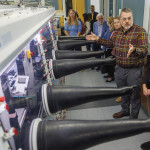
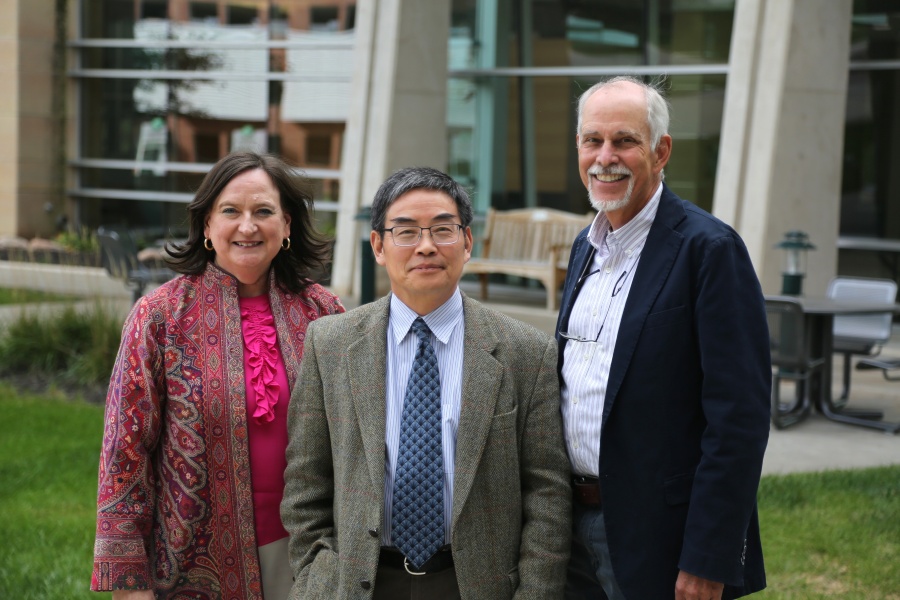
National biotechnology commission visits UW–Madison to explore research and innovation (opens the original)
From advances in agricultural science and sustainable bioenergy to medical breakthroughs to new automated technologies, UW–Madison is shaping the future of biotechnology.
-
How permanent daylight saving time could affect schools
Risks for negative outcomes may be reduced through mitigation measures such as public education on sleep health and later or flexible start times.
-
Stony Brook Paleontologist Dinosaur Discovery Reveals a Specialized Fruit Eater (opens the original)
A discovery by an international team of paleontologists including Stony Brook revealed a new species, the first known dinosaur that specifically ate fruit. The post Stony Brook Paleontologist Dinosaur Discovery Reveals a Specialized Fruit Eater first appeared on SBU News.
-
Branching out: New study reveals when invasive pythons take to the trees (opens the original)
Effective management of invasive species often depends on not only understanding where the species lives, but how it behaves. In Big Cypress National Preserve, USGS scientists are uncovering new insights into the behavior of one of Florida’s most prolific invasive snakes – the Burmese python. A new study provides…
-
Government of Canada launches engagement on the future of agricultural science (opens the original)
Agriculture and Agri-Food Canada (AAFC) has been conducting agricultural research in Canada for nearly 140 years. The department is Canada’s largest agricultural science organization, with partners and facilities in every province and strong collaborations across industry, academia, and international networks.
-
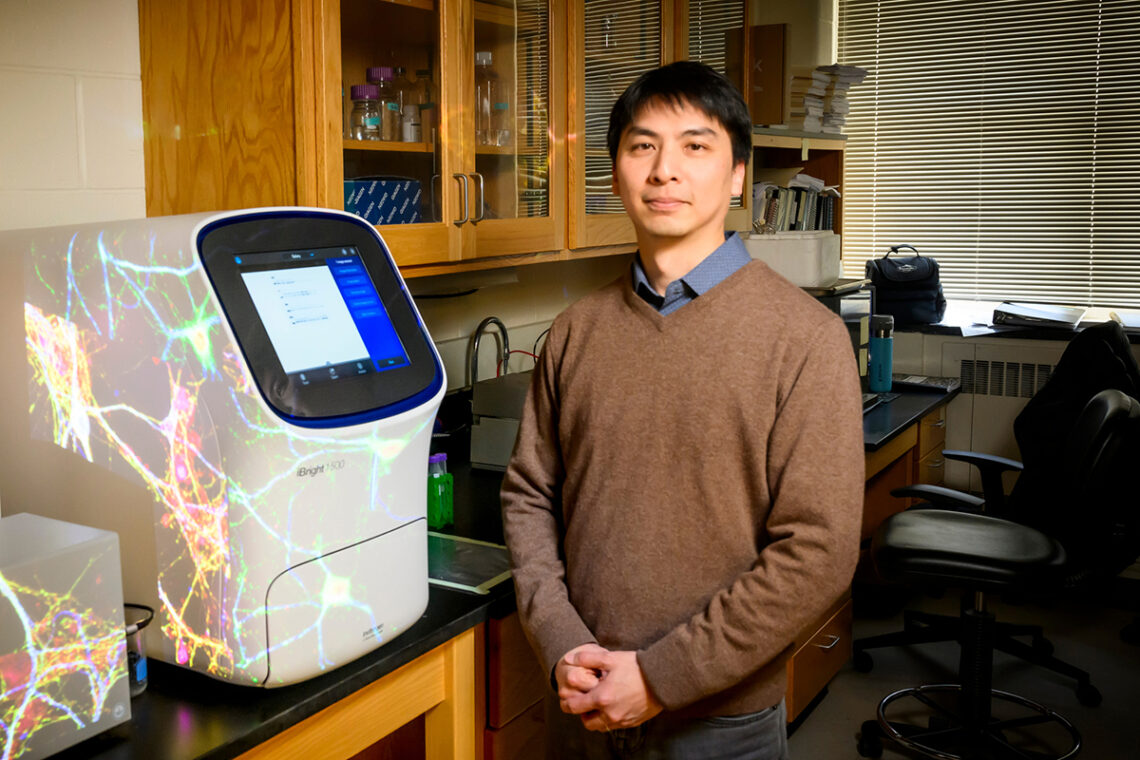
New microscopy platform enables imaging of neuronal activity at single-cell resolution at unprecedented tissue depth (opens the original)
Researchers have pushed the depth limits of optical imaging of brain activity by creating an optical platform that is 250-fold more efficient than conventional systems of its kind.
-
Researchers identify pathway that enables regulatory T cells to prevent devastating autoimmune responses to gut bacteria (opens the original)
Explore new research uncovering how the COMPASS pathway helps immunosuppressive T cells prevent lethal gut inflammation triggered by intestinal microbiota.
-
UW Adds Conviron Walk-In Chamber to Plant Growth Facility (opens the original)
A new walk-in growth chamber at the University of Wyoming’s Plant Growth and Phenotyping Facility will allow UW researchers t
-
Study reveals amino acid can diminish age-related inflammation (opens the original)
Taurine controls an inflammatory response of the innate immune system. Manipulating it could be a target for inflammaging.
-
Department hosts 2026 Antimicrobial Peptide Conference (opens the original)
The 2026 Antimicrobial Peptide Conference hosted by UNMC’s Department of Pathology, Microbiology and Immunology this month drew more than 200 researchers from 33 countries.
-
Earwax is both slippery and sticky – this weird combo might lead to safer insect repellents
Earwax’s unusual physical properties help it repel insects in the lab. Is this a job it evolved to do in animal ears?
-
Brambles are a problem weed in South Africa but researchers are closer to finding a natural enemy to manage them
Biological control looks like a feasible option for managing invasive brambles.
-
Neural signaling protein could be therapeutic target for autism-linked gene deletion (opens the original)
A neural signaling protein could be a drug target for disorders related to the autism-linked gene MEF2C.
-
Study finds plant climate sensitivity varies by region (opens the original)
Climate change affects the same plant species differently in different regions of the U.S., a new study finds.
-
Africa and Europe join forces for One Health at Think Corner in World One Health Day event (opens the original)
lindymar@helsinki.fi Tue, 27/10/2026 - 14:00 Disease outbreaks, antimicrobial resistance and food security do not stop at the borders between species, sectors or countries. Researchers from the University of Helsinki will…
-
Protein can help build and preserve muscle, but eating more has its limits
Extra protein can support muscle growth, but its benefits depend on what you already eat and whether you challenge your muscles.
-
Plant-Derived Gamma-Linolenic Acid Found to Suppress Contraction of a Major Artery Supplying the Brain — Findings Suggest TP Receptor Antagonism and Potassium Channel Activation — (opens the original)
TOPICSPharmceutical SciencesDATE October 22, 2026 Conducting Research at Toho SHARE October 22, 2026 Plant-Derived Gamma-Linolenic Acid Found to Suppress Contraction of a Major Artery Supplying the Brain — Findings Suggest TP Receptor Antagonism and Potassium Channel Activation — A research team from the Department…




Read: The Conversation, CORDIS, ESO, NASA, ScienceDaily and the newsroom feeds of 753 institutions. Last read: today. Each story's date is its publisher's. Where the news comes from, and what each source allows.