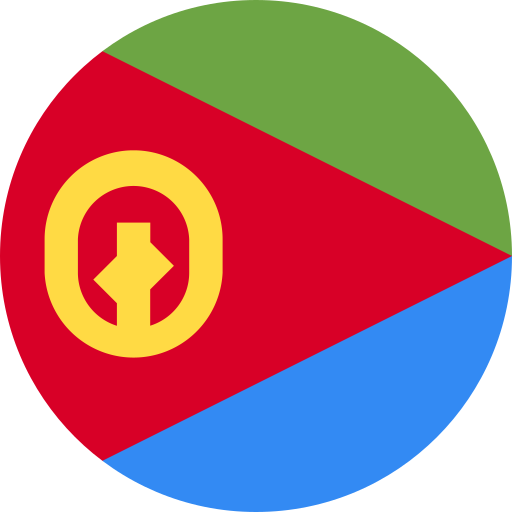
 Eritrea
- World rank, 2022-now
- #174
- #175 all time
- Works, 2022-now
- 213
- fractional
- Top-10% rate
- 8.2%
- share of its work among the world's most cited
- Open access
- 73%
- of its works free to read
Strongest relative focus: Applied Microbiology and Biotechnology, Family Practice, Toxicology.
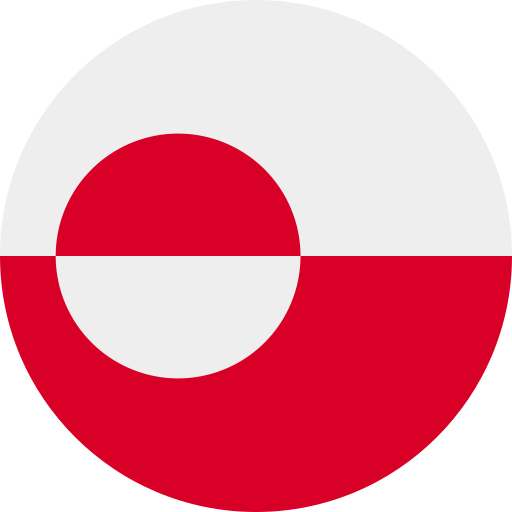 Greenland
- World rank, 2022-now
- #171
- #138 all time
- Works, 2022-now
- 223
- fractional
- Top-10% rate
- 9.1%
- share of its work among the world's most cited
- Open access
- 51%
- of its works free to read
Strongest relative focus: Atmospheric Science, Ecology, Oceanography.
Who leads, measure by measure?
Greenland leads on 6 of 9 measures: research quality, output, top-10% rate, citations per work, international co-authorship and growth. Eritrea leads on 2 of 9 measures: excellence for its fields and open access. The two are level on institutions in the world top 100.
- #174Research qualityworld rank of 189 countries, 2022-now#171
- 1.01×Excellence for its fieldsits top-10% rate against what its topics predict; 1.00× is as expected0.94×
- 213Outputfractional works, 2022-now223
- 8.2%Top-10% rateshare of its works among the world's most cited9.1%
- 13.0Citations per workall time, per fractional work20.0
- 0World top 100institutions it holds among the world's best 1000
- 73%Open accessof its works free to read, all time51%
- 34%Internationalof its works written with co-authors abroad, all time61%
- -22%Growthworks in 2022-25 against 2018-21; half a bar is no change+3%
A rank is drawn as its standing: the longer the bar, the nearer the top. Anything else is drawn against the larger of the two, and two values a hair apart are called level. Quality, excellence and the top-10% rate are explained in the methodology.
What is each known for?
The keywords that describe each side's research, by fractional works in 2022-now and weighted toward what it does more of than the world.
Eritrea
- Water Scarcity
- Global Health
- Infertility
- Sustainability Assessment
- Insulin Resistance
- Maternal and Child Undernutrition
- Community Health Workers
- Poverty Reduction
- Vaccine
- Antiretroviral Therapy
- Ethiopia
- Human Rights
- Politics
- COVID-19
- Immune Response
- Child Development
- Religion
- Environmental Impact
- Diagnosis
- Climate Change
- Epidemiology
- Public Health
- Conflict
- Maternal Mortality
- History
- Treatment
- Culture
- Drug Resistance
- Society
- Eritrea
- Migration
- Global Governance
- Health Inequalities
- Child Mortality
- Health Systems
- Water Sanitation Hygiene
- Infectious Diseases
- HIV Infection
- Gender Inequality
- Security Council
All 40 words, with their numbers
- Epidemiology19▲ 2.0×58 topics
- Climate Change9▲ 1.34×25 topics
- Public Health7▲ 2.1×18 topics
- Diagnosis7▲ 3.3×16 topics
- Conflict7▲ 19×5 topics
- Environmental Impact7▲ 1.75×20 topics
- Maternal Mortality6▲ 12×5 topics
- Religion6▲ 5.9×5 topics
- History6▲ 3.8×5 topics
- Child Development6▲ 6.2×4 topics
- Treatment6▲ 2.1×17 topics
- Immune Response6▲ 4.3×11 topics
- Culture6▲ 4.7×4 topics
- COVID-195▲ 1.74×15 topics
- Drug Resistance5▲ 7.8×6 topics
- Politics5▲ 8.6×2 topics
- Society5▲ 12×2 topics
- Human Rights5▲ 2.2×11 topics
- Eritrea5▲ 159×1 topic
- Ethiopia5▲ 159×1 topic
- Migration5▲ 6.3×2 topics
- Antiretroviral Therapy5▲ 12×6 topics
- Global Governance4▲ 7.9×8 topics
- Vaccine4▲ 4.7×10 topics
- Health Inequalities4▲ 15×2 topics
- Poverty Reduction4▲ 13×3 topics
- Child Mortality4▲ 23×1 topic
- Community Health Workers4▲ 19×2 topics
- Health Systems4▲ 23×1 topic
- Maternal and Child Undernutrition4▲ 20×1 topic
- Water Sanitation Hygiene4▲ 20×1 topic
- Insulin Resistance4▲ 3.5×8 topics
- Infectious Diseases4▲ 4.5×7 topics
- Sustainability Assessment3▲ 9.4×2 topics
- HIV Infection3▲ 12×3 topics
- Infertility3▲ 8.0×3 topics
- Gender Inequality3▲ 8.1×4 topics
- Global Health3▲ 7.2×2 topics
- Security Council2▲ 21×2 topics
- Water Scarcity2▲ 13×2 topics
Greenland
- Methane Emissions
- Marine Biodiversity
- Habitat Selection
- Biogeography
- Permafrost
- Invasive Species
- Ecosystem Management
- Northern Sea Route
- Hydrology
- Governance
- Sea Ice
- Fisheries Sustainability
- Anthropogenic Noise
- Acoustic Communication
- Sustainability
- Remote Sensing
- Traditional Knowledge
- Nutrition Transition
- Vulnerability
- Arctic
- Climate Change
- Food Security
- Ecological Knowledge
- Arctic Indigenous Peoples
- Population Dynamics
- Conservation
- Predator-Prey Interactions
- Ocean Circulation
- Marine Mammals
- Decline
- Trophic Cascades
- Geopolitics
- International Relations
- Shipping
- Marine Fisheries
- Health Effects
- Health Equity
- Social Sciences
- Benthic Communities
- Decolonization
All 40 words, with their numbers
- Climate Change82▲ 12×43 topics
- Arctic23▲ 79×4 topics
- Food Security21▲ 15×3 topics
- Vulnerability19▲ 31×3 topics
- Ecological Knowledge19▲ 168×2 topics
- Nutrition Transition18▲ 219×2 topics
- Arctic Indigenous Peoples18▲ 403×1 topic
- Traditional Knowledge18▲ 166×1 topic
- Population Dynamics17▲ 25×6 topics
- Remote Sensing16▲ 5.0×12 topics
- Conservation14▲ 13×12 topics
- Sustainability12▲ 1.88×17 topics
- Predator-Prey Interactions12▲ 57×2 topics
- Acoustic Communication11▲ 84×2 topics
- Ocean Circulation11▲ 31×3 topics
- Anthropogenic Noise11▲ 147×1 topic
- Marine Mammals11▲ 147×1 topic
- Fisheries Sustainability10▲ 46×2 topics
- Decline10▲ 144×1 topic
- Sea Ice10▲ 144×1 topic
- Trophic Cascades9▲ 39×2 topics
- Governance8▲ 9.3×3 topics
- Geopolitics8▲ 19×2 topics
- Hydrology8▲ 22×3 topics
- International Relations8▲ 12×2 topics
- Northern Sea Route7▲ 108×1 topic
- Shipping7▲ 57×1 topic
- Ecosystem Management7▲ 45×1 topic
- Marine Fisheries7▲ 66×1 topic
- Invasive Species7▲ 6.0×11 topics
- Health Effects6▲ 4.1×14 topics
- Permafrost6▲ 51×2 topics
- Health Equity5▲ 6.5×4 topics
- Biogeography5▲ 6.5×7 topics
- Social Sciences4▲ 12×2 topics
- Habitat Selection4▲ 22×2 topics
- Benthic Communities4▲ 26×2 topics
- Marine Biodiversity4▲ 26×2 topics
- Decolonization4▲ 19×3 topics
- Methane Emissions4▲ 30×2 topics
Size is fractional works in the topics tagged with each word; colour is the word's share of the side's work against its share of the world's. Each word links to the topic it comes from most.
How has their output grown?
Eritrea has out-published Greenland every year since 2025, when it overtook it.
Fractional works per year.
Their share of all research
Growing output can still be a shrinking share, because all of science grows. Each line is a side as a percentage of every work published that year.
Fractional works over all fractional works that year. How the balance of science has shifted.
How much of it reaches the world top 10%
The share of each side's works, year by year, that reached the world's 10% most cited for their field and year. The average of all institutions is 10.0% (why not 10%).
A year with under 1% of the side's peak output is left out: a rate over a handful of papers says nothing. The latest years are still being cited.
Who holds more of the world's best institutions?
A country's average quality and the number of institutions it holds at the very top can disagree, and both are worth knowing. The counts are nested: an institution in the top 50 is also in the top 100.
- 0In the world top 500
- 0In the top 1000
- 0In the top 5000
- 0In the top 1,0000
- #51Elite capacityrank among 204 countries#51
Institutions ranked on research quality, 2022-now. Elite capacity counts a country's institutions by their worldwide rank, weighted so a place at #1 counts for more than one at #480.
Which publishes more research, Eritrea or Greenland?
Greenland publishes 1.0× as much research as Eritrea in 2022-now (223 against 213 fractional works).
Whose research has more impact, Eritrea or Greenland?
9.1% of Greenland's research reaches the world's top 10% most cited, against 8.2% for Eritrea.
Is Eritrea or Greenland growing faster?
Output in 2022-25 was +3% against 2018-21 for Greenland, and -22% for Eritrea.
Which has more open access research, Eritrea or Greenland?
73% of Eritrea's research is free to read, against 51% of Greenland's.
Which has more world-class institutions, Eritrea or Greenland?
Eritrea holds 0 of the world's top 100 research institutions and Greenland 0; in the top 1,000 it is 0 against 0.
Which institutions lead in each country?
The highest-ranked institutions on each side on research quality, 2022-now. The percentage is each institution's own top-10% rate: the share of its works that are among the world's 10% most cited for their field and year. Every figure stands alone, so they do not add up to 100%.
Eritrea
- 1University of Asmara8.2% top 10% · 213 works
Greenland
- 1Ilisimatusarfik7.5% top 10% · 99 works
- 2Grønlands Naturinstitut11.5% top 10% · 88 works
The number is the rank inside the country. The track on each row is the top-10% rate; the tick is the average of all institutions, 10.0% (how it is set): teal above it, red below. The ranking is the quality score, which compares the rate with what each institution's own topics predict and adds a small reward for size, so the rates do not fall in order.
Who are the top researchers on each side?
The most cited researchers on each side, among those ranked.
Eritrea
- 1 Selam Mihreteab #1,183,860 worldwide 1.1k citations · 28 works
- 2 Ghebrebrhan Ogubazghi #1,338,523 worldwide 1.3k citations · 65 works
- 3 Eyasu Habte Tesfamariam #1,384,050 worldwide 286 citations · 20 works
- 4 Araia Berhane #1,422,903 worldwide 896 citations · 32 works
- 5 Meron Mehari Kifle #1,474,057 worldwide 804 citations · 23 works
Greenland
- 1 Lorenz Meire #298,354 worldwide 3.2k citations · 174 works
- 2 John Mortensen #323,266 worldwide 3.8k citations · 99 works
- 3 Alexandra Messerli #413,578 worldwide 351 citations · 1,945 works
- 4 Erik W. Born #443,074 worldwide 11k citations · 227 works
- 5 Malene J. Simon #444,230 worldwide 2.8k citations · 88 works